Beginner’s Guide to Setting Up WordPress Hosting
Starting a website is an exciting venture. You have a vision, a brand, and maybe even some content ready to go. But before you can share your ideas with the world, you need a home for them online. That’s where WordPress comes in. As the power behind over 40% of the web, WordPress is the undisputed king of website platforms. It’s flexible, user-friendly, and perfect for everyone from bloggers to business owners.
However, WordPress software doesn’t run on thin air. To get your site live, you need hosting. If you’ve never built a website before, the term “hosting” might sound technical and intimidating. You might be wondering why it matters so much or how to choose between the hundreds of options available.
Your choice of hosting is arguably the most critical decision you’ll make early on. It directly impacts your site’s speed, security, and search engine ranking (SEO). A good host ensures your site loads quickly and stays safe from hackers, while a poor one can lead to constant downtime and frustration.
In this guide, we’ll demystify the process. You will learn exactly what WordPress hosting is, how to choose the right provider for your needs, and how to get your site set up step-by-step. Let’s get your website off the ground.
What Is WordPress Hosting?
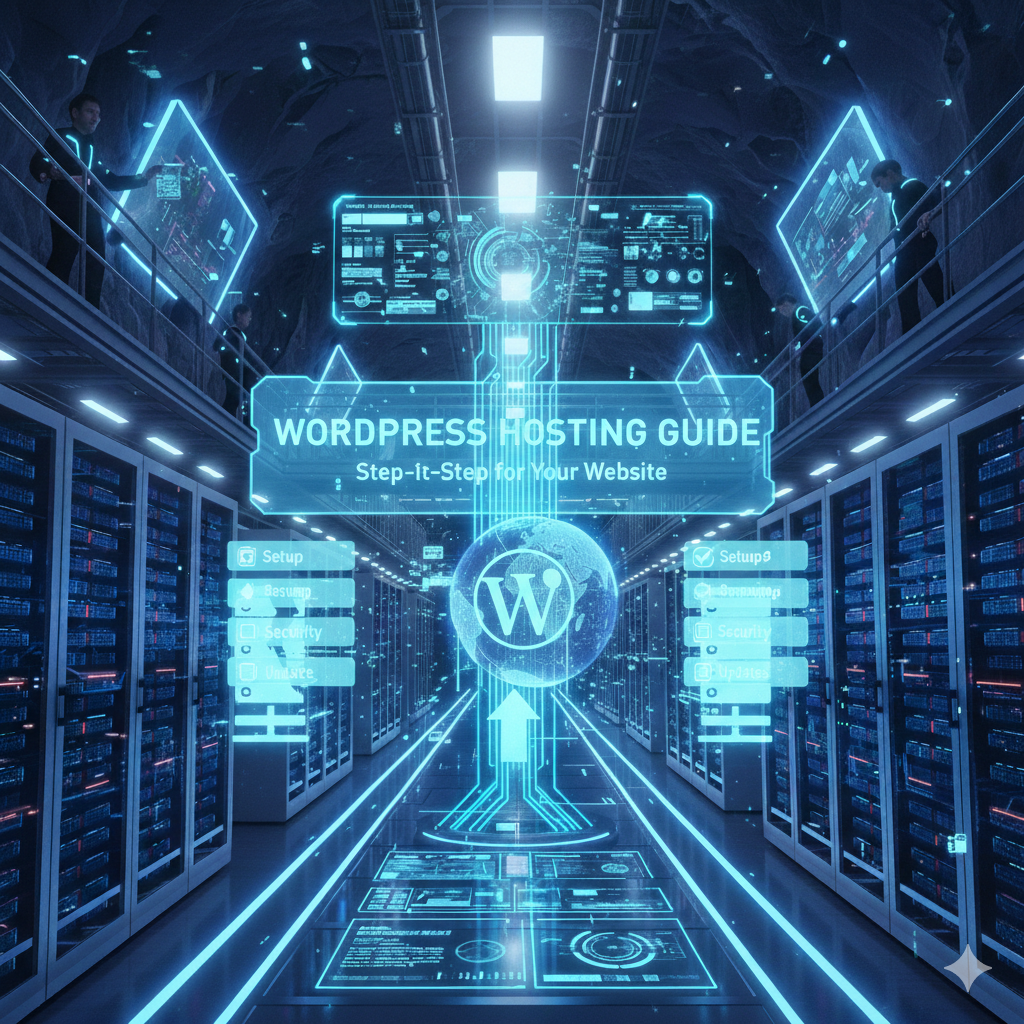
At its core, web hosting is a service that allows you to post a website onto the internet. A web host provides the technologies and services needed for the website or webpage to be viewed in the internet. Websites are hosted, or stored, on special computers called servers.
WordPress hosting is simply hosting that has been specifically optimised to meet WordPress’s performance and security needs. It usually includes features like one-click WordPress installs to make it easy to get started.
Managed WordPress Hosting vs Shared Hosting
When you start looking for a plan, you’ll likely encounter two main types: shared hosting and managed WordPress hosting. Understanding the difference is key to making the right choice.
Shared Hosting is the most common entry point for beginners. As the name suggests, your website shares a server with many other websites.
- Pros: It is the most affordable option, making it great for new sites with low traffic.
- Cons: Performance can sometimes suffer if other sites on the server get a lot of traffic. You are also responsible for more technical maintenance, like updates and backups.
Managed WordPress Hosting provides a concierge service for your WordPress site. The host manages all technical aspects of running WordPress.
- Pros: It offers better security, faster speeds, daily backups, and automatic updates. The support team is usually made up of WordPress experts.
- Cons: It is significantly more expensive than shared hosting.
The Benefits of Optimised WordPress Servers
Choosing hosting specifically designed for WordPress offers distinct advantages over generic web hosting. These servers are configured to handle the specific database structure and PHP memory requirements of WordPress. This results in faster loading times and fewer compatibility issues with plugins.
Best WordPress Hosting for Beginners (How to Choose)
With thousands of providers promising the moon, filtering through the noise to find the best WordPress hosting for beginners can be tough. Here are the three main factors you should evaluate.
1. Speed and Uptime Requirements
Speed is crucial. Google has explicitly stated that site speed is a ranking factor. If your site is slow, visitors will leave before it even loads. Look for hosts that offer SSD storage and have data centres close to your target audience.
Uptime is equally important. This is the percentage of time your site is online and available. A reputable host should guarantee at least 99.9% uptime.
2. Customer Support Importance
When you’re starting out, things will inevitably go wrong. You might accidentally delete a file or a plugin might crash your site. When that happens, you need help fast. Test a potential host’s support before you buy. Do they have 24/7 live chat? Is there a phone number? Read reviews to see if their support team is helpful and responsive.
3. Pricing and Scalability
Price is often the deciding factor. Cheap WordPress hosting can be tempting, but be wary of prices that seem too good to be true. Often, extremely low introductory rates renew at a much higher price.
You also need to think about growth. If your blog takes off, will your host be able to handle the traffic spike? A good host allows you to easily upgrade your plan as your site grows.
Step-by-Step Guide to Setting Up WordPress Hosting
Ready to get started? Follow this WordPress setup guide to launch your site in under an hour.
Step 1: Choose a WordPress hosting provider
Based on the criteria above, select a host. Popular choices for beginners include Bluehost, SiteGround, and Hostinger. They balance performance with affordability and excellent support.
Step 2: Register a domain or connect an existing one
Your domain name is your address on the internet (e.g., yourwebsite.com). Most hosting providers offer a free domain name for the first year when you sign up. If you already own a domain, you will be given the option to connect it during the signup process.
Step 3: Select your hosting plan
Select the plan that fits your budget. For most beginners, the basic or starter plan is sufficient. You can usually choose a contract length—signing up for 12 or 36 months often secures the biggest discount.
Step 4: Install WordPress (one-click install)
Most modern hosts use an installer script like Softaculous to make this easy.
- Log in to your hosting account dashboard.
- Look for a section labelled “Website” or “WordPress”.
- Click the “Install WordPress” button.
- You’ll be asked to create an admin username and password. Make these secure!
This process takes care of all the complex database creation in the background.
Step 5: Log into your WordPress dashboard
Once installed, you can access your site by going to yourdomain.com/wp-admin. Enter the username and password you created in the previous step. Welcome to your WordPress dashboard!
Step 6: Choose a theme
Appearance isn’t everything, but it helps.
- Go to Appearance > Themes in your dashboard.
- Click Add New.
- Browse thousands of free themes. Look for one that is “responsive” (mobile-friendly).
- Click Install and then Activate.
Step 7: Install essential plugins
Plugins add functionality to your site. To start, you should install a few basics:
- Yoast SEO or RankMath: To help you rank in search engines.
- UpdraftPlus: For backups.
- Wordfence: For security.
Go to Plugins > Add New, search for the plugin, and click Install Now and Activate.
How to Configure WordPress Settings After Installation
Before you start writing, you need to tweak a few WordPress basic configuration settings to ensure your site runs smoothly.
Permalinks
Permalinks are the permanent URLs of your blog posts. By default, WordPress uses a structure that looks like yourdomain.com/?p=123. This is bad for SEO and looks unprofessional.
- Go to Settings > Permalinks.
- Select Post name (e.g.,
yourdomain.com/sample-post/). - Click Save Changes.
Site Title and Tagline
These tell search engines what your site is about.
- Go to Settings > General.
- Update your Site Title (your brand name).
- Update your Tagline (a short description of what you do).
Timezone and Language
Ensure your content is published at the right time for your audience.
- Stay in Settings > General.
- Scroll down to select your Timezone, Date Format, and Site Language.
How to Make Your WordPress Site Fast and Secure
A slow site kills conversions, and an insecure site risks losing everything. Here is how to handle WordPress security for beginners and speed up your WordPress website.
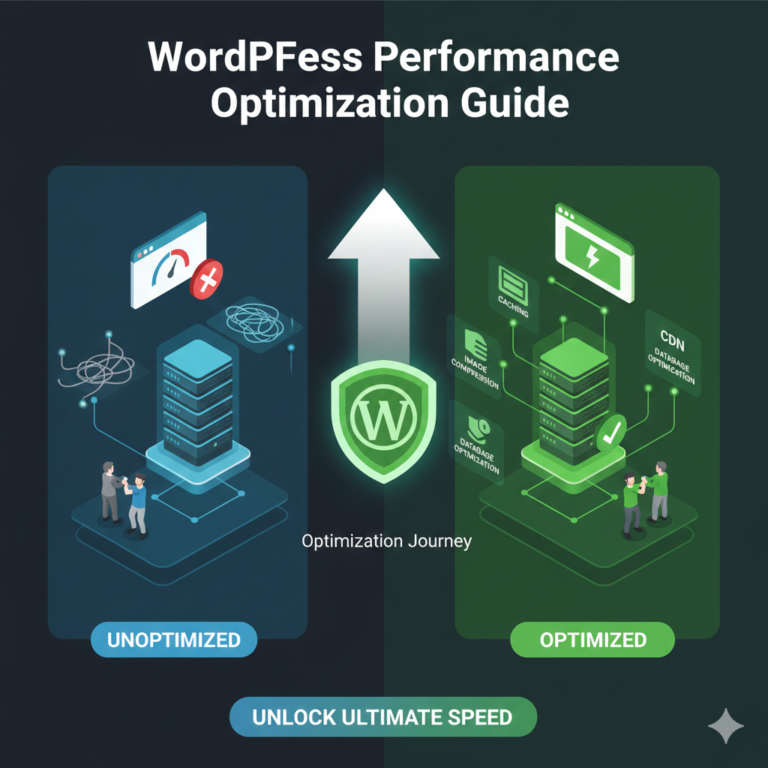
Caching
Caching saves a static copy of your site to show to visitors, reducing the load on your server. Install a plugin like WP Super Cache or W3 Total Cache. Many managed hosts have built-in caching, so check with them first.
Image Optimisation
Large images are the number one cause of slow websites. Never upload raw photos directly from a camera. Use a plugin like Smush or ShortPixel to automatically compress images as you upload them without losing quality.
SSL Certificates
An SSL certificate encrypts the data between your website and your visitor’s browser. It adds the padlock icon next to your URL and changes HTTP to HTTPS. Google penalises sites without one. Most hosts now offer a free Let’s Encrypt SSL certificate that you can enable in your hosting dashboard.
Backups
If your site gets hacked or breaks, a backup is your only safety net. While your host may offer backups, you should always keep your own. Use the UpdraftPlus plugin to schedule automatic backups to Google Drive or Dropbox.
Common WordPress Hosting Mistakes Beginners Make
Navigating the world of hosting can be tricky. Avoid these common pitfalls to save yourself time and money.
Choosing Cheap Unreliable Hosting
We all love a bargain, but relying on the absolute cheapest hosting can be a disaster. These hosts often overcrowd their servers, leading to slow speeds and frequent downtime. If your site is down, you are losing visitors. It is worth paying a few extra pounds a month for reliability.
Installing Too Many Plugins
It is tempting to install a plugin for every cool feature you see. However, every plugin adds code that your server has to load. Too many plugins (or poorly coded ones) will slow your site down significantly. Only install what you absolutely need.
Ignoring Backups
Many beginners assume their host will take care of backups. While some do, they aren’t always guaranteed or easy to restore. Always have an independent backup solution in place.
Recommended Tools and Plugins for New WordPress Sites
To give your site the best start, here is a curated list of tools essential for WordPress hosting setup.
SEO Plugins
- RankMath: A user-friendly SEO suite that helps you optimise content, manage redirects, and track rankings.
- Yoast SEO: The industry standard for on-page SEO optimisation.
Security Plugins
- Wordfence Security: Includes an endpoint firewall and malware scanner built from the ground up for WordPress.
- Sucuri: A cloud-based security platform that protects your site from attacks.
Performance Plugins
- WP Rocket: A premium caching plugin that is incredibly easy to set up and delivers great results.
- Nitropack: An all-in-one performance optimisation service.
How Much Does WordPress Hosting Cost?
Budgeting is a big part of any new project. Let’s break down the typical WordPress hosting cost per month.
Monthly Pricing Breakdown
- Shared Hosting: Usually costs between £2 and £10 per month. This is the cheap WordPress hosting tier suitable for new blogs.
- Managed WordPress Hosting: Ranges from £20 to £100+ per month. This is for serious businesses or high-traffic sites.
- VPS / Cloud Hosting: Can range from £20 to £50 per month, offering a middle ground of performance and control.
Renewal Costs
This is where many get caught out. Most hosts offer a massive discount for your first term (e.g., £2.99/mo). However, when that term ends, the price often jumps to the “regular” rate, which can be two or three times higher. Always check the renewal price before signing up.
Hidden Fees
Be on the lookout for upsells during checkout. Hosts often try to add extras like “SiteLock Security” or “SEO Tools” that you likely don’t need or can get for free via plugins. Uncheck these boxes to keep your costs down.
FAQ – WordPress Hosting Setup
Q1: What is the best WordPress hosting for beginners?
For beginners, Bluehost and SiteGround are top recommendations. They offer an excellent balance of affordability, ease of use, and reliable customer support, making the learning curve much smoother.
Q2: How much does WordPress hosting cost per month?
For a starter shared hosting plan, you can expect to pay between £2 and £8 per month. Managed hosting plans typically start around £20 per month.
Q3: Can I install WordPress for free?
Yes, the WordPress software itself is 100% free and open-source. However, you must pay for a domain name and web hosting service to use it on the live web.
Q4: Do I need managed WordPress hosting?
Not necessarily. If you are just starting a small blog or portfolio, shared hosting is sufficient. You can upgrade to managed hosting later as your traffic grows and you need more resources and support.
Q5: How long does it take to set up WordPress hosting?
With modern one-click installers, you can purchase hosting, register a domain, and have WordPress installed in under 30 minutes.
Q6: Can I move my WordPress site to another host later?
Absolutely. Most hosting providers offer free migration services to help you move your site from your old host to their servers. Plugins like Duplicator also make it easy to move a site yourself.
Start Building Your Website Today
Setting up WordPress hosting doesn’t have to be a headache. By understanding the basics—what hosting is, the difference between shared and managed plans, and how to configure your settings—you have laid a solid foundation for your online presence.
Remember, the goal isn’t just to get a website live; it’s to create a fast, secure, and scalable platform that grows with you. Don’t let analysis paralysis stop you. The best way to learn is by doing.
Choose a hosting provider that fits your budget, follow the steps in this guide, and launch your WordPress site today. Your audience is waiting.