
CRM Hosting in 2026: Why Self-Hosting is Making a Comeback for Privacy-Conscious Brands
How data ownership, regulation, and trust are reshaping CRM infrastructure decisions worldwide
Introduction
Customer Relationship Management (CRM) systems are the backbone of modern business operations. They store and process some of the most sensitive data organizations own: customer identities, communication histories, sales pipelines, behavioral insights, and increasingly, AI-driven predictions. In 2026, how and where this data is hosted has become a strategic—and often controversial—decision.
CRM hosting refers to the infrastructure model used to deploy, operate, and secure a CRM platform. For more than a decade, the industry narrative favored cloud-based, SaaS-hosted CRM solutions as the default. Convenience, scalability, and rapid deployment made cloud CRM the dominant model across the United States, the United Kingdom, Germany, and most global markets.
However, the landscape is changing.
Rising privacy concerns, tighter regulations, high-profile data breaches, and growing awareness of data sovereignty have triggered a renewed interest in self-hosted CRM solutions. In 2026, self-hosting is no longer seen as legacy or regressive—it is increasingly viewed as a privacy-first, control-centric alternative for brands that cannot afford regulatory or reputational risk.
This article explores why self-hosted CRM is making a comeback, how it compares to cloud SaaS CRM in 2026, and what privacy-conscious organizations—especially in the US, UK, and Germany—should consider when choosing a CRM hosting strategy.
What Is CRM Hosting?
Definition
CRM hosting describes the deployment model and infrastructure environment in which a CRM system runs. This includes servers, databases, networking, security controls, maintenance processes, and compliance mechanisms that support CRM functionality.
Hosted vs On-Premises vs Self-Hosted CRM
In 2026, CRM hosting typically falls into three categories:
- Cloud / SaaS CRM Hosting
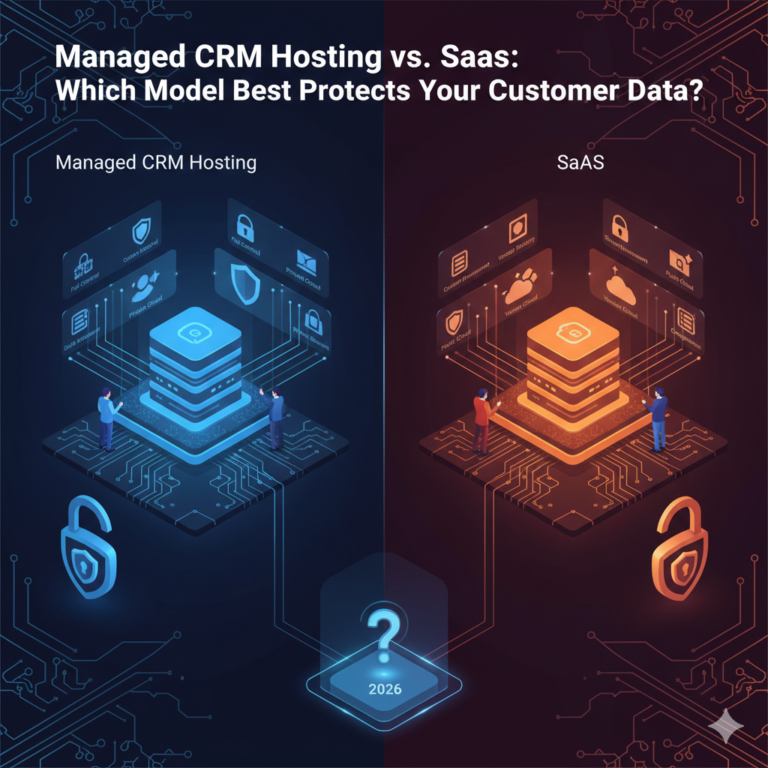
The CRM application and data are hosted and managed entirely by a third-party provider. - Managed CRM Hosting
The CRM is dedicated to one organization but hosted and maintained by a managed service provider. - Self-Hosted CRM
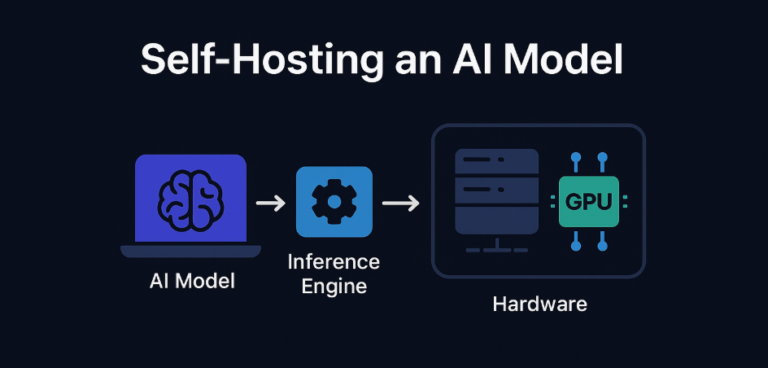
The organization deploys and controls the CRM software on its own infrastructure (on-premises, private cloud, or sovereign data center).
A Brief History of CRM Hosting
- 1990s–early 2000s: On-premises CRM dominated (Siebel, early SAP CRM).
- 2008–2020: SaaS CRM exploded, driven by subscription economics and cloud maturity.
- 2021–2024: Hybrid and managed CRM models gained traction.
- 2025–2026: Self-hosting resurges for compliance-driven and privacy-first organizations.
Key Global Trends Influencing CRM Hosting
- Expansion of data protection regulations
- Increased customer sensitivity to data misuse
- AI-powered CRM increasing data volume and sensitivity
- Geopolitical concerns around data residency
Why Privacy Matters More Than Ever


The Regulatory Landscape in 2026
By 2026, privacy compliance is not optional—it is foundational.
Key regulations shaping CRM hosting decisions include:
- General Data Protection Regulation (GDPR)
- California Consumer Privacy Act (CCPA)
- UK Data Protection Act
- Federal Data Protection Act (BDSG)
These frameworks impose strict requirements on:
- Data residency and cross-border transfers
- Consent management and data minimization
- Breach disclosure timelines
- Vendor accountability
Security Breaches and Erosion of Trust
Over the past few years, several high-profile CRM and marketing platform breaches have exposed millions of customer records. Even when SaaS providers are legally compliant, brand trust damage falls on the data controller—the business—not the vendor.
For privacy-focused brands, this has led to a critical realization:
You can outsource infrastructure, but you cannot outsource responsibility.
Industry Consequences of Poor CRM Data Governance
- Regulatory fines reaching tens of millions of euros
- Class-action lawsuits in the US and UK
- Loss of enterprise customers due to compliance failures
- Reputational harm that directly impacts revenue
Types of CRM Hosting in 2026
Cloud / SaaS CRM Hosting
Examples: Salesforce, HubSpot, Zoho CRM
Pros
- Fast deployment
- Minimal infrastructure management
- Built-in scalability
Cons
- Limited data residency control
- Vendor lock-in
- Shared responsibility model for security
Cloud CRM remains popular, but scrutiny is increasing—particularly in Germany and the UK, where data sovereignty expectations are high.
Managed CRM Hosting
Managed CRM hosting sits between SaaS and self-hosting. Providers host a dedicated CRM environment for one customer, often in a specific geographic region.
Benefits
- Better compliance control than SaaS
- Reduced operational burden
- Custom security configurations
Limitations
- Higher cost than SaaS
- Less flexibility than full self-hosting
Self-Hosted CRM (Core Focus)
Self-hosted CRM means the organization controls:
- Infrastructure
- Data location
- Security policies
- Update cadence
Popular self-hosted CRM platforms include open-source and commercial solutions that can run on private infrastructure.
Key Advantages
- Full data ownership
- Precise compliance alignment
- Deep customization
Key Challenges
- Requires internal or partner expertise
- Higher upfront setup effort
Why Self-Hosting is Making a Comeback
1. Growing Privacy Concerns
Consumers are more privacy-aware than ever. Brands that can truthfully state “your data never leaves our controlled infrastructure” gain a measurable trust advantage.
2. Regulatory Compliance Pressure
Self-hosting simplifies compliance with GDPR, UK data laws, and German regulations by eliminating ambiguous cross-border data flows.
3. Enterprise Control and Customization
Self-hosting allows organizations to:
- Define custom encryption standards
- Integrate internal IAM systems
- Align CRM workflows with proprietary processes
4. Long-Term Cost Considerations
While SaaS CRM appears cheaper initially, CRM TCO often favors self-hosting beyond 3–5 years for mid-to-large deployments.
5. Technical Advancements
Modern tooling has reduced the historical pain points of self-hosting:
- Containerization (Docker, Kubernetes)
- Infrastructure-as-Code
- Managed security layers
- Automated updates and backups
Self-Hosted CRM vs Cloud SaaS CRM: Head-to-Head
Data Ownership & Privacy
| Aspect | Cloud CRM | Self-Hosted CRM |
|---|---|---|
| Data control | Limited | Full |
| Residency | Provider-defined | Organization-defined |
| Vendor access | Possible | None |
Security & Compliance
Self-hosted CRM enables:
- Zero-trust architectures
- Custom encryption key management
- Isolated environments
Cloud CRM relies on shared security responsibility models.
Performance & Reliability
Self-hosting allows:
- Dedicated resources
- Predictable performance
- Local latency optimization
Cloud CRM depends on multi-tenant infrastructure.
Cost & Total Cost of Ownership (TCO)
| Cost Factor | Cloud CRM | Self-Hosted CRM |
|---|---|---|
| Entry cost | Low | Medium |
| Scaling cost | High | Moderate |
| Long-term TCO | Variable | Predictable |
Integration & Ecosystem
Cloud CRMs offer marketplaces; self-hosted CRMs offer API-level freedom without vendor constraints.
Scalability & Global Reach
Self-hosting combined with regional data centers enables compliance-friendly global deployment—especially relevant for US-EU operations.
Support & Community
- SaaS: vendor-led support
- Self-hosted: community + partners + internal teams
Case Studies & Real-World Examples
United States: B2B SaaS Provider
A US-based SaaS firm handling regulated customer data migrated from cloud CRM to a self-hosted deployment to meet enterprise procurement requirements.
“Self-hosting gave us compliance credibility with Fortune 500 buyers.”
— CTO, US SaaS Company
United Kingdom: Financial Services Firm
A UK fintech adopted self-hosted CRM to ensure full alignment with UK data protection laws post-Brexit.
Germany: Manufacturing Enterprise
German industrial companies increasingly self-host CRM to align with strict data residency expectations and works council requirements.
How to Choose CRM Hosting in 2026
Step-by-Step Decision Framework
- Classify CRM data sensitivity
- Identify regulatory exposure
- Model 3–5 year TCO
- Assess internal technical capability
- Define scalability needs
- Evaluate breach impact scenarios
Key Questions to Ask
- Where will customer data physically reside?
- Who controls encryption keys?
- How easily can we exit the platform?
Privacy-Focused CRM Checklist
✔ Data residency clarity
✔ Encryption control
✔ Audit logging
✔ Custom retention policies
Pros & Cons Table
| Model | Pros | Cons |
|---|---|---|
| Cloud CRM | Speed, ease | Privacy risk, lock-in |
| Self-Hosted CRM | Control, compliance | Operational responsibility |
Future Trends in CRM Hosting
Edge Computing
CRM workloads moving closer to users for latency and sovereignty.
AI Integration
AI-driven CRM automation increases data sensitivity, favoring controlled environments.
Zero-Trust & Decentralization
CRM infrastructure adopting decentralized security principles.
FAQs
Q1. What is CRM hosting?
CRM hosting refers to the infrastructure model used to deploy and manage CRM systems.
Q2. Is self-hosted CRM legal under GDPR?
Yes—often easier to comply when properly managed.
Q3. Is cloud CRM less secure?
Not inherently, but risk exposure differs.
Q4. Which is cheaper long-term?
Self-hosted CRM often wins on long-term TCO.
Q5. Can self-hosted CRM scale globally?
Yes, with regional deployments.
Q6. Do small businesses need self-hosting?
Usually no, unless compliance demands it.
Q7. What about updates and maintenance?
Modern automation simplifies this.
Q8. Is self-hosting future-proof?
When built on modern infrastructure, yes.
Conclusion
In 2026, CRM hosting is no longer just a technical choice—it is a trust decision.
For privacy-conscious brands in the US, UK, and Germany, self-hosted CRM offers unmatched control, compliance confidence, and long-term strategic value. While cloud CRM remains appropriate for many organizations, the resurgence of self-hosting reflects a deeper shift toward data sovereignty, accountability, and customer trust.