
Why VPS Security Isolation Matters and How “Private” Resources Work
When you launch a website or a business application, where that data lives is just as important as the code itself. For many growing businesses, Shared Hosting feels too risky, yet Dedicated Servers remain too expensive. This is where Virtual Private Servers (VPS) step in.
But the real value of a VPS isn’t just about faster loading speeds or more storage space. It is about isolation.
In the digital landscape, your neighbors matter. If a website sitting on the same server as yours gets attacked, does your site go down with it? In a shared environment, the answer is often yes. In a VPS environment, the answer should be no. Security isolation creates a protective barrier around your resources, ensuring that your data, processing power, and operating system remain distinct from everyone else on the same physical machine.
Understanding how this isolation works is critical for anyone managing sensitive data, running e-commerce platforms, or simply trying to keep a business online during a cyberattack.
Background and VPS Security Explained
To understand why isolation matters, we first need to define what we mean by “private” in the context of virtualization.
What “private” means in VPS hosting
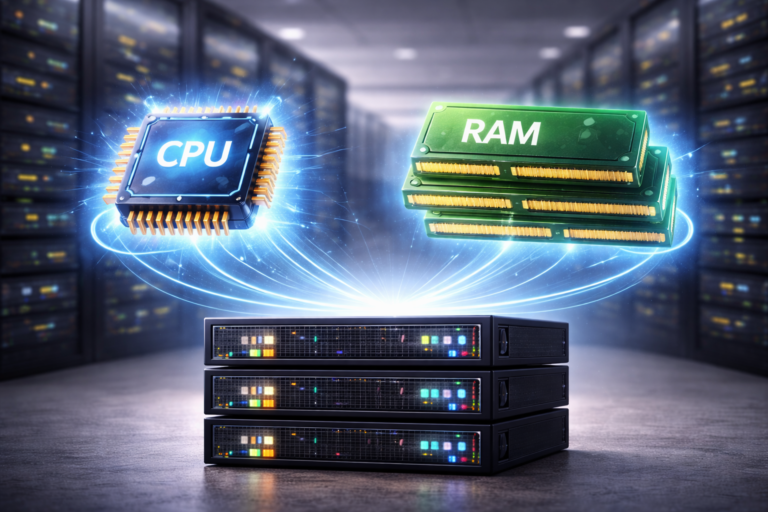
When hosting providers use the word “private,” they are referring to the allocation of resources. In a VPS setup, the physical server is sliced into smaller, virtual compartments. The resources assigned to your compartment—specifically Random Access Memory (RAM), CPU cores, and storage space—are reserved exclusively for you.
This privacy extends beyond just performance. It implies a boundary. Even though other users exist on the same hardware, they operate in completely separate instances. They cannot see your files, they cannot leech your allocated RAM, and they cannot run processes that directly interfere with your operating system.
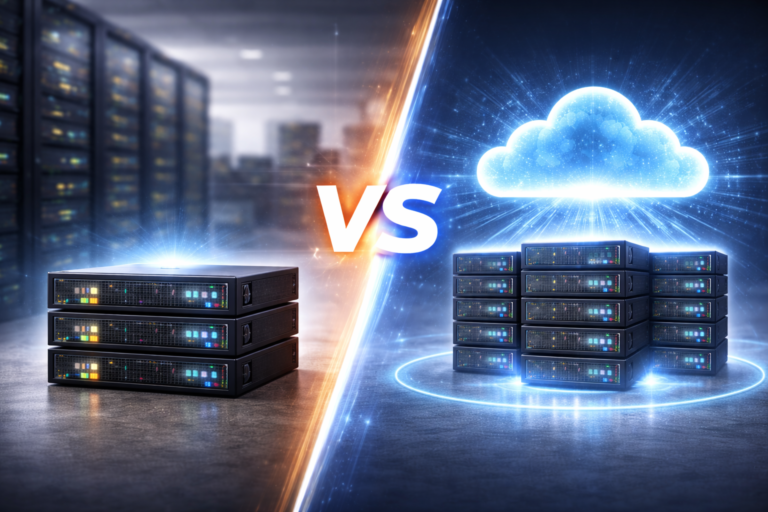
How VPS environments differ from shared hosting setups
Think of shared hosting like a massive dormitory. You have your own room, but you share the kitchen, the bathroom, and the front door. If one resident throws a loud party (a traffic spike), everyone loses sleep. If someone leaves the front door unlocked (a security vulnerability), everyone is at risk.
A VPS is more like an apartment complex. You all share the foundation (the physical server), but you have your own reinforced front door, your own kitchen, and your own bathroom. What happens in Apartment 4B does not impact Apartment 4C. This structural difference is the foundation of VPS security. In shared hosting, hundreds of users might share the same IP address and the same instance of the web server software (like Apache or Nginx). In a VPS, you run your own OS kernel and your own web server software, completely detached from the choices your neighbors make.
How VPS Security Isolation Works
The separation inside a VPS isn’t magic; it is the result of sophisticated software engineering known as virtualization.
Resource isolation at the virtualization layer
At the heart of every VPS is a technology called the Hypervisor. The hypervisor sits between the physical hardware and the virtual machines. Its job is to lie to the operating systems. It tells your VPS, “You have this entire hard drive and this processor to yourself,” even though it is actually managing requests from multiple VPSs at once.
This layer enforces strict limits. If a neighboring VPS tries to use 100% of the physical CPU, the hypervisor acts as a traffic cop, denying those requests to ensure your slice of the CPU remains available. This availability is a security feature in itself, protecting your site from Denial of Service (DoS) conditions caused by resource exhaustion on other accounts.
Separation of file systems, memory, and CPU
The isolation goes deeper than just resource caps.
- File Systems: Each VPS has its own root file system. A user on VPS A has absolutely no way to navigate the file directory of VPS B. There is no shared “public” folder between the two unless explicitly created. To the operating system, no other file systems exist.
- Memory (RAM): Memory isolation is perhaps the most critical security aspect. Data stored in RAM is often unencrypted and sensitive (like passwords or session tokens). The hypervisor ensures that memory addresses assigned to one virtual machine cannot be read or written to by another. This prevents “memory scraping” attacks where a malicious actor tries to read data from the physical RAM of the host server.
- CPU: The processor instructions sent by your VPS are executed separately. Modern CPUs even have hardware-assisted virtualization features (like Intel VT-x or AMD-V) that help the processor physically distinguish between different virtual machines, adding a hardware-level layer of security.
Role of the hypervisor in enforcing isolation
The hypervisor is the enforcer. There are two main types: Type 1 (bare-metal) and Type 2 (hosted). Most enterprise VPS solutions use Type 1 hypervisors, like KVM (Kernel-based Virtual Machine) or VMware ESXi.
Because the hypervisor runs directly on the hardware, it controls the “world” that the guest operating system sees. If a hacker manages to compromise a VPS, they are trapped inside that virtual world. Breaking out of the VPS to attack the hypervisor itself (known as a “VM escape”) is extremely difficult. This containment is the primary reason why security experts prefer VPS over shared hosting.
Key Security Advantages of VPS Isolation
The technical architecture of isolation translates into tangible security benefits for business owners and administrators.
Reduced exposure to neighboring workloads
The “Bad Neighbor Effect” is a major liability in shared hosting. If a neighbor runs an outdated WordPress plugin that gets infected with malware, that malware can sometimes scan the shared directory for other vulnerable sites. Even if the malware doesn’t spread, the neighbor might get blacklisted by email providers for sending spam. Because shared hosting often shares IP addresses, your legitimate business emails might end up in the spam folder because of someone else’s actions.
VPS isolation solves this. You have your own dedicated IP address. Your file system is unreachable from the outside. A compromised neighbor has no bridge to cross into your territory.
Greater control over firewall and access policies
In a shared environment, the hosting provider dictates the security rules. They might block certain ports that you need, or leave ports open that you want closed. You generally cannot configure the system-wide firewall.
With a VPS, you have root (administrative) access. This allows you to implement “Defense in Depth.” You can configure your own firewall (like iptables or UFW) to block all traffic except for the specific ports you use. You can set up Fail2Ban to automatically block IP addresses that try to guess your password. This granular control allows you to tailor your security posture to your specific application, rather than relying on a generic “one size fits all” policy.
Improved containment of security incidents
Security is not just about prevention; it is about resilience. No system is perfectly unhackable. However, isolation minimizes the blast radius of a breach.
If you run multiple websites, you can host them on separate Virtual Private Servers rather than piling them all onto one machine. If one site gets breached, the attackers are contained within that specific VPS. They cannot easily pivot to attack your other assets. This compartmentalization strategy is a standard best practice in cybersecurity, effectively quarantining potential threats before they can spread to your entire infrastructure.
Why VPS Security Isolation Matters for India and Emerging Markets
The rapid digitization of economies in emerging markets, particularly India, has created a unique hosting landscape where the balance between cost and security is critical.
Growth of online businesses handling sensitive data in India
India is witnessing a massive surge in digital-first businesses, from fintech startups to localized e-commerce platforms. These businesses are handling sensitive customer data, including UPI payment information, Aadhaar numbers, and personal addresses.
As these businesses grow, they become targets. Cyberattacks targeting Indian enterprises have risen sharply. In this environment, relying on shared hosting is a liability. However, jumping straight to expensive dedicated hardware is often financially unviable for a startup. VPS isolation provides the necessary security framework to protect consumer data without the massive overhead of physical infrastructure.
Importance of affordable but isolated infrastructure
The Indian market is highly price-sensitive. The VPS model fits this perfectly by offering “enterprise-grade” logic at a fraction of the price. It allows small to medium-sized enterprises (SMEs) to comply with data residency and privacy expectations.
Furthermore, with the introduction of stricter data protection laws (such as the DPDP Act in India), businesses are legally obligated to implement reasonable security safeguards. Using a hosting solution that isolates data from other tenants is a fundamental step toward demonstrating compliance and “due diligence” in data protection.
Current Trends in VPS Security
As threats evolve, so do the technologies protecting virtual environments.
Increased focus on isolation for compliance needs
Regulatory compliance is no longer just for banks. General Data Protection Regulation (GDPR) in Europe, CCPA in California, and similar laws globally require businesses to ensure the integrity and confidentiality of data.
Hosting providers are responding by offering “compliant-ready” VPS setups. These often include enhanced isolation features, such as encrypted storage by default and stricter hypervisor configurations that prevent data leakage. We are seeing a shift where isolation is marketed not just as a performance feature, but as a legal necessity.
Integration of VPS environments with security monitoring tools
Modern VPS platforms are becoming more intelligent. Rather than just giving you a server and leaving you to defend it, providers are integrating security monitoring at the hypervisor level.
This includes tools that monitor network traffic flow into the VPS to detect DDoS attacks before they even reach your application. It also involves “agentless” antivirus scanning, where the host machine can scan for malware patterns in the memory or storage of the VPS without needing software installed inside the VPS itself. This provides a layer of security that the user doesn’t even have to configure.
Expert Insights and Data-Backed Analysis
It is important to separate marketing claims from technical reality.
Industry perspectives on isolation-related risks
Cybersecurity experts generally agree that while VPS isolation is robust, it is not absolute. The concept of “side-channel attacks” (like Spectre and Meltdown) revealed that if a hacker understands the physical hardware intimately, they can sometimes infer data from a neighboring process based on how the CPU handles memory.
However, industry analysis suggests that these attacks are highly sophisticated and rare in the wild for general web hosting. For 99% of businesses, the primary risks are weak passwords, unpatched software, and phishing—not hypervisor escapes. The isolation provided by a standard VPS is sufficient to stop the vast majority of automated and targeted attacks.
Common misconceptions about VPS security guarantees
A common myth is that moving to a VPS automatically makes a site secure. This is false. A VPS gives you the tools to be secure, but it also gives you the responsibility.
In shared hosting, the provider patches the OS. In an unmanaged VPS, you must patch the OS. If you leave your VPS with default passwords and open ports, it is actually less secure than a shared account. Isolation protects you from your neighbors, but it does not protect you from yourself or your own lack of maintenance.
What to Watch Next
The technology behind virtualization is constantly improving.
Advances in virtualization security techniques
We are moving toward “Micro-VMs.” Technologies like Firecracker (used by AWS Lambda) allow for creating lightweight virtual machines that boot in milliseconds and have extremely stripped-down attack surfaces. This offers the isolation of a traditional VPS with the speed of a container.
Hosting provider features improving isolation controls
Expect to see hosting dashboards that give users more visibility into their isolation. This might look like “Security Scorecards” that analyze your firewall rules from the outside, or one-click isolation modes that sever network connections during a suspected breach. Providers are actively working to make the complex management of VPS security more accessible to non-experts.
Frequently Asked Questions
Is VPS hosting fully isolated from other users?
Yes, for all practical purposes. Your operating system, file storage, and RAM are logically separated from other users on the server. While you share the physical hardware, the hypervisor prevents other users from accessing your data or resources.
How does VPS security compare to dedicated servers?
Dedicated servers offer the highest level of security because you do not share hardware with anyone. However, a properly configured VPS offers a very high level of security that is sufficient for most businesses, bridging the gap between shared and dedicated options.
Can poor configuration weaken VPS isolation?
No, poor configuration generally doesn’t break the isolation between VPSs (that is the provider’s job), but it can leave your specific VPS wide open to the internet. If you have weak passwords or outdated software, hackers can enter your VPS regardless of how well it is isolated from neighbors.
Does VPS isolation help with regulatory compliance?
Yes. Many data privacy regulations require that data be segregated and protected from unauthorized access. VPS hosting demonstrates a clear separation of data and resources, which is often a requirement for compliance audits.
Conclusion
Security in the digital age is about risk management. No system is impenetrable, but choosing the right infrastructure is the first line of defense. VPS hosting offers a powerful middle ground, providing the cost efficiency of shared resources with the security and privacy of a dedicated environment.
The isolation provided by virtualization acts as a firewall against the chaos of the broader internet. It ensures that your resources remain yours, your data stays private, and your business remains resilient against the “noisy neighbors” that plague shared hosting environments. As cyber threats become more indiscriminate, upgrading to an isolated environment isn’t just a technical upgrade—it’s a necessary evolution for any serious online business.