Managed CRM Hosting vs. SaaS: Which Model Best Protects Your Customer Data?
In a digital landscape where data breaches make headlines weekly, your Customer Relationship Management (CRM) system is more than just a sales tool—it is a vault. It holds your clients’ most sensitive information, from contact details to financial history.
For business owners, CTOs, and compliance managers, selecting a CRM is no longer just about features or pricing. It is a critical security decision. As regulations like GDPR in Europe and the CCPA in California tighten, the question isn’t just “What can this CRM do?” but “Where does my data live, and who holds the keys?”
The debate centers on two primary deployment models: Managed CRM Hosting and SaaS (Software as a Service). While SaaS offers convenience, managed hosting offers control. But which one truly keeps your customer data safe?
This guide breaks down the architecture, security, and compliance implications of both models to help you make an informed decision for your business.
Why CRM Data Security Matters More Than Ever
Trust is the new currency of the digital economy. A single breach can shatter a reputation built over decades. Yet, as businesses amass more data, the target on their back grows larger.
- Rising Cyber Threats: CRMs are high-value targets for hackers because they centralize data.
- Regulatory Pressure: The cost of non-compliance is skyrocketing. Under GDPR, fines can reach €20 million or 4% of global turnover.
- Customer Expectations: Modern consumers demand transparency. They want to know exactly how their data is stored and processed.
Whether you operate in the US, UK, or Germany, understanding the nuances of CRM data protection is essential for risk mitigation and maintaining customer trust.
What Is Managed CRM Hosting?
Managed CRM hosting sits in the sweet spot between running a server in your own closet (on-premise) and renting a slice of a massive public cloud (SaaS).
Definition and Architecture
In a managed hosting environment, your CRM software resides on a dedicated server or a private cloud environment that is specifically configured for your business. While a third-party provider manages the hardware, updates, and server maintenance, the environment itself is isolated.
Think of it as renting a single-family home. The landlord fixes the roof, but you have the only key to the front door, and you decide who comes in and out.
How Managed Hosting Differs from SaaS
The core difference lies in tenancy. Managed hosting is typically single-tenant. Your data does not share database space or computing resources with other companies. This isolation eliminates “noisy neighbor” issues and significantly reduces the risk of cross-contamination or accidental data leakage between accounts.
Examples of Managed CRM Environments
- Private Cloud Hosting: Hosting an open-source CRM (like SuiteCRM or Odoo) on a dedicated AWS or Azure instance managed by a specialized vendor.
- Dedicated Servers: Using a bare-metal server in a data center solely for your CRM application.
This model is often favored by organizations prioritizing private CRM hosting to meet strict internal security policies.
What Is SaaS CRM?
SaaS is the dominant model in the modern software market, popularized by giants like Salesforce and HubSpot.
Overview of Cloud-Based CRM Platforms
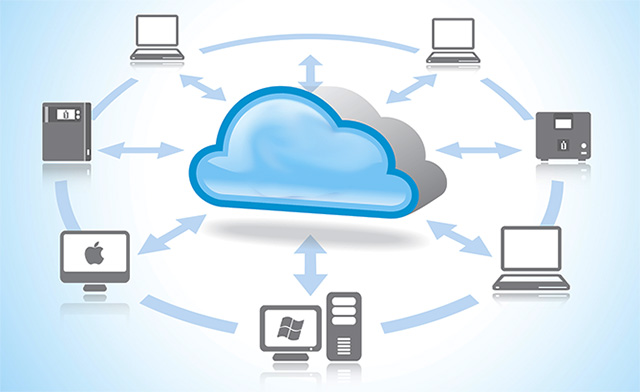
SaaS (Software as a Service) delivers the CRM application over the internet. You pay a subscription fee, and the vendor handles everything: infrastructure, application code, security patches, and feature updates. It is the ultimate convenience model—sign up, log in, and start selling.
The Shared Infrastructure Model
SaaS typically operates on a multi-tenant architecture. Think of this like an apartment complex. You have your own private unit (your account), but you share the foundation, plumbing, and security guard with hundreds of other tenants.
While cloud CRM software separates data logically (using software code), the data physically resides on the same servers and databases as other customers. For most businesses, this is secure enough. For highly regulated industries, it can raise concerns about data sovereignty and “vendor lock-in.”
How Customer Data Is Stored & Managed
When evaluating CRM data ownership, you must look beyond the login screen to the physical location of the data.
Data Ownership Comparison
- SaaS: You own the data “legally,” but the vendor possesses it “physically.” If you stop paying or if the vendor changes their terms, retrieving your data can be difficult. You are renting access to your data.
- Managed Hosting: You typically have root access to the database. You can export a full SQL dump at any time. You own both the legal rights and the physical accessibility of the data.
Data Residency and Sovereignty
Data residency refers to the physical or geographic location of an organization’s data.
- SaaS Challenges: A SaaS vendor might replicate your data across servers in the US, Ireland, and Singapore for speed and redundancy. If you are a German company required to keep data within Germany, this can be a compliance nightmare.
- Managed Hosting Advantages: You choose the data center. If you need your CRM to be hosted in Frankfurt to satisfy GDPR CRM compliance, a managed host can spin up a server in that specific location. This control is crucial for data sovereignty.
Security Comparison: Managed CRM Hosting vs. SaaS
Both models can be secure, but they approach security differently.
Encryption, Access Control, and Backups
- Encryption: Both models usually offer encryption in transit (SSL/TLS) and at rest. However, in SaaS, the vendor holds the encryption keys. In managed hosting, you can often manage your own keys.
- Access Control: SaaS platforms have rigid role-based access control (RBAC). Managed hosting allows for network-level access control, such as whitelisting specific IP addresses so the CRM is only accessible from your office VPN.
- Backups: SaaS backups are automated but often generic. Managed hosting allows you to define custom backup schedules and retention policies (e.g., hourly backups retained for 7 years).
Vulnerability Management
SaaS CRM security relies on the vendor’s schedule. If a vulnerability is found, they patch it globally. This is generally good, but if a patch breaks a feature you rely on, you have no choice.
In secure CRM hosting, you control the patching schedule. You can test security updates in a staging environment before applying them to production, ensuring stability alongside security.
Breach Responsibility
In a SaaS model, if the vendor is breached, your data is at risk, and you are dependent on their incident response. In managed hosting, while the provider secures the server, you have more visibility into server logs to detect suspicious activity early.
Privacy & Compliance Considerations
For businesses in the EU, UK, or operating under strict US frameworks (like HIPAA or CCPA), privacy is the deciding factor.
GDPR (EU & Germany) and UK GDPR
The General Data Protection Regulation (GDPR) imposes strict rules on data processors.
- SaaS: Many US-based SaaS providers rely on the Data Privacy Framework (formerly Privacy Shield) to transfer data. However, privacy activists frequently challenge these frameworks. Using a US-based SaaS can be legally complex for strict EU entities.
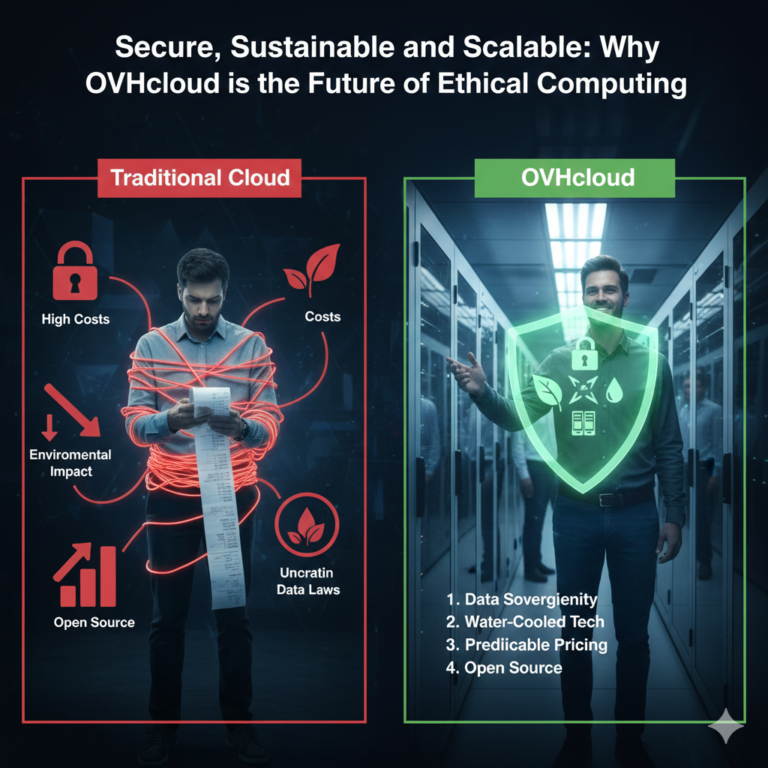
- Managed Hosting: This is often the preferred route for a privacy-first CRM. By hosting in a local data center (e.g., Hetzner in Germany or OVH in France) and using open-source software, you eliminate cross-border data transfer issues entirely.
Auditability and Compliance Readiness
When an auditor knocks on your door, they want proof.
- SaaS: You can provide the vendor’s SOC 2 Type II report. You cannot show the auditor the server logs because you don’t have them.
- Managed Hosting: You can provide full access logs, database query logs, and server configurations. This level of transparency is often required for high-level compliance certifications in finance and healthcare.
Cost, Control & Customization
Security usually comes at a premium, but the cost structures of these two models differ significantly over time.
Total Cost of Ownership (TCO)
- SaaS: Low initial cost. You pay per user/month. However, costs scale linearly. As you add employees, the price jumps.
- Managed Hosting: Higher initial setup (provisioning servers). However, the monthly cost is often for the server, not the user. If you have 100 users, managed hosting is frequently cheaper than 100 SaaS licenses.
Vendor Lock-in Risks
CRM vendor lock-in is a major risk with SaaS. Proprietary platforms make it hard to leave. They may export your data in messy CSV files that are hard to import elsewhere.
Managed hosting often utilizes open-source CRM software. Because the code is open, you can migrate your database to a different host or even an on-premise server without losing data fidelity.
Custom Security Policies
Do you need to enforce Two-Factor Authentication (2FA) via a hardware key? Do you need to block all traffic from outside your country? SaaS platforms might offer these features on their most expensive “Enterprise” tier. Managed hosting allows you to configure these CRM customizations at the server level, regardless of your plan size.
Which CRM Model Is Better for Different Businesses?
There is no one-size-fits-all answer. Your choice depends on your resources and regulatory environment.
SMEs vs. Enterprises
- SMEs (Small to Medium Enterprises): Usually prefer SaaS. The convenience of not managing infrastructure outweighs the theoretical security risks.
- Enterprises: Often prefer Managed Hosting or Private Cloud. They have the budget for custom configurations and the need for granular data control.
Regulated Industries (Finance, Healthcare, SaaS)
- Best CRM hosting for enterprises in regulated sectors is almost exclusively Managed Hosting or Private Cloud. The ability to audit infrastructure and guarantee data residency is non-negotiable for banks, insurers, and healthcare providers.
Pros & Cons Comparison Table
| Feature | Managed CRM Hosting | SaaS CRM |
|---|---|---|
| Data Ownership | High (You own the DB and files) | Low (Vendor controls access) |
| Data Residency | You choose the specific data center location | Vendor chooses (usually regional) |
| Security Control | Granular (Firewalls, VPNs, Custom Encryption) | Vendor-defined (Standardized) |
| Scalability | Vertical (Upgrade server specs) | Horizontal (Add user licenses) |
| Maintenance | Provider manages hardware; you manage app logic | Vendor manages everything |
| Cost Structure | Server-based (Good for many users) | User-based (Pricey at scale) |
| Customization | Unlimited (Code-level access) | Limited (API and Plugins only) |
| GDPR Compliance | Easier to guarantee strict sovereignty | Depends on vendor’s data transfers |
Future Trends in CRM Data Protection
As we look toward CRM trends 2026, security architecture is evolving.
Zero-Trust CRM Architecture
The “trust but verify” model is dead. Zero-trust architecture assumes a breach has already happened. Future CRM hosting will rely heavily on continuous authentication, where every request—even from inside the network—is verified. Managed hosting environments are easier to adapt to zero-trust principles because you control the network perimeter.
AI, Automation, and Data Privacy
With the rise of AI CRM security, businesses are using AI to detect anomalies in user behavior (e.g., a sales rep downloading the entire customer list at 2 AM). However, AI needs data to learn. SaaS providers are increasingly using customer data to train their AI models. Managed hosting ensures your data is only used for your business, not to train a vendor’s algorithm.
FAQs
Is managed CRM hosting more secure than SaaS?
Managed CRM hosting is not inherently “more” secure, but it offers more control. It allows you to implement specific security protocols (like VPN restrictions) that SaaS cannot offer. For companies with strict compliance needs, this makes it the safer choice.
Who owns customer data in SaaS CRM?
Legally, you do. However, the vendor controls the physical access. If the vendor goes bankrupt or locks your account, retrieving that data can be legally and technically difficult.
Is SaaS CRM GDPR compliant?
Most major SaaS vendors are GDPR compliant, but cross-border data transfers remain a gray area. If a US-based SaaS vendor stores EU citizen data on US servers, it can create legal friction. Hosting data strictly within the EU via managed hosting is a safer bet for compliance.
Which CRM hosting is better for privacy?
Managed hosting is generally better for privacy because it isolates your data. There is no risk of comingling data with other customers, and you can prevent the vendor from using your data for analytics or AI training.
Can SaaS CRM vendors access my data?
Yes. Support staff and engineers at SaaS companies may have access to your instance to resolve technical issues. While they have strict protocols, the technical capability exists. In managed hosting with client-managed encryption keys, the host cannot see your data.
What is the safest CRM hosting model?
Self-hosting (On-Premise) is theoretically the safest if you have a world-class security team. For most businesses, Managed Private Cloud is the safest balance, offering professional infrastructure security with single-tenant isolation.
Does managed CRM cost more than SaaS?
For small teams (1-5 users), SaaS is cheaper. For larger teams (20+ users), managed hosting is often significantly cheaper because you stop paying per-seat licensing fees.
Which CRM is best for EU businesses?
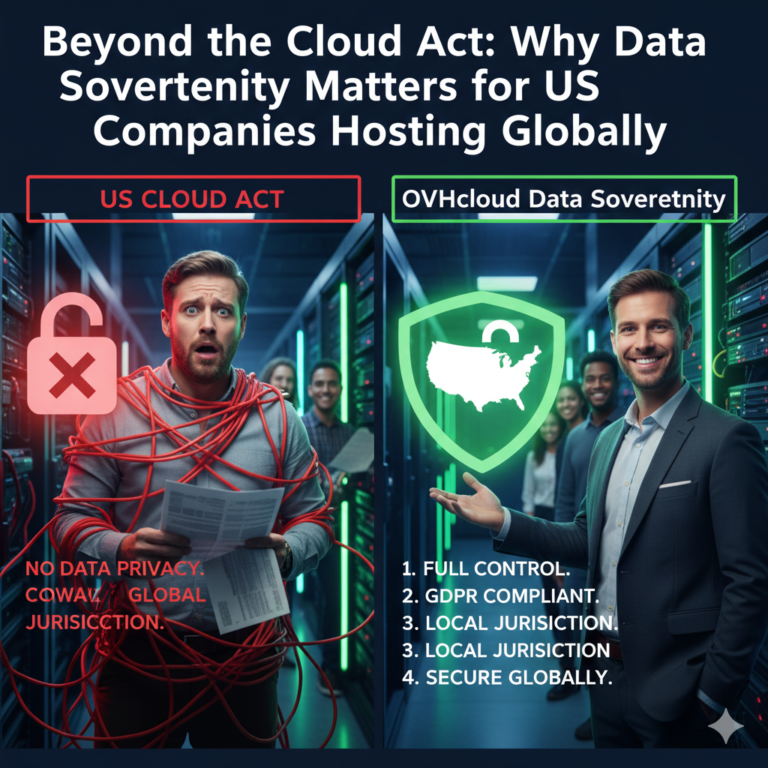
For EU businesses, a self-hosted or managed open-source CRM hosted in an EU data center (Germany, France, Ireland) is the gold standard for navigating GDPR and avoiding US Cloud Act implications.
Conclusion
Choosing between Managed CRM Hosting and SaaS is a choice between convenience and control.
If your priority is rapid deployment, ease of use, and minimal IT involvement, SaaS CRM is the logical choice. It powers the majority of modern businesses for a reason.
However, if your priority is CRM data protection, strict regulatory compliance, and total ownership of your customer assets, Managed CRM Hosting is the superior model. It ensures that your customer data resides where you want it, is accessed only by whom you authorize, and remains truly yours.
For decision-makers in 2024, the “best” model is the one that lets you sleep at night, knowing your customer data is secure.