Advantages and Disadvantages of Shared Hosting
Building a website is an exciting milestone, whether you’re launching a personal blog, a portfolio, or a small business site. But before you can share your content with the world, you have to make a crucial decision: where will your website live?
If you have started researching web hosting, you have likely encountered the term “shared hosting.” It is the most common entry point for new website owners, primarily because of its incredibly low price tag. But is the cheapest option always the best one? Does saving money now mean sacrificing performance or security later?
Choosing the right hosting plan can feel overwhelming, especially with technical jargon thrown around like “bandwidth,” “uptime,” and “server resources.” This guide cuts through the noise. We will break down exactly what shared hosting is, why it is so popular, and the real-world pros and cons you need to know before handing over your credit card details. By the end, you will know if shared hosting is the perfect launchpad for your project or if you need something more robust.
What Is Shared Hosting?
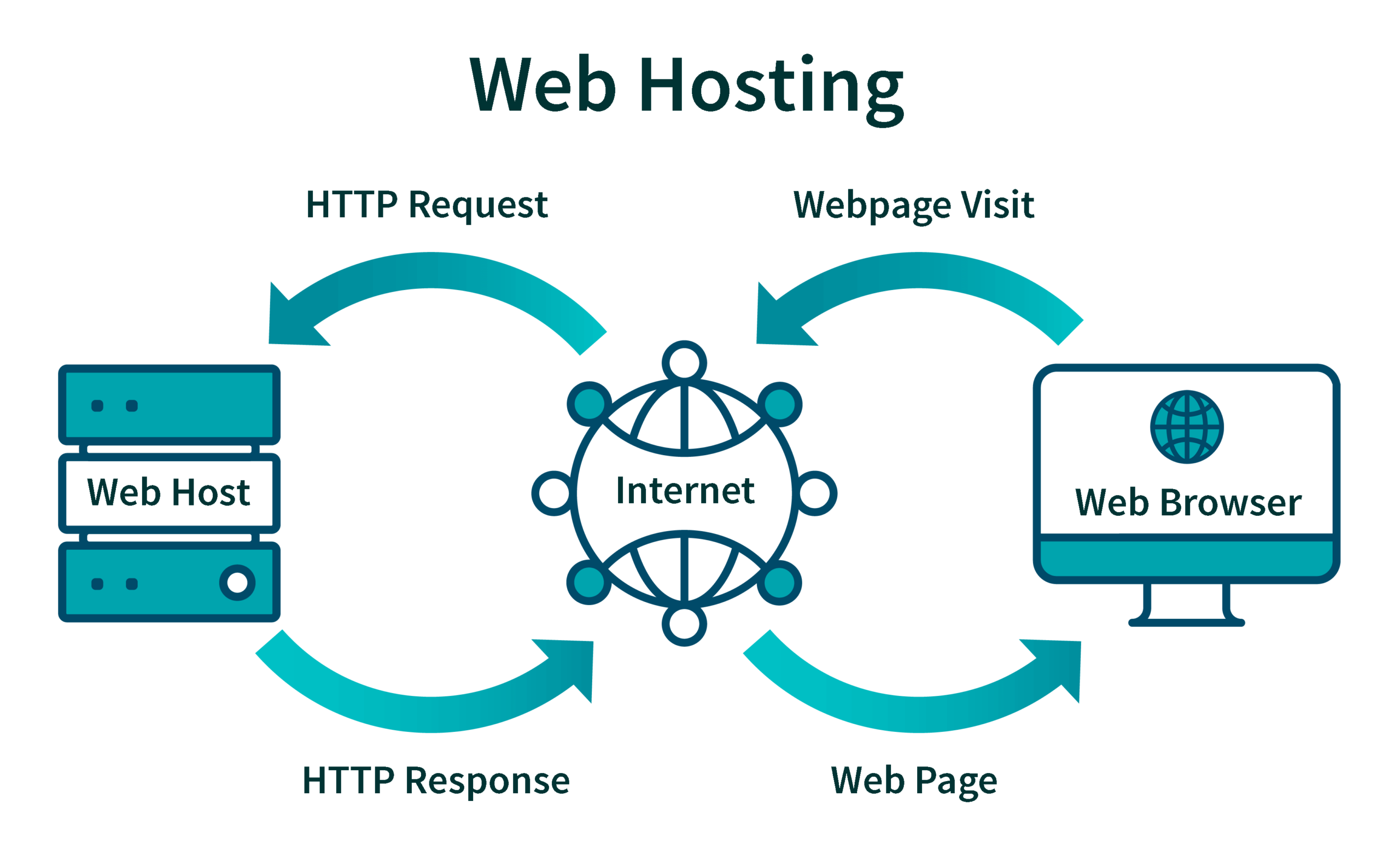
At its core, web hosting is simply renting space on a physical server—a powerful computer that stores your website’s files and makes them accessible to people on the internet.
Shared hosting is exactly what it sounds like: multiple websites living on a single physical server. Think of it like renting an apartment in a large building. You have your own private space (your website), but you share the building’s resources—like water, electricity, and the elevator—with all the other tenants.
In the context of hosting, the “resources” you are sharing include:
- CPU (Central Processing Unit): The brain of the server.
- RAM (Memory): The short-term memory used to process active tasks.
- Disk Space: The storage capacity for your files and databases.
- Bandwidth: The amount of data that can be transferred to and from the server.
Because hundreds, or sometimes thousands, of websites share these same resources, the hosting provider can split the cost of the server maintenance among many users. This is why shared hosting is significantly cheaper than other types of hosting, such as Virtual Private Servers (VPS) or Dedicated Hosting, where you have guaranteed resources all to yourself.
Advantages of Shared Hosting
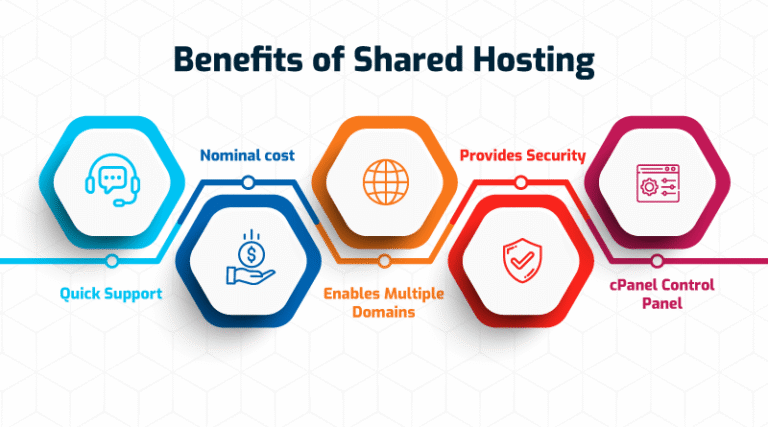
Shared hosting remains the dominant choice for the vast majority of new websites. It isn’t just about the price; the entire ecosystem is designed to be accessible for people who aren’t tech wizards. Here are the primary benefits.
Low Cost
The most significant advantage of shared hosting is affordability. Because the cost of the server is distributed across many users, hosting providers can offer plans for the price of a cup of coffee per month.
For students, hobbyists, and startups operating on a shoestring budget, this low barrier to entry is a game-changer. You don’t need hundreds of dollars to get online; you can often secure a year of hosting for under $50. This allows you to allocate your budget to other critical areas, such as domain registration, premium themes, or marketing.
Easy to Use
Shared hosting is built with beginners in mind. You typically don’t need to know how to code or manage a Linux command line to set up your site.
Most providers include a user-friendly control panel, such as cPanel or Plesk. These interfaces look similar to your computer’s operating system, using icons and simple menus to help you manage your files, email accounts, and databases. If you can navigate a smartphone, you can likely navigate a shared hosting dashboard.
No Technical Maintenance
When you rent a dedicated server, you are often responsible for maintaining the hardware and software. If the server crashes at 3:00 AM, fixing it is your problem.
With shared hosting, the hosting provider handles all the heavy lifting. They are responsible for:
- Keeping the hardware running.
- Updating the operating system.
- Managing network connectivity.
- Implementing basic security firewalls.
This “managed” aspect allows you to focus on building your website and creating content rather than worrying about server updates or hardware failures.
Quick Setup
Time is money, and shared hosting is incredibly fast to deploy. Once you complete your purchase, your account is usually active instantly.
Furthermore, most shared hosting plans come with “one-click installers” for popular platforms like WordPress, Joomla, or Drupal. You simply select the software you want, click a button, and the hosting platform installs the content management system for you. You can go from zero to a live website in less than ten minutes.
Good for Small Websites
If you are building a personal blog, a resume site, or a brochure site for a local bakery, you likely don’t need the immense power of a dedicated server. Shared hosting provides adequate resources for sites that receive low to moderate traffic (typically up to 10,000–20,000 visitors a month, depending on the plan).
For these types of “static” or low-resource sites, the performance difference between shared hosting and premium hosting is often negligible to the average visitor.
Disadvantages of Shared Hosting
While the price is right, shared hosting comes with trade-offs. The “apartment building” analogy applies here too—sometimes the neighbors are noisy, and sometimes the elevator is full.
Limited Performance
The biggest drawback of shared hosting is resource contention. Since you are sharing CPU and RAM with other websites, your site’s performance can fluctuate.
If a “neighbor” on your server suddenly goes viral and receives a massive spike in traffic, they might hog the server’s resources, causing your website to slow down or even become temporarily unavailable. This is often referred to as the “bad neighbor effect.” While modern hosting companies have gotten better at isolating accounts to prevent this, it remains a fundamental risk of the shared architecture.
Less Control
Shared hosting is a rigid environment. To maintain security and stability for hundreds of users on one machine, providers lock down the server settings.
- Limited Customization: You generally cannot change the operating system or install complex, custom software that requires root access.
- File Limits: Many providers place a cap on the number of files (inodes) you can store, even if they advertise “unlimited” storage.
- Resource Caps: If your site starts using too much CPU power, the host may temporarily suspend your account to protect other users.
Security Risks
While hosting providers implement security measures, the shared nature of the server introduces specific vulnerabilities. If a hacker gains access to the main server through a vulnerability in another user’s website, there is a theoretical risk that they could affect other sites on that same server.
Additionally, if a website on your shared IP address engages in spamming or malicious activity, that IP address could get blacklisted. This might cause your legitimate emails to land in your customers’ spam folders, simply because you share an address with a “bad actor.”
Limited Scalability
Shared hosting has a ceiling. Eventually, a successful website will outgrow it.
If your blog takes off or your online store starts processing hundreds of orders a day, shared hosting will not be able to keep up. You will experience slow load times, database errors, and potentially site crashes during peak hours. At this stage, you are forced to migrate to a VPS or dedicated server, which can be a technical hurdle if you aren’t prepared for it.
Advantages vs Disadvantages: A Quick Comparison
Here is a snapshot of how the pros and cons stack up against each other.
| Feature | Shared Hosting Score | Notes |
|---|---|---|
| Cost | Excellent | The cheapest option available, ideal for low budgets. |
| Ease of Use | Excellent | Designed for non-technical users with intuitive dashboards. |
| Performance | Fair | Speed can fluctuate based on server load and traffic spikes. |
| Security | Good | Basic security is handled, but shared environments carry inherent risks. |
| Scalability | Poor | Great for starting out, but hard to stick with as you grow big. |
| Control | Limited | No root access; restricted software options. |
Who Should Use Shared Hosting?
Despite the disadvantages, shared hosting is still the correct choice for roughly 90% of new websites. You should choose shared hosting if:
- You are a first-time website owner: If you are learning the ropes of WordPress or web design, shared hosting is a low-risk sandbox.
- You have a tight budget: If you can’t justify spending $30+ a month on premium hosting, shared hosting gets you in the game for $3–$10.
- You run a personal blog or portfolio: These sites rarely require high-performance resources.
- You are a small local business: A restaurant displaying a menu or a plumber listing services usually has consistent, manageable traffic that shared hosting can handle easily.
Who Should Avoid Shared Hosting?
Shared hosting is not for everyone. You should skip it and look at VPS or Managed WordPress hosting if:
- You run a high-traffic site: If you expect tens of thousands of visitors immediately, shared hosting will crash.
- You are launching a serious eCommerce store: Speed equals revenue. A slow checkout page on a shared server will lose you sales.
- You need custom software: If your project requires specific server-side languages or custom configurations, you need root access found in VPS hosting.
- You handle sensitive data: While shared hosting supports SSL certificates, businesses handling HIPPA-compliant data or large-scale customer information often require the isolated security of a dedicated environment.
Is Shared Hosting Worth It Today?
In the current landscape of web technology, shared hosting remains relevant and valuable. It democratizes the internet by allowing anyone with a few dollars to publish content.
However, the hosting market has evolved. “Managed WordPress Hosting” has become a popular hybrid. It is often technically shared hosting but optimized specifically for WordPress with better caching and security, costing only slightly more.
Ultimately, shared hosting is worth it if you view it as a stepping stone. It is the perfect place to start, validate your idea, and build your initial audience. It is not a “forever home” for a high-growth business, but it is the best foundation for a new one.
Start small. Prove your concept. When your site generates enough traffic to crash a shared server, that is a good problem to have—and that is the right time to upgrade.
Frequently Asked Questions
Is shared hosting safe?
Generally, yes. Reputable hosting companies use firewalls, malware scanning, and server monitoring to keep sites safe. However, because you share the server, you are slightly more vulnerable than on a dedicated server. You must still do your part by using strong passwords and keeping your website software (like WordPress plugins) updated.
Can I upgrade from shared hosting later?
Absolutely. Most hosting providers make it very easy to upgrade from a shared plan to a VPS or dedicated server. They often handle the migration for you to ensure your site doesn’t go offline during the switch.
How much traffic can shared hosting handle?
This varies by provider, but a typical shared hosting plan can handle anywhere from 10,000 to 50,000 monthly visits. However, concurrent traffic matters more. If 500 people try to visit your site at the exact same second, shared hosting will likely struggle.
Is shared hosting good for SEO?
Shared hosting itself won’t hurt your SEO, provided the site loads reasonably fast and stays online (good uptime). However, if your shared host is overcrowded and your site becomes incredibly slow, Google may penalize your rankings because page speed is a ranking factor.
Final Thoughts
Choosing web hosting is a balance between your current needs and your future goals. Shared hosting offers an unbeatable entry point: it is affordable, user-friendly, and requires zero technical maintenance. For bloggers, portfolios, and small business brochures, it is often the smartest financial decision.
However, you must accept the limitations. You are trading performance power and granular control for cost savings and simplicity. If you understand that trade-off, you won’t be disappointed.
My advice? Don’t overthink it. If you are just starting, grab a shared hosting plan. Focus your energy on building a great website. If you grow fast enough to need a server upgrade later, the revenue from your successful site will likely cover the cost.