Why 2026 Is the Year of the Sovereign Cloud: How OVH Delivers Performance and Privacy
We are standing at a critical juncture in the digital age. For over a decade, the “cloud-first” mentality meant moving everything to the massive hyperscalers. Speed and scalability were the only metrics that mattered. But as we approach 2026, the conversation has shifted. It is no longer just about how fast you can scale, but where your data lives, who controls it, and who can access it.
Rising geopolitical tensions, stringent new privacy regulations like the AI Act, and an erosion of trust in global data transfers have pushed data sovereignty from a niche legal concern to a boardroom priority. Organizations are waking up to the reality that relying solely on US-based hyperscalers introduces risks—legal, operational, and financial—that are becoming impossible to ignore.
This shift is accelerating sovereign cloud adoption. By 2026, experts predict that a significant portion of sensitive enterprise data will migrate away from general-purpose public clouds toward infrastructure that guarantees jurisdictional control. This article explores why the sovereign cloud is becoming the new standard for performance and privacy, and how providers like OVH are leading the charge in delivering infrastructure that is secure, compliant, and built for the future.
What Is a Sovereign Cloud?
Before diving into the trends, we must clarify what “sovereign cloud explained” actually means, as the term is often misused in marketing.
A sovereign cloud is a cloud computing architecture designed to ensure that all data, including metadata, stays resident within a specific jurisdiction and is subject only to the laws of that country or region. Unlike a standard public cloud region—which might physically sit in Germany but be legally compelled to hand over data to US authorities under the CLOUD Act—a true sovereign cloud offers immunity from extraterritorial laws.
The core difference lies in control. In a traditional public cloud, you rent space on someone else’s computer, often trading control for convenience. In a sovereign cloud, you retain strictly defined ownership. This covers data residency (where the data is stored), operational sovereignty (who operates the infrastructure), and technological sovereignty (independence from proprietary, lock-in software).
Why 2026 Is the Turning Point for Sovereign Cloud Adoption
Several converging forces are making 2026 the tipping point for sovereign cloud trends. The era of the “wild west” internet is over; the era of the regulated, bordered internet has begun.
First, the regulatory landscape is tightening. The EU’s digital strategy, including the Data Act and the AI Act, places immense responsibility on data handlers. Companies can no longer claim ignorance regarding where their customer data is processed.
Second, the explosion of Generative AI has created a massive data governance challenge. Enterprises are rushing to train models, but they are terrified of leaking intellectual property or sensitive customer PII (Personally Identifiable Information) into public models hosted on servers they don’t control. Data sovereignty cloud solutions offer a “clean room” environment where AI can be deployed safely.
Finally, cybersecurity risks are evolving. Nation-state attacks and supply chain vulnerabilities have demonstrated the fragility of globalized infrastructure. Sovereignty offers a way to shrink the attack surface by keeping critical digital assets within a trusted legal and physical boundary.
Data Privacy and Compliance Driving Cloud Decisions
The driving force behind the migration to sovereign infrastructure is compliance. For years, the General Data Protection Regulation (GDPR) was the benchmark. Now, it is the floor, not the ceiling.
GDPR compliant cloud hosting is non-negotiable for any business operating in Europe. However, legal frameworks like the dismantling of the Privacy Shield have made it legally risky to store European data with US providers, even if those providers have EU data centers. This legal uncertainty creates a liability that risk-averse enterprises are no longer willing to accept.
Beyond Europe, data localization laws are springing up globally, from India to Brazil. Industries like healthcare, finance, and the public sector face even stricter rules. They require a data privacy cloud provider that can prove—via audit and architecture—that no unauthorized foreign entity can access their datasets. Sovereign clouds provide this assurance by design, rather than as a contractual afterthought.
Performance Challenges with Traditional Public Cloud Providers
While privacy grabs the headlines, performance and cost are often the quiet killers of cloud strategies. The hyperscale promise of “infinite scale” often masks significant issues.
Public cloud performance issues frequently stem from the “noisy neighbor” effect in multi-tenant environments, where other users’ workloads impact your application’s speed. Furthermore, latency becomes a hurdle when data has to traverse global networks rather than staying local.
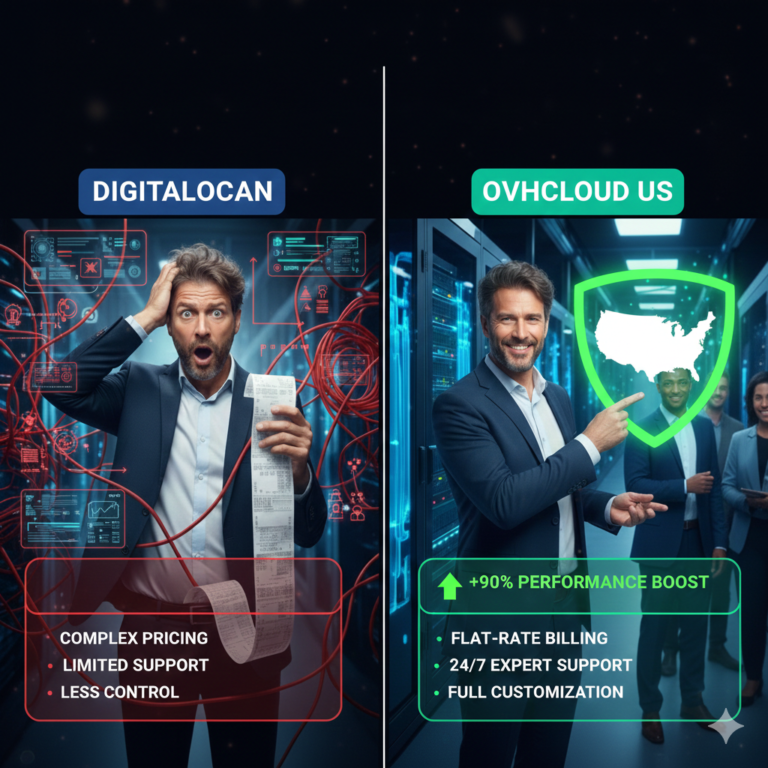
Then there is the issue of cloud cost overruns. The complexity of hyperscale billing models is notorious. Companies often find themselves trapped by high egress fees—the cost to move data out of the cloud. This creates a form of economic lock-in. You might technically own your data, but if it costs a fortune to move it, are you truly free?
How OVH Delivers True Sovereign Cloud Infrastructure
OVHcloud stands out as a pioneer in this space. Unlike US-based providers attempting to retroactively build sovereignty into their products, OVH was built on these principles from day one.
OVH sovereign cloud offerings are vertically integrated. This means OVH designs its own servers, manages its own fiber-optic network, and builds its own data centers. This end-to-end control eliminates third-party dependencies that often introduce security or privacy gaps.
For the OVHcloud infrastructure, transparency is the default. Customers know exactly where their data sits. OVH is not subject to the US CLOUD Act, meaning European data stays European, legally and physically. This clear jurisdictional stance provides the certainty that CIOs and Data Protection Officers need to sleep at night.
Performance Advantages of OVH Sovereign Cloud
Sovereignty does not mean sacrificing speed. In fact, for many use cases, it improves it.
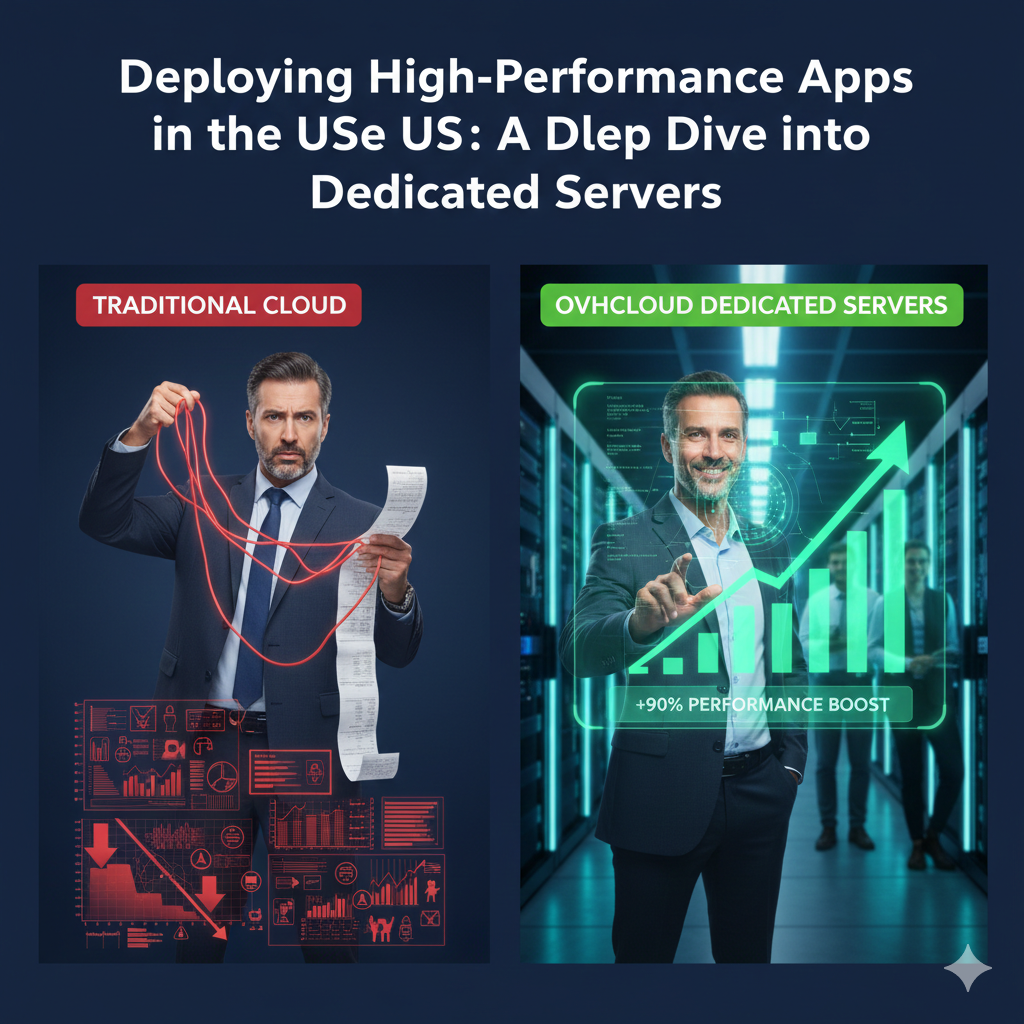
OVH is renowned for its bare metal instances. Unlike virtualized instances that share resources, high performance cloud hosting on bare metal gives you raw power. You get dedicated hardware without the virtualization tax, resulting in lower latency and higher processing power for resource-intensive tasks like big data analytics and 3D rendering.
OVHcloud performance is further bolstered by high bandwidth availability. Because they own the network piping, they can offer unlimited bandwidth on many server ranges, eliminating the bottleneck that often throttles high-traffic applications on other platforms.
Security and Compliance Capabilities
Trust is built on verification. A secure cloud hosting provider must go beyond promises and offer proof.
OVH leverages distinct security measures to protect data integrity. This includes industry-leading anti-DDoS protection included by default—a feature often charged as a premium add-on by competitors.
From a compliance standpoint, cloud compliance hosting at OVH is robust. They hold a wide array of certifications, including ISO 27001, SOC 2 Type II, and specific regional certifications like SecNumCloud in France. These certifications ensure audit readiness, allowing highly regulated businesses to demonstrate compliance to auditors with minimal friction.
Sovereign Cloud vs. Hyperscalers (AWS, Azure, GCP)
How does a sovereign approach stack up against the “Big Three”?
| Feature | Sovereign Cloud (e.g., OVH) | Hyperscalers (AWS, Azure, GCP) |
|---|---|---|
| Jurisdictional Control | High. Often immune to extraterritorial laws (e.g., CLOUD Act). | Low. Subject to US laws regardless of server location. |
| Data Residency | Guaranteed and transparent. | Available, but legal access by foreign authorities remains a risk. |
| Vendor Lock-in | Low. Often built on open standards (OpenStack). | High. Proprietary tools make migration difficult. |
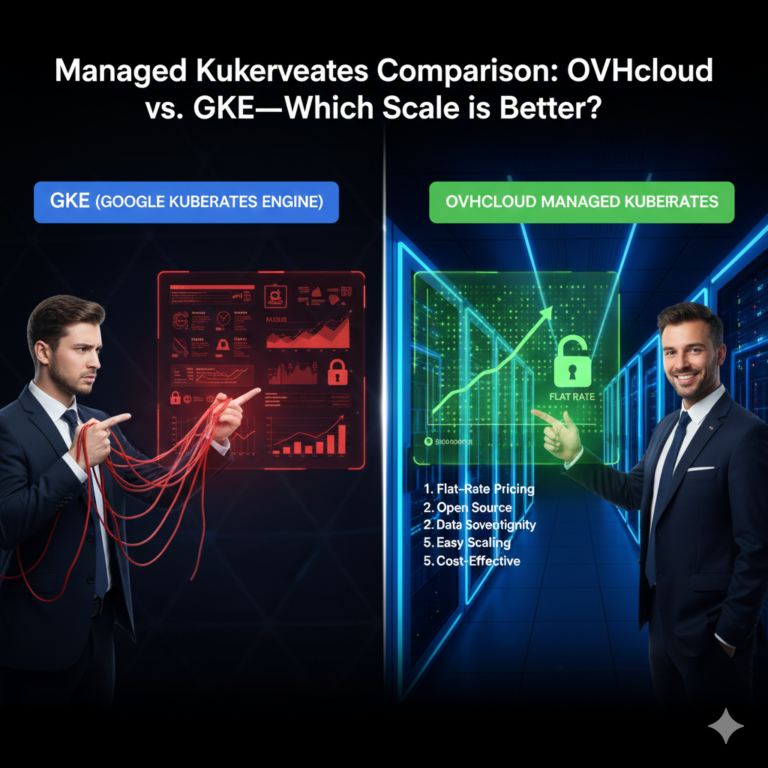
| Pricing Model | Predictable. Often fixed-price or inclusive of bandwidth. | Complex. Pay-per-use with variable egress fees. |
| Performance | High (Bare Metal options). | Variable (Virtualized multi-tenancy). |
When comparing sovereign cloud vs AWS, the distinction is clear. Hyperscalers offer an endless menu of proprietary services, which is great for rapid prototyping but dangerous for long-term independence. AWS alternatives cloud providers like OVH prioritize open standards, preventing the technical debt of vendor lock-in.
Who Should Use Sovereign Cloud in 2026?
As we move toward 2026, the user base for sovereign cloud is expanding.
- Government and Public Sector: Agencies handling citizen data must ensure it never leaves national borders.
- Healthcare: Hospitals and med-tech firms dealing with patient records need the highest tier of privacy.
- Finance and Insurance: Banks are under immense pressure to demonstrate operational resilience and data localization.
- SaaS Providers: Software companies that handle sensitive client data can use secure hosting for regulated industries as a competitive advantage, selling “compliance as a feature” to their own customers.
If your business relies on trust, best cloud for compliance isn’t a luxury; it’s a necessity.
How to Migrate to a Sovereign Cloud Platform
Moving away from a hyperscaler requires a strategic approach.
- Data Classification: Not all data needs to be in a sovereign cloud. Classify your data by sensitivity. Public marketing data can stay on a CDN; customer PII should move to sovereign storage.
- Compliance Mapping: Identify which specific regulations (GDPR, HIPAA, etc.) apply to your data and map them to the provider’s capabilities.
- Migration Strategy: Plan your move. A cloud migration strategy should prioritize “lift and shift” for simple applications and “refactoring” for complex ones.
- Execute and Validate: Use the migrate to sovereign cloud process as an opportunity to audit your security posture.
Business Benefits Beyond Compliance
While fear of fines drives compliance, the benefits of sovereign cloud extend to the bottom line.
Brand Trust: In an era of data leaks, telling your customers “we store your data locally and securely” is a powerful marketing message.
Cost Predictability: With transparent pricing and no hidden egress fees, financial forecasting becomes accurate again.
Operational Resilience: Diversifying your cloud portfolio with a sovereign provider reduces the risk of being completely offline if a single global provider creates a policy change or suffers a massive outage.
FAQ – Sovereign Cloud & OVH
Q1: What is a sovereign cloud and why does it matter?
A sovereign cloud ensures that data storage and processing are subject only to the laws of the country in which the data resides. It matters because it protects organizations from foreign interference, industrial espionage, and legal conflicts between conflicting national laws (like the US CLOUD Act vs. EU GDPR).
Q2: Is OVH a sovereign cloud provider?
Yes. OVHcloud is a leading European cloud provider that operates with strict adherence to data sovereignty. They are not subject to the US CLOUD Act, and they offer a vertically integrated infrastructure that guarantees data stays where you put it.
Q3: How does sovereign cloud improve data privacy?
It improves privacy by ensuring that no foreign government or entity has the legal right to access your data. Furthermore, sovereign clouds often implement stricter access controls and encryption standards tailored to local privacy regulations.
Q4: Is sovereign cloud more expensive than public cloud?
Not necessarily. While some specialized services may carry a premium, providers like OVH often offer significantly lower total cost of ownership (TCO) due to transparent pricing, included bandwidth, and no egress fees, which are common “hidden costs” in public clouds.
Q5: Which industries need sovereign cloud the most?
Highly regulated industries have the most urgent need. This includes government, defense, healthcare, finance, legal services, and telecommunications. However, any enterprise with significant intellectual property or customer data concerns should consider it.
Q6: Can sovereign cloud deliver high performance?
Absolutely. Sovereign providers like OVH offer high-performance computing (HPC) and Bare Metal servers that provide dedicated resources. This often results in better raw performance and lower latency compared to shared, virtualized instances on general public clouds.
Why the Future is Sovereign
The momentum toward 2026 is undeniable. The era of blind faith in globalized data storage is ending, replaced by a demand for verification, control, and sovereignty.
Organizations that proactively adopt sovereign infrastructure today will not only avoid the regulatory headaches of tomorrow but will also build a more resilient, cost-effective, and trustworthy business. OVHcloud offers the value proposition that modern enterprises need: the power of the cloud, without the compromise of control.
If you are ready to secure your data future, it is time to evaluate your infrastructure. Don’t wait for the regulations to force your hand. Explore how a sovereign cloud platform can safeguard your privacy and boost your performance today.