
VPS vs Cloud Hosting Costs Explained: Predictable Billing or Usage-Based Pricing
Every business owner knows the sinking feeling of opening a utility bill that is significantly higher than expected. In the digital infrastructure world, hosting costs can trigger that same anxiety. When you are launching an application or scaling a website, choosing between Virtual Private Server (VPS) hosting and cloud hosting is often framed as a technical decision. Engineers debate root access, scalability, and uptime guarantees. However, for the finance team—or the founder wearing the finance hat—the decision is fundamentally about cost structures.
Hosting expenses are rarely a one-time purchase; they are a recurring operational cost that impacts cash flow and long-term financial planning. Selecting the wrong model can lead to wasted resources on one end or budget-breaking overages on the other. The core friction lies between the stability of predictable billing and the flexibility of usage-based pricing.
This guide breaks down the financial implications of VPS versus cloud hosting. We will move beyond the technical specifications to analyze how these cost models function, where the hidden fees lie, and which approach offers the financial stability your business needs to grow sustainably.
Background and Hosting Cost Models Explained
To make an informed financial decision, it is essential to understand the philosophy behind how these two hosting environments charge for their services. They represent two fundamentally different approaches to resource consumption.
What predictable billing means in VPS hosting
VPS hosting traditionally operates on a flat-rate subscription model. Think of it like renting an apartment. You pay a fixed amount every month for a specific set of amenities—a certain amount of RAM, CPU cores, and storage space. Whether you use your apartment 24/7 or leave it empty for two weeks, your rent remains the same.
In a VPS environment, you are allocated a dedicated slice of a physical server’s resources. Because these resources are reserved specifically for you, the hosting provider can calculate exactly how much it costs to support your account. This allows them to offer a flat monthly fee. For businesses, this means the invoice you receive in January will likely match the invoice you receive in December, provided you haven’t upgraded your plan.
How pay-as-you-go pricing works in cloud hosting
Cloud hosting flips the script, operating more like a utility bill for electricity or water. This is the “pay-as-you-go” or “usage-based” model. In a true cloud environment, resources are virtualized across a vast network of servers. You are not necessarily renting a specific slice of hardware; you are consuming computing power on demand.
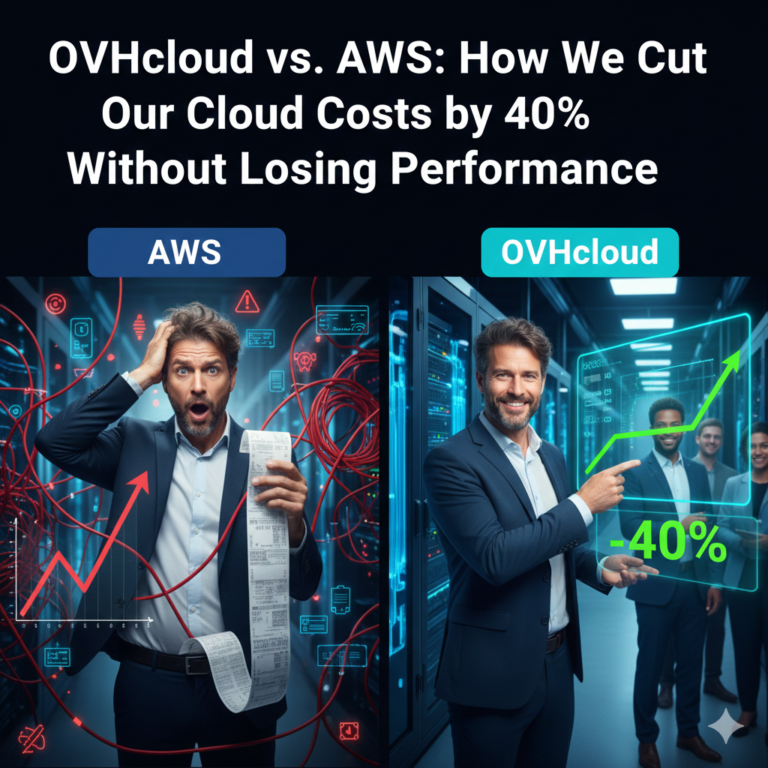
Pricing is determined by metering your usage down to the minute or second. If your application requires high computing power for three hours on a Tuesday and almost zero resources for the rest of the week, you only pay for those three hours of high intensity (plus minimal storage costs). While this sounds efficient, it introduces variability. If your site goes viral or a script malfunctions and consumes excessive data, your bill scales up in real-time along with that usage.
VPS Hosting Cost Structure
The appeal of VPS hosting often lies in its simplicity. For organizations that operate with strict departmental budgets, the VPS model offers a level of safety that cloud hosting struggles to match.
Fixed monthly pricing and resource allocation
The defining characteristic of VPS billing is the “bundled” approach. A typical plan might offer 4 vCPUs, 8GB of RAM, and 160GB of SSD storage for $40 a month. This bundle is hard-capped. If your website traffic spikes and you hit the limit of your RAM, your site might slow down or crash, but you will not be charged extra.
This creates a distinct trade-off: you are trading performance elasticity for financial certainty. For many businesses, particularly those with consistent, predictable traffic patterns (like corporate informational sites, internal tools, or established e-commerce stores), this trade-off is advantageous. You know exactly what your infrastructure burn rate is.
Renewal pricing and long-term cost visibility
While the monthly fee is fixed, there is a nuance in VPS pricing that requires attention: the renewal rate. Many hosting providers attract new customers with aggressive introductory discounts—sometimes offering 50% to 70% off the standard rate for the first term (12, 24, or 36 months).
When that initial term expires, the plan renews at the regular list price. A VPS that cost $10 a month during the first year might jump to $25 a month in year two. However, unlike cloud pricing variability, this increase is visible years in advance. A diligent IT manager can factor this scheduled increase into long-term financial projections, ensuring there are no surprises when the contract renews.
Cloud Hosting Cost Structure
Cloud hosting offers unparalleled power and flexibility, but it shifts the responsibility of cost management onto the user. The bill is not a single line item but a complex aggregate of several moving parts.
Usage-based billing for compute, storage, and bandwidth
In the cloud, you are rarely paying a single fee. Instead, you are paying for three distinct pillars of infrastructure:
- Compute: The cost of the virtual machine running (usually per hour or second).
- Storage: The cost of keeping your data on the disk (usually per GB per month).
- Bandwidth (Data Transfer): The cost of moving data in and out of the cloud (usually per GB).
This granular billing means you have total control. You can shut down a development server at 6:00 PM on Friday and spin it back up on Monday morning, saving money on compute costs for the entire weekend. However, it also means you must constantly monitor all three vectors. If you delete a server but forget to delete the attached storage volume, you will continue to be billed for that storage indefinitely.
Cost variability during traffic spikes
The double-edged sword of cloud hosting is auto-scaling. Cloud environments can be configured to automatically add more resources (more servers or more power) when traffic increases.
From a technical standpoint, this is brilliant; your website stays online during a Super Bowl ad or a Black Friday sale. From a financial standpoint, this can be terrifying. A sudden influx of users means your compute usage skyrockets, and your data transfer fees multiply. If a botnet attacks your site, or if a piece of code enters an infinite loop, you could burn through a month’s budget in a few days. The bill reflects the resources consumed, regardless of whether that consumption was profitable traffic or a technical glitch.
Key Cost Comparison Factors
When sitting down to draft a budget, how do you decide which pain point is more acceptable: the risk of a slow site (VPS caps) or the risk of a high bill (Cloud scaling)?
Budget predictability and financial planning
For startups with limited runway or small businesses with tight margins, cash flow is king. VPS hosting wins on predictability. A CFO can look at a VPS contract and know exactly what the expense will be for the fiscal year. This stability allows funds to be allocated elsewhere, such as marketing or hiring, without the need to keep a “buffer” fund for unexpected server costs.
Cloud hosting requires a different budgeting approach. Finance teams often have to set “soft limits” or alarms. They budget for an average monthly spend but must be prepared for a variance of 20-30%. This uncertainty can be stressful for businesses that do not have deep pockets to absorb fluctuations.
Scaling costs as usage grows
As a business grows, the cost curves of VPS and Cloud diverge.
- VPS Scaling: Scaling is usually a manual “step” function. To get more power, you must upgrade to the next tier (e.g., moving from the $40 plan to the $80 plan). You often end up paying for more resources than you need immediately because you have to jump to the next tier.
- Cloud Scaling: Scaling is linear. You pay for exactly what you use. If you need 10% more power, you pay 10% more. However, at a certain scale, the “per-unit” cost of cloud can be higher than VPS. Renting a massive amount of compute power on-demand in the cloud is often more expensive than reserving a large dedicated VPS or dedicated server on a contract.
Hidden or indirect expenses
The most common complaint regarding cloud hosting involves “egress fees.” Most cloud providers let you upload data for free, but charge you to download it or send it to users. If you run a media-heavy site or a video streaming service, bandwidth fees can actually exceed the cost of the server itself.
VPS plans typically come with generous bandwidth allowances (e.g., 2TB or 5TB per month) included in the flat rate. Overage charges exist, but the caps are usually so high that average businesses rarely hit them. In the cloud, bandwidth billing starts from the first gigabyte, making it a “hidden” cost that creeps up as you grow.
Why This Cost Comparison Matters for India and Emerging Markets
The debate between predictability and flexibility takes on a different dimension in price-sensitive markets like India, Southeast Asia, and Latin America.
Importance of predictable costs for startups and SMEs in India
The startup ecosystem in India is booming, but capital efficiency remains a primary metric for success. For an Indian SME or early-stage startup, a sudden hosting bill that is 40% higher due to currency fluctuations (if billed in USD) or traffic spikes can be destabilizing.
Predictable billing allows these businesses to operate with leaner margins. Knowing that the infrastructure cost is fixed at, say, ₹5,000 or ₹10,000 per month provides the stability needed to invest aggressively in product development. The “peace of mind” factor of a VPS is a tangible asset for founders who are bootstrapping.
Managing infrastructure spend in price-sensitive markets
In emerging markets, the Average Revenue Per User (ARPU) might be lower than in Western markets. A SaaS company in the US might earn $100 per user, whereas a similar company in India might earn $10 or $20.
If both companies use the same expensive cloud infrastructure, the Indian company’s margins are significantly thinner. Therefore, strict control over infrastructure spend is vital. The VPS model, which generally offers a better price-to-performance ratio for raw compute power, allows businesses in these regions to serve customers profitably without the overhead of premium cloud services.
Current Trends in Hosting Pricing
The industry is acknowledging that neither model is perfect, leading to a convergence of features and pricing structures.
Hybrid approaches combining VPS and cloud models
We are seeing a rise in “Hybrid” strategies. Businesses are placing their core, predictable workloads (like their main database or corporate website) on fixed-cost VPS instances. They then connect these to cloud services for specific, variable tasks—like storage buckets for large files or serverless functions for image processing. This allows the business to “ring-fence” 80% of their costs while retaining cloud capabilities where they matter most.
Increased demand for clearer pricing transparency
Customer frustration with complex cloud calculators is driving change. Providers are under pressure to simplify. We are seeing cloud providers introduce “Lightsail” style bundles—essentially VPS-like fixed plans within a cloud ecosystem. Simultaneously, traditional VPS providers are offering hourly billing options, allowing for short-term testing without a monthly commitment. The line between the two models is blurring as users demand the “best of both worlds”: the simplicity of VPS with the technology of the cloud.
Expert Insights and Data-Backed Analysis
Data from industry analysts suggests that startups often over-optimize for technology before they optimize for cost.
Industry benchmarks comparing VPS and cloud costs
Benchmarks often reveal that for steady-state workloads (servers that run 24/7 at a consistent utilization), VPS solutions can be 30% to 50% cheaper than equivalent cloud instances. The premium paid for the cloud is for the ability to turn it off or scale it instantly. If you aren’t turning it off or scaling it, you are paying a premium for a feature you aren’t using.
Common budgeting challenges faced by growing businesses
The “Cloud Waste” phenomenon is real. Reports indicate that businesses waste billions annually on idle cloud resources. A developer spins up a test server, forgets about it, and the meter keeps running. In a VPS model, this is less likely to go unnoticed because the billing is tied to a specific contract or plan, rather than a nebulous usage fee. Expert consensus is shifting toward “Cloud Repatriation” for some workloads—moving mature, predictable applications back to VPS or dedicated hardware to stop the financial bleed of usage-based billing.
What to Watch Next
As we look toward the future of hosting economics, two trends stand out.
Changes in cloud pricing structures
Expect major cloud providers to offer more aggressive “reserved instance” pricing to compete with VPS. They want to lock customers in. By committing to a 1 or 3-year term, cloud users can get discounts that bring prices closer to VPS levels, though this sacrifices the flexibility that defined the cloud in the first place.
VPS plan adjustments aimed at cost flexibility
Conversely, VPS providers are introducing “sliceable” resources. Instead of upgrading a whole tier, you might soon be able to just add 2GB of RAM to your fixed plan for an extra $5/month. This micro-scaling brings the flexibility of the cloud to the stability of the VPS model, potentially making it the dominant choice for SMEs in the coming years.
Conclusion
Choosing between VPS and cloud hosting is not just about server specs; it is a strategic financial decision. If your business relies on strict budgets, consistent performance, and maximum value for every dollar spent, the predictable billing of a VPS is likely your best ally. It protects you from the volatility of usage spikes and simplifies your financial forecasting.
However, if your business is chasing rapid, unpredictable growth, or if your application has wild swings in traffic that would crash a fixed server, the premium you pay for cloud hosting is an insurance policy against downtime.
The smartest move? Audit your traffic. If your utilization is flat, don’t pay for the flexibility of a rubber band. Lock in a VPS. If your utilization looks like a rollercoaster, embrace the cloud—but set your budget alarms tight.
Frequently Asked Questions
Is VPS hosting always cheaper than cloud hosting?
Generally, yes. For comparable resources (RAM, CPU), VPS hosting usually offers a lower price-to-performance ratio because you are committing to a fixed slice of a server. Cloud hosting charges a premium for the flexibility to scale up and down instantly and for the redundancy built into the infrastructure.
When does pay-as-you-go pricing become expensive?
Pay-as-you-go becomes expensive when you have “steady-state” workloads. If a server runs 24/7 at consistent usage, paying by the hour is almost always more expensive than a flat monthly rate. It also becomes expensive during traffic spikes or if “zombie” resources (unused storage or servers) are left running unintentionally.
Can businesses control cloud hosting costs effectively?
Yes, but it requires active management. Businesses can use cost-monitoring tools, set up billing alarms to trigger when spending hits a certain threshold, and use “reserved instances” (pre-paying for a year) to lower rates. However, without this active management, costs can easily spiral.
Which cost model is better for steady traffic websites?
The VPS fixed-cost model is far superior for steady traffic. If your visitor numbers are consistent month-over-month, there is no financial benefit to paying for the elasticity of the cloud. A VPS gives you the resources you need at a guaranteed price, making budgeting significantly easier.