Why Cloud Hosting Is the Future of Web Hosting
The way we build, host, and access websites has undergone a radical transformation over the last two decades. In the early days of the internet, simply having a website online was an achievement. The infrastructure was rigid, hardware-dependent, and often temperamental. If a server went down, your business went dark.
As digital demands increased, so did the limitations of these physical boxes sitting in data centers. Traffic spikes from a viral marketing campaign could crash a site instantly, while paying for expensive dedicated hardware meant wasted budget during quiet periods. The traditional hosting model—rigid, finite, and localized—was struggling to keep up with a dynamic, global internet.
Enter cloud hosting. It wasn’t just an upgrade; it was a paradigm shift. By decoupling software from specific hardware, the cloud introduced a level of flexibility and resilience that traditional servers could never match. Today, we aren’t just seeing a preference for cloud solutions; we are witnessing a complete industry takeover. From small startups to global enterprises, the migration to the cloud is accelerating, signaling that the future of web hosting isn’t just about renting space on a server—it’s about accessing an intelligent, scalable ecosystem.
The Limitations of Traditional Web Hosting
To understand why the future is in the cloud, we have to look at what came before it. Traditional hosting, particularly shared hosting and dedicated physical servers, relies on a single-point-of-failure architecture that is increasingly risky for modern businesses.
Single-Server Dependency
In a traditional setup, your website lives on one specific physical machine. If that machine experiences a hardware failure—a fried motherboard, a corrupted hard drive, or a power supply issue—your website goes offline until that specific component is fixed. There is no automatic backup waiting to take over instantly. This dependency creates a fragility that is unacceptable for mission-critical applications.
Scalability Challenges
Scaling a physical server is a manual, cumbersome process. If your website outgrows its current resources, you typically have to migrate to a larger server or physically add RAM and storage to the existing machine. This often requires scheduled downtime. Conversely, if you provision a massive server to handle Black Friday traffic, that capacity sits idle for the rest of the year, burning through your budget.
Performance Bottlenecks
In shared hosting environments, “bad neighbor” effects are common. If another website on your shared server gets hit with a DDoS attack or experiences a massive traffic surge, it consumes the server’s CPU and RAM, slowing your site down to a crawl. You are at the mercy of other users’ activities.
What Makes Cloud Hosting Different
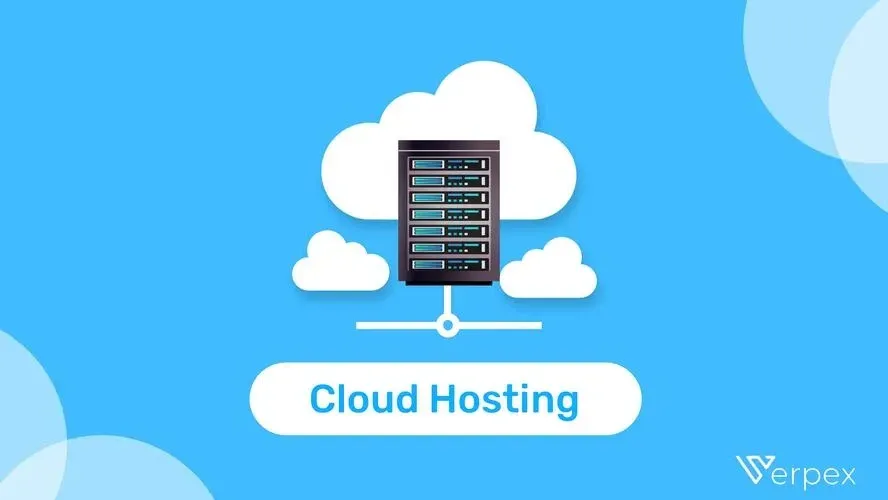
Cloud hosting fundamentally changes the architecture. Instead of relying on a single piece of metal, your website is hosted on a virtual partition that draws resources from an underlying network of physical servers.
This is achieved through virtualization. A layer of software (the hypervisor) sits on top of the physical hardware, abstracting resources like CPU, RAM, and storage into a “pool.” Your cloud instance dips into this pool as needed.
Crucially, the architecture is distributed. If one physical server in the cluster fails, the virtualization software automatically moves your instance to another healthy server in the network. This happens almost instantly, often without the user ever noticing a blip in connectivity.
Key Reasons Cloud Hosting Is the Future
The shift toward cloud infrastructure isn’t driven by hype; it is driven by tangible operational advantages that solve the biggest headaches of web administration.
Scalability Without Limits
The defining feature of the cloud is elasticity. In a cloud environment, resources can be scaled up or down vertically (adding more power to an instance) or horizontally (adding more instances to handle the load).
This is critical for handling traffic spikes. Imagine a retail site launching a flash sale. In a traditional setup, the sudden influx of users might crash the server. In a cloud environment, auto-scaling rules can detect the increased load and instantly provision more CPU and RAM to handle the traffic. Once the rush subsides, those resources spin down, ensuring efficiency.
Higher Uptime & Reliability
Downtime kills revenue and reputation. Cloud hosting minimizes this risk through redundancy. Because data is often mirrored across multiple storage devices and servers, there is no single point of failure. If a data center faces a power outage, traffic can often be rerouted to a different availability zone. This architecture allows cloud providers to offer robust Service Level Agreements (SLAs) with uptime guarantees often exceeding 99.9%.
Cost Efficiency & Pay-As-You-Go
Traditional hosting often requires a “capex” (capital expenditure) model where you pay upfront for maximum capacity you might need. Cloud hosting operates on an “opex” (operational expenditure) model. You typically pay for what you use.
If you are a startup, you don’t need to lease an expensive dedicated server “just in case” you grow. You start small, paying a few dollars a month. As you grow, your bill grows in proportion to your success, not your speculation.
Better Performance & Speed
Cloud environments leverage load balancing to distribute traffic evenly across the network, preventing any single resource from becoming overwhelmed. Furthermore, cloud hosting integrates seamlessly with Content Delivery Networks (CDNs). This ensures that static assets (images, CSS, JavaScript) are served from edge servers located physically closer to the user, drastically reducing latency and load times.
Improved Security
While security is a shared responsibility, cloud providers invest billions in securing their infrastructure. This includes advanced hardware firewalls, sophisticated intrusion detection systems, and physical security at data centers. Additionally, patching and maintenance of the underlying infrastructure are handled by the provider, ensuring that the hardware layer is protected against the latest vulnerabilities without the user lifting a finger.
Cloud Hosting & Modern Technologies
Cloud hosting is the engine room for the next generation of internet technologies. It is not just a place to store files; it is the platform that enables innovation.
- AI and Big Data: Training AI models requires massive computational power for short bursts of time. Cloud computing allows companies to spin up high-performance GPU instances to process big data and then shut them down, making AI accessible to non-enterprise players.
- DevOps and CI/CD: Modern software development relies on Continuous Integration and Continuous Deployment (CI/CD). Cloud environments support containerization (like Docker and Kubernetes), allowing developers to push code updates dozens of times a day without disrupting the live environment.
- Remote Teams: Cloud infrastructure supports the tools global teams need to collaborate, ensuring that data and applications are accessible securely from anywhere in the world.
Business Adoption Trends
The market data is clear: the migration is happening now. Startups rarely consider buying physical servers anymore. The “cloud-first” strategy is the default because it allows new businesses to launch products with virtually zero upfront infrastructure costs.
However, it’s not just startups. Large enterprises are currently in a massive migration phase, moving legacy on-premise applications to the cloud to gain agility. We are also seeing the rise of Managed Cloud Hosting. Business owners realize that while they want the power of the cloud, they don’t want the headache of managing system administration. Managed providers (like Cloudways or Kinsta) bridge this gap, offering the raw power of Google Cloud or AWS with a user-friendly interface.
Cloud Hosting vs. Other Hosting Models
To understand where you fit, it helps to compare cloud hosting directly against its predecessors.
Cloud vs. Shared Hosting
Shared hosting is like living in a dormitory. You have a room, but you share the bathroom, kitchen, and hallways. If your roommate throws a loud party (high traffic), you can’t sleep. Cloud hosting is like owning a condo in a high-rise. You have your own dedicated space and resources, but you benefit from the building’s shared security and maintenance.
Cloud vs. VPS (Virtual Private Server)
This line is blurring, as many VPS providers now use cloud infrastructure. However, a traditional VPS is often hosted on a single physical server. If that specific server dies, your VPS dies. True cloud hosting is distributed across multiple servers, offering higher availability.
Cloud vs. Dedicated Servers
A dedicated server gives you the entire machine. It offers immense raw power and privacy, but it is rigid. If you max out the drive space, you have to physically install a new drive. Cloud hosting may offer slightly less raw “metal” performance in some niche benchmarks due to the virtualization layer, but it wins on flexibility. You can double your storage in the cloud with a single click.
Real-World Use Cases
Who is actually benefiting from this technology?
- eCommerce Platforms: During Cyber Monday, traffic can spike 100x. Cloud hosting scales to meet this demand, ensuring the checkout process remains smooth, then scales down to save money in January.
- SaaS Applications: Software-as-a-Service businesses need to guarantee uptime to their subscribers. The redundancy of the cloud ensures their tools are always available.
- Media Sites: News outlets and streaming services use the cloud to store massive libraries of content and deliver it globally via CDNs to reduce buffering.
Challenges & Considerations
Despite the clear advantages, moving to the cloud isn’t without challenges.
- The Learning Curve: Configuring a raw cloud environment (like a bare AWS EC2 instance) requires significant technical expertise.
- Cost Management: The “pay-as-you-go” model can be a double-edged sword. If you leave a powerful instance running or configure auto-scaling incorrectly, you might wake up to a massive surprise bill.
- Vendor Lock-in: Moving data and applications from one cloud provider to another can be complex and expensive due to egress fees and proprietary configurations.
Who Should Move to Cloud Hosting Now?
Is the cloud right for everyone? Almost, but there are specific triggers for migration.
- Growing Small Businesses: If your site is starting to feel slow or you are seeing error messages during traffic peaks, it is time to move.
- High-Traffic Websites: If downtime costs you money, you cannot afford to be on shared hosting.
- Developers & Agencies: The ability to stage environments, clone sites, and deploy instantly makes the cloud the only logical choice for professionals.
What the Future Looks Like
The evolution of hosting hasn’t stopped. The future is leaning toward Serverless Computing and Edge Computing.
In a serverless model (like AWS Lambda), developers don’t even manage the cloud instance. They simply upload code, and the cloud provider executes it only when triggered, charging down to the millisecond of execution time. Edge computing pushes this processing power physically closer to the user (the “edge” of the network), enabling real-time applications like autonomous driving and IoT (Internet of Things) devices.
We are also seeing AI-driven scaling, where the hosting environment learns traffic patterns and pre-scales resources before a spike even happens, creating a truly self-healing, self-managing internet infrastructure.
Ready to Scale?
The era of the single, fragile server is ending. Cloud hosting has democratized access to enterprise-grade infrastructure, allowing a solo entrepreneur to have the same site reliability as a Fortune 500 company.
It offers the scalability to grow, the reliability to stay online, and the flexibility to innovate. While traditional hosting still has a small place for hobbyists, the future of the commercial web is undeniably in the cloud. If you are building for tomorrow, you cannot rely on the infrastructure of yesterday.
Frequently Asked Questions (FAQ)
Is cloud hosting better than traditional hosting?
For most modern use cases, yes. Cloud hosting offers superior scalability, reliability, and flexibility compared to traditional shared or dedicated hosting. It eliminates single points of failure and allows you to pay only for the resources you utilize.
Will cloud hosting replace VPS and shared hosting?
It is already happening. Many “shared” hosting plans are now actually running on cloud infrastructure behind the scenes. While ultra-cheap legacy shared hosting will likely exist for hobby sites, the standard for business hosting has shifted to cloud VPS and managed cloud solutions.
Is cloud hosting worth it for small businesses?
Absolutely. The “pay-as-you-go” model is ideal for small businesses because it requires low upfront investment. You can start with a very small, affordable cloud instance and scale up instantly as your business grows, ensuring you never pay for capacity you don’t need.