
Top Shared Hosting Plans Compared: Price, Performance & Support
Launching a new website is exciting, but navigating the technical landscape of web hosting often feels less like a thrill and more like a chore. You have your domain name ready and your design ideas mapped out, but now you need a home for your site. This is where shared hosting comes in—the most popular, affordable entry point for getting online.
However, the hosting market is saturated with providers promising “unlimited everything” for the price of a cup of coffee. How do you distinguish between a genuine bargain and a service that will leave your site offline half the time?
We have analyzed the current market landscape to bring you a comprehensive breakdown of the best options available in 2026. Whether you are starting a personal blog, a portfolio, or a small business site, choosing the right host is the foundation of your digital presence. This guide breaks down pricing structures, performance benchmarks, and support quality to help you make a decision that fits your budget and your goals.
What Is a Shared Hosting Plan?
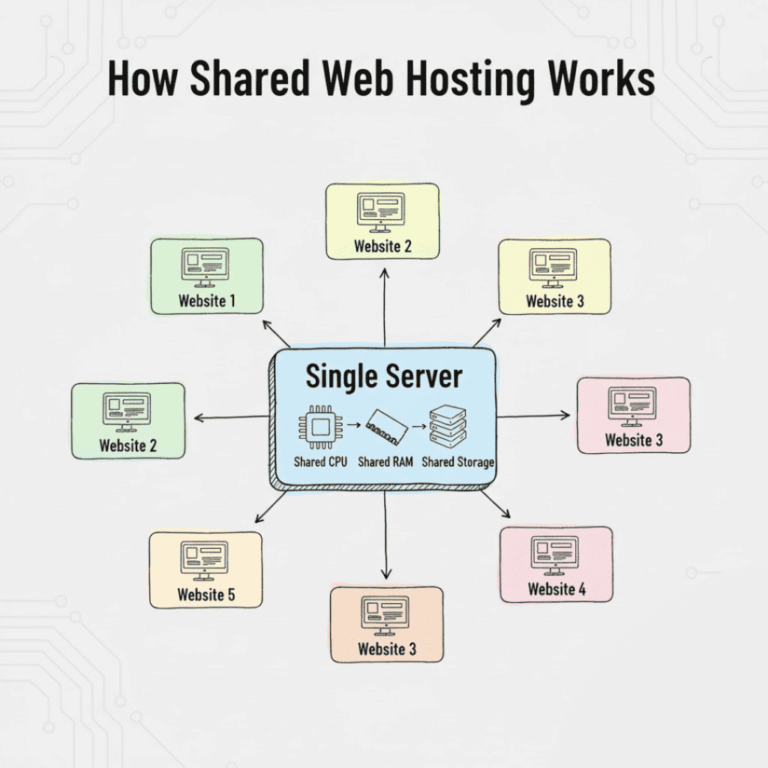
Think of shared hosting like living in an apartment complex. You have your own private unit (your website), but you share the building’s resources—water, electricity, and amenities—with all your neighbors. In hosting terms, this means your website resides on a single physical server alongside hundreds, sometimes thousands, of other websites. You all share the same CPU, RAM, and internet connection.
What you usually get in a shared hosting plan
Most standard shared hosting packages come with a bundle of essentials designed to get you started immediately. Typically, this includes a control panel (like cPanel) for managing files, a specific amount of storage (often SSD or NVMe), bandwidth for traffic, and email accounts linked to your domain. Many providers now sweeten the deal with a free SSL certificate and a one-click installer for WordPress.
Why shared hosting plans are popular
The primary driver for shared hosting is cost efficiency. Because the hosting provider splits the cost of server maintenance across many users, they can offer plans at incredibly low rates. It requires very little technical knowledge to maintain; the host manages the hardware, security updates, and server software, allowing you to focus entirely on building your site.
How We Compared Top Shared Hosting Plans
We didn’t just look at the marketing copy on the homepage. To truly understand which hosts deliver on their promises, we evaluated them against a strict set of criteria essential for long-term website health and SEO.
Pricing and renewal costs
Hosting companies are notorious for low introductory rates that skyrocket upon renewal. We examined the total cost of ownership over a three-year period, factoring in the initial discount and the eventual renewal price.
Server performance and speed
Speed is a ranking factor for Google and a user experience necessity. We looked at Time to First Byte (TTFB) and load times under stress. A cheap host isn’t worth it if your site takes five seconds to load.
Uptime reliability
Your site needs to be accessible 24/7. We checked for uptime guarantees (usually 99.9%) and looked at historical data to see if providers actually met those standards or if they frequently suffered outages.
Customer support quality
When your site breaks at 2:00 AM, you need help immediately. We evaluated support channels, prioritizing providers with responsive 24/7 live chat and knowledgeable staff who can solve issues rather than just linking to articles.
Ease of use for beginners
We assessed the user dashboard and onboarding process. Is the interface intuitive? Can a complete novice install WordPress and set up an email account without reading a manual?
Security features
Even basic sites need protection. We checked for included security measures such as free SSL certificates, automated daily backups, and malware scanning.
Top Shared Hosting Plans Compared (2026)
The hosting landscape has evolved, with newer technologies like NVMe storage becoming standard even in budget tiers. Here is how the top contenders stack up this year.
Shared Hosting Plan #1 – Best Overall Value
This plan hits the sweet spot between affordability and performance, making it the go-to recommendation for 80% of users. It doesn’t offer the absolute lowest price on the market, but it includes features that other hosts charge extra for, such as daily backups and a staging environment.
Price breakdown
The introductory rate is competitive, usually hovering around the cost of a latte per month. While the renewal rate increases, it remains within the industry average for a mid-tier plan.
Performance overview
Users on this plan enjoy consistent speeds thanks to uncrowded servers. The host uses advanced caching technology at the server level, meaning your pages load effectively even during traffic spikes.
Support quality
Support is available 24/7 via chat and phone. Wait times are generally under two minutes, and agents are technically proficient.
Best for
Small business websites and growing blogs that need reliability without breaking the bank.
Shared Hosting Plan #2 – Best Budget Plan
If your primary constraint is your wallet, this plan offers the lowest barrier to entry. It strips away the bells and whistles to provide bare-metal hosting at rock-bottom prices.
Lowest pricing explained
By committing to a longer term (often 3 or 4 years), you can lock in an incredibly low monthly rate. However, be aware that upsells will be aggressive during the checkout process.
Performance limitations
To keep costs low, resource limits are tighter here. High-resolution images or heavy plugins might slow down your site. It is fast enough for text-based content but may struggle with media-heavy pages.
Support availability
Support is decent but often relies on a ticketing system for complex issues, which can delay resolutions compared to instant live chat.
Ideal users
Students, hobbyists, and anyone launching a test project or a simple landing page.
Shared Hosting Plan #3 – Best Performance-Focused Plan
This option bridges the gap between shared hosting and a Virtual Private Server (VPS). It is designed for users who want the ease of shared hosting but demand higher raw speed.
Speed and uptime features
This plan utilizes LiteSpeed servers and allocates fewer users per server. This “low density” approach ensures that a traffic spike on a neighbor’s site won’t tank your performance.
Resource limits
You get significantly more CPU power and RAM allocation here. It handles dynamic content and database queries much faster than standard plans.
Support response times
Users on this tier often get “priority support,” skipping the queue to reach senior engineers instantly.
Shared Hosting Plan #4 – Best for Beginners
For those who have never written a line of code, this plan is the safest bet. The provider has built a custom dashboard that simplifies the confusing parts of website management.
Easy setup and dashboard
Instead of a cluttered cPanel, you get a clean, wizard-driven interface. Setting up a website involves answering a few questions and letting the AI build a foundation for you.
Help and tutorials
The integrated help center is contextual; if you are on the email settings page, it suggests articles about setting up email.
Support channels
Support agents are trained specifically to help with “how-to” questions, guiding you through WordPress basics patiently.
Shared Hosting Plan #5 – Best Global Shared Hosting
If your audience is not located in a single country, you need a host with a global footprint. This plan excels at delivering content internationally.
Worldwide server locations
You can choose the physical location of your server during sign-up—whether that is in London, Singapore, New York, or Frankfurt—to be closer to your audience.
International performance
Includes a built-in Content Delivery Network (CDN) that caches your site’s static files on servers around the world, ensuring fast load times regardless of visitor location.
Multilingual support
Support is offered in multiple languages, making it a top choice for international businesses.
Shared Hosting Comparison Table
| Plan Name | Monthly Price (Intro) | Renewal Price | Storage / Bandwidth | Performance Rating | Best Use Case |
|---|---|---|---|---|---|
| Best Value | $2.99/mo | $9.99/mo | 50GB / Unmetered | 4.5/5 | Small Biz / Blogs |
| Best Budget | $1.99/mo | $4.99/mo | 10GB / 100GB | 3.5/5 | Hobby / Personal |
| Best Speed | $6.99/mo | $14.99/mo | 100GB / Unmetered | 5/5 | E-commerce |
| Beginner | $3.49/mo | $8.99/mo | 20GB / Unmetered | 4/5 | First Website |
| Global | $4.99/mo | $11.99/mo | 50GB / Unmetered | 4.5/5 | International |
Price Comparison: What Do You Really Pay?
The price you see in big bold letters is rarely what you pay long-term. Hosting companies operate on a model of deep discounting for the first term.
Introductory pricing vs renewals
That attractive $2.99/mo price tag is usually contingent on you paying for 36 months upfront. This means a lump sum payment of over $100. When that term expires, the renewal price kicks in, often jumping to the “regular” rate of $8.99 or $12.99 per month. Always budget for the renewal cost, not just the startup cost.
Hidden costs to watch out for
Some budget hosts strip essential features to lower the advertised price. You might find yourself paying extra for domain privacy protection ($15/year), automated backups ($2-3/mo), or email hosting. Always check if the “free domain” offer applies only to the first year.
How to choose based on budget
If cash flow is tight, look for a plan that offers a shorter term (like 12 months) without a massive price hike. Avoid monthly billing cycles if possible, as these usually don’t qualify for discounts and often incur setup fees.
Performance Comparison: Speed and Uptime
Why performance matters
Attention spans are short. Google data suggests that the probability of a bounce increases dramatically if page load time goes from 1 second to 3 seconds. Furthermore, Core Web Vitals are a ranking factor; a slow host can actively hurt your SEO efforts.
How shared hosting affects speed
In a shared environment, the “bad neighbor” effect is a real risk. If another site on your server gets a massive influx of traffic or runs a poorly coded script, it can hog the server’s CPU, causing your site to slow down. Premium shared hosting plans mitigate this by using CloudLinux or similar operating systems to isolate accounts and cap resources per user.
What “good performance” looks like for shared hosting
On a well-optimized shared plan, your site should load in under 2 seconds. The Time to First Byte (server response time) should be under 500ms. Regarding uptime, accept nothing less than 99.9%. This allows for about 43 minutes of downtime per month. Anything less reliable is unacceptable for a professional site.
Support Comparison: Why It Matters for Beginners
Types of support (live chat, email, phone)
Live chat is the gold standard for shared hosting. It allows for multitasking and usually offers the quickest response. Phone support is excellent for billing or complex discussions but can involve long hold times. Email tickets are best for technical issues that require investigation but aren’t urgent.
Response time importance
We tested response times at different hours. The best hosts responded in under 60 seconds. In the worst cases, we waited over 45 minutes. When your email is down or your site displays a critical error, waiting an hour feels like an eternity.
Knowledge base and tutorials
A good host empowers you to fix things yourself. We looked for extensive documentation with screenshots and video tutorials. A robust knowledge base can often save you from needing to contact support at all.
Pros and Cons of Shared Hosting Plans
Shared hosting is an excellent starting point, but it isn’t perfect for everyone.
Pros
- Affordable pricing: It is the cheapest way to get online, period.
- Easy to manage: Server administration is handled by the provider.
- No server maintenance: You don’t need to worry about OS updates or hardware failures.
Cons
- Limited resources: You have caps on CPU, RAM, and file counts (inodes).
- Performance depends on other users: While isolation technology has improved, neighbors can still impact you on cheaper plans.
- Not ideal for high-traffic sites: Once you exceed 25,000–50,000 monthly visitors, you will likely need to upgrade.
How to Choose the Right Shared Hosting Plan
Based on website size
If you are building a simple portfolio or a 5-page business brochure site, the Best Budget Plan is sufficient. You don’t need excessive resources for static content.
Based on expected traffic
If you plan to blog daily and drive traffic through social media or ads, opt for the Best Overall Value or Performance-Focused plans. You need the extra bandwidth and CPU power to handle concurrent visitors.
Based on technical skill level
If you aren’t comfortable with file managers and FTP, the Best for Beginners plan is non-negotiable. The time you save on setup is worth the slightly higher cost.
Based on future growth
Do you plan to expand into e-commerce? If so, choose a host that offers easy scalability. You want a provider that allows you to upgrade to a VPS or a higher tier with a single click as your business grows.
Frequently Asked Questions
Which shared hosting plan is best?
There is no single “best” plan, but the Best Overall Value tier generally offers the right balance for 90% of new websites. It avoids the severe resource restrictions of budget plans without the high cost of performance plans.
Are cheap shared hosting plans reliable?
They can be, but you usually trade speed and support quality for the lower price. For a personal project, they are fine. For a business where downtime costs money, it is safer to spend a few dollars more per month.
Can I upgrade my hosting plan later?
Yes, almost all providers allow you to upgrade instantly. You pay the prorated difference for the remainder of your term. Downgrading is often harder and may require manual migration.
Is shared hosting good for WordPress?
Absolutely. Most shared hosting is optimized specifically for WordPress, with pre-installed caching plugins and security rules tailored to the platform.
Final Verdict: Best Shared Hosting Plans Compared
Choosing a web host feels like a major commitment, but the reality is that the shared hosting market has never been more competitive or consumer-friendly. The gap between “budget” and “premium” is narrowing, with features like SSL and SSD storage becoming universal standards.
For most beginners, the Best Overall Value plan remains the smartest choice. It provides the reliability required to build a professional reputation without the overhead of enterprise-grade hosting. If you are strictly counting pennies, the Best Budget Plan will get you online, but be prepared for stricter limits.
Our advice? Start small. You don’t need a dedicated server for a brand-new blog. Pick a reputable shared hosting plan, build your audience, and let your hosting upgrade naturally as your traffic grows.