
7 Ways VPS Hosting Supports the Growth of Dubai’s Fintech Sector
Dubai has transformed from a regional trading port into a global command center for digital finance. The emirate’s strategic vision, coupled with regulatory frameworks like the Dubai International Financial Centre (DIFC), has attracted a swarm of startups and established financial institutions alike. From blockchain ledgers to digital wallets, the innovation happening in this region is palpable.
However, behind every seamless transaction and instant loan approval lies a robust technical backbone. While slick user interfaces and clever marketing grab the headlines, the unsung hero of this financial revolution is the server infrastructure. Specifically, Virtual Private Server (VPS) hosting has emerged as the preferred engine for many of these agile financial platforms.
For a fintech company, downtime isn’t just an inconvenience; it is a direct loss of revenue and, more importantly, trust. As the sector matures, the demand for hosting that bridges the gap between affordable shared environments and expensive dedicated hardware has skyrocketed. This post explores exactly how VPS hosting provides the stability, security, and speed required to sustain Dubai’s aggressive fintech growth.
Understanding the Engine: VPS Hosting Explained
To understand why VPS is pivotal, we first need to look at what it actually is. In the world of web hosting, you generally have three main tiers: shared hosting, VPS, and dedicated servers.
What VPS hosting is and how it works
Think of a server as an apartment complex.
- Shared hosting is like living in a dormitory. You share everything—kitchen, bathroom, living space—with roommates. If one roommate throws a loud party (high traffic), everyone else suffers.
- Dedicated hosting is owning a standalone mansion. You have total control and zero neighbors, but it is expensive and requires significant maintenance.
- VPS hosting is the middle ground: a private condo. You are in a larger building (the physical server) with other residents, but you have your own private walls, your own resources, and a lock on the door. What your neighbors do doesn’t affect your living space.
Technologically, a VPS uses virtualization software (a hypervisor) to partition a physical server into multiple virtual environments. Each environment acts as a standalone server with its own operating system, dedicated RAM, and CPU power.
Why fintech platforms require specialized hosting environments
Fintech applications are not standard blogs or e-commerce sites. They handle sensitive user data, execute real-time transactions, and must adhere to rigorous compliance standards. A shared hosting environment, where security vulnerabilities can bleed from one site to another, is simply too risky for a financial app. Conversely, a dedicated server might be overkill for a lean startup just launching its MVP (Minimum Viable Product).
VPS hosting offers the “Goldilocks” solution: the isolation and security of a dedicated server without the prohibitive cost. This balance allows Dubai’s fintech entrepreneurs to deploy professional-grade infrastructure from day one.
Key Ways VPS Hosting Supports Fintech Growth
The adoption of VPS technology isn’t just a trend; it is a strategic necessity. Here are seven specific ways this infrastructure powers the sector.
1. Improved performance for transaction-heavy platforms
In finance, latency is the enemy. Whether it is high-frequency trading or a simple peer-to-peer transfer, users expect immediacy. If an app hangs for three seconds while processing a payment, the user assumes something has gone wrong.
VPS hosting guarantees dedicated resources. Unlike shared hosting, where a spike in traffic on a neighboring site can slow down the entire server, a VPS ensures that a defined amount of RAM and CPU is always available for your application. This stability is crucial for maintaining low latency during market volatility or high-traffic periods, such as Black Friday sales or end-of-month pay cycles.
2. Dedicated resources for sensitive financial workloads
Financial computations can be resource-intensive. Running fraud detection algorithms, encrypting data in transit, and managing ledger updates require consistent computing power.
With a VPS, the “noisy neighbor” effect is eliminated. The resources paid for are the resources received. This isolation ensures that critical background processes—like database indexing or automated compliance reporting—run smoothly without competing for bandwidth. For a Dubai-based startup handling international remittances, this reliability ensures that a transfer initiated in Bur Dubai reaches a recipient in Mumbai without a technical hitch.
3. Greater control over security configurations
Security is the currency of the fintech industry. A single breach can bankrupt a startup. VPS hosting provides “root access” (or administrative access) to the server. This is a game-changer for security officers.
With root access, fintech IT teams can:
- Install custom firewalls tailored to their specific threat landscape.
- Configure aggressive intrusion detection systems.
- Close unnecessary ports to reduce the attack surface.
- Implement specific encryption protocols that exceed standard requirements.
This level of granular control is rarely available in shared hosting environments and is essential for protecting customer banking details and personal identification information.
4. Scalability to support rapid user growth
The trajectory of a successful fintech app is often non-linear. A platform might have 1,000 users one month and 50,000 the next following a successful funding round or viral marketing campaign.
VPS hosting is inherently scalable. Because the server is virtual, upgrading resources is often as simple as clicking a button in a dashboard. A company can start with 4GB of RAM and 2 CPUs, and scale up to 64GB of RAM and 16 CPUs instantly as demand grows. This elasticity allows Dubai’s startups to pay only for what they need now, while retaining the ability to expand infrastructure instantly without the downtime associated with migrating to a new physical server.
5. Flexibility for custom fintech applications
Off-the-shelf software rarely cuts it in fintech. Developers often build proprietary applications using specific coding languages (Python, Go, Node.js) and database structures.
Shared hosting environments usually force users to stick to a standard stack (like LAMP). VPS hosting, however, allows developers to install any operating system and software they require. If a blockchain ledger requires a specific version of Linux and a custom library to function, a VPS can accommodate that effortlessly. This freedom fosters innovation, allowing developers to build exactly what the market needs rather than working around the limitations of their hosting provider.
6. Support for compliance-oriented infrastructure
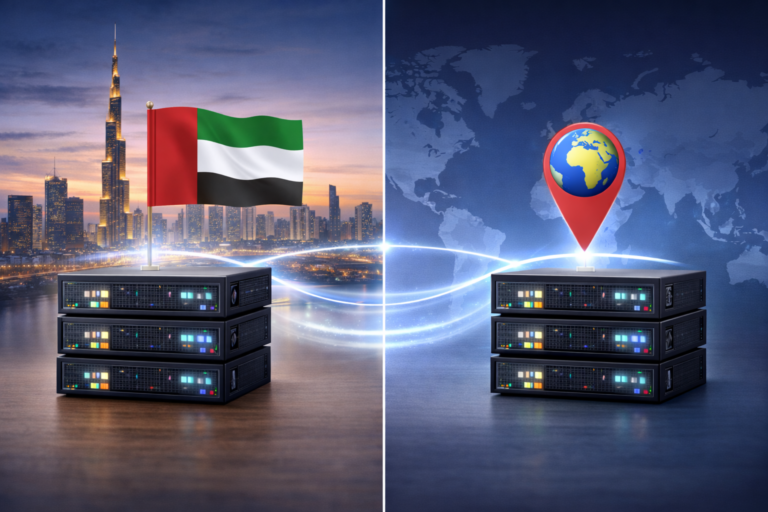
The regulatory landscape in the UAE is strict regarding data sovereignty. Laws often dictate that financial data generated within the country must remain physically stored on servers within the country.
Using a VPS provider with data centers located physically in Dubai or Abu Dhabi helps fintech companies remain compliant with these data residency laws. Furthermore, because the environment is isolated, it is much easier to pass compliance audits (such as PCI-DSS for credit card processing) compared to a shared environment where the hosting provider controls the security settings.
7. Cost efficiency compared to dedicated servers
Burn rate is a critical metric for any startup. Renting a physical dedicated server can cost hundreds or even thousands of dollars a month—a heavy burden for a company that is pre-revenue or in the early seed stages.
VPS hosting offers a significant portion of the power and most of the security benefits of a dedicated server at a fraction of the cost. This efficiency allows fintech startups to allocate their limited capital toward product development, marketing, and talent acquisition, rather than sinking it all into hardware rental.
Why This Matters for India and Emerging Markets
Dubai often serves as a gateway to the Middle East, Africa, and South Asia (MEASA). The strategies deployed here have a ripple effect on neighboring markets, particularly India.
Infrastructure models influencing fintech growth in India
India is home to one of the world’s most vibrant fintech ecosystems, driven by the Unified Payments Interface (UPI). The hosting challenges faced by Indian startups mirror those in Dubai: a need for low cost, high security, and massive scalability.
As Indian fintechs look to expand into the Gulf Cooperation Council (GCC) region, and as Dubai-based firms look to tap into the Indian market, the standardization of infrastructure becomes important. The heavy reliance on VPS architecture in Dubai provides a blueprint for Indian startups looking to optimize their hosting spend while preparing for international compliance standards.
Lessons from Dubai’s fintech hosting approach
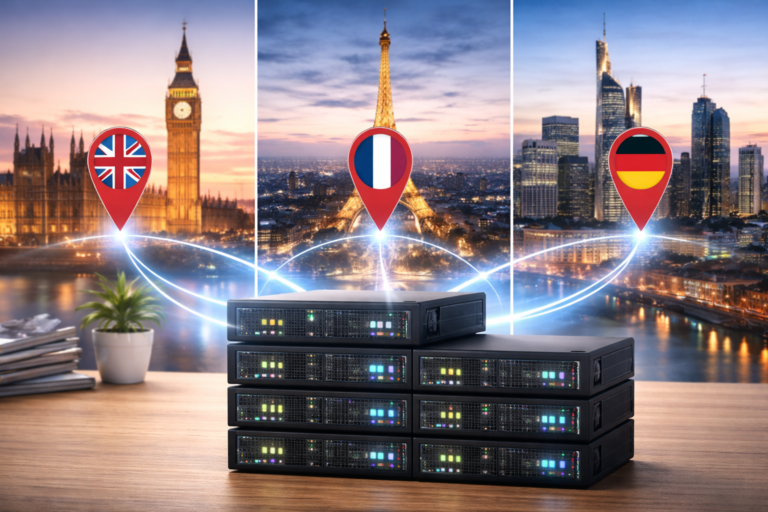
Emerging markets can learn from Dubai’s emphasis on localizing data. By encouraging hosting providers to build local data centers, Dubai reduced latency for its users and solved data sovereignty issues simultaneously. For other emerging tech hubs, prioritizing local VPS availability over reliance on distant servers in Europe or the US is a crucial step toward digital maturity.
Current Trends in Fintech Hosting
The hosting landscape is not static. As technology evolves, so do the deployment strategies of financial companies.
Increased use of VPS and cloud hybrids
We are seeing a move toward hybrid environments. A fintech company might use a VPS for its core, secure database (to ensure isolation and compliance) while using a public cloud service to serve static assets like images and JavaScript files. This hybrid approach maximizes security for critical data while leveraging the global content delivery networks (CDNs) of cloud giants for speed.
Preference for regional data centers and low-latency networks
There is a growing flight to “the edge.” Fintechs are increasingly choosing VPS providers that offer data center locations physically close to their user base. In Dubai, this means choosing providers with racks in Dubai Internet City or similar tech hubs. The physics is simple: the shorter the distance data travels, the faster the trade executes. In an algorithmic trading environment, this geographic advantage is a competitive edge.
Expert Insights and Data-Backed Analysis
Industry veterans argue that the hardware layer is often the first point of failure for scaling fintechs.
Industry perspectives on fintech infrastructure requirements
CTOs in the region frequently cite “predictability” as their primary infrastructure goal. When dealing with money, surprises are bad. A shared hosting plan is unpredictable by nature. A dedicated server is predictable but rigid. Experts favor VPS because it offers predictable performance (dedicated resources) with the agility to change course quickly.
Common hosting challenges faced by fintech startups
The most common pitfall identified by analysts is “under-provisioning.” Startups often underestimate the resource load of encryption and background security scanning. A VPS mitigates this risk by allowing instant vertical scaling. If a security scan maxes out the CPU, the admin can add two more cores immediately, preventing a system crash.
What to Watch Next
The intersection of finance and technology will continue to rely heavily on advanced hosting solutions.
Regulatory developments affecting fintech infrastructure
The UAE’s data protection laws are evolving to match GDPR standards. We expect future regulations to place even heavier scrutiny on third-party vendors, including hosting providers. Fintechs will likely need to provide detailed reports on exactly where their VPS is located and who has physical access to the hardware.
Evolving performance and security demands in digital finance
As Artificial Intelligence (AI) becomes standard for fraud detection, the computational load on servers will increase. Standard VPS configurations may evolve into “GPU-accelerated VPS” offerings, designed specifically to handle the heavy math required by AI models without slowing down the user-facing application.
Shaping the Future of Finance
Dubai’s fintech sector is a case study in how rapid innovation requires a solid foundation. VPS hosting provides that foundation. It offers the isolation required for security, the power required for speed, and the flexibility required for innovation—all at a price point that fosters competition. As the region continues to digitize its economy, the humble Virtual Private Server will remain the silent engine powering the next generation of financial unicorns.
Frequently Asked Questions
Why is VPS hosting suitable for fintech platforms?
VPS hosting is suitable because it offers dedicated resources (RAM/CPU) ensuring stable performance, and isolated environments which significantly improve security compared to shared hosting. This balance of performance, security, and cost makes it ideal for financial applications.
How does VPS hosting support financial data security?
It provides an isolated environment, meaning a breach in a neighboring account won’t affect yours. It also offers root access, allowing IT teams to configure custom firewalls, install advanced encryption software, and manage strict access controls tailored to financial compliance standards.
Can VPS hosting scale with rapid fintech growth?
Yes. VPS hosting is highly scalable. Administrators can typically upgrade RAM, CPU, and storage capacity instantly through a software dashboard without needing to migrate to a new physical server, allowing infrastructure to grow alongside the user base.
How important is server location for fintech applications?
Extremely important. Hosting on a VPS physically located near the user base (e.g., in Dubai for UAE customers) reduces latency, resulting in faster transactions. Furthermore, local hosting is often a legal requirement for complying with data residency and sovereignty laws in the financial sector.