
Cheap Hosting Myths Busted in 2026: What’s True and What’s Not
For decades, the advice has been consistent: “You get what you pay for.” In the world of web hosting, this adage created a binary way of thinking. Expensive meant good, secure, and fast. Cheap meant dangerous, slow, and unreliable.
But we are in 2026 now. The hardware landscape has shifted, software has become more efficient, and the competitive market has forced providers to up their game. The line between premium and budget has blurred significantly. Yet, the stigma remains. Many aspiring website owners are terrified to touch cheap hosting plans, fearing their site will vanish overnight or load so slowly that visitors bounce immediately.
Is this fear justified? Or are you overpaying for resources you don’t actually need?
To make the right decision for your project, we need to separate legacy fears from modern technical realities. Whether you are launching a personal portfolio, a dropshipping store, or a small business brochure site, understanding the affordable hosting truth can save you significant capital without sacrificing quality.
Below, we dismantle the seven biggest cheap hosting myths circulating today, backed by technical facts and data, to help you determine if budget hosting is the smart move for you.
Myth #1 – Cheap Hosting Is Always Slow
The Myth: If you pay a low monthly fee, your website will crawl. The servers are overloaded, the hardware is ancient, and your visitors will leave out of frustration.
The Truth: Speed is determined by optimization and software stack, not just the price tag. Modern budget hosts utilize the same core technologies as premium tiers.
The Evolution of Hardware
In the early 2010s, budget hosts used spinning Hard Disk Drives (HDDs). These were mechanical, prone to failure, and slow to retrieve data. Today, even entry-level hosting plans almost exclusively use NVMe SSD storage. This storage technology reads and writes data significantly faster than its predecessors. The cost of NVMe has plummeted, allowing budget providers to include it as a standard feature rather than a premium add-on.
Server Optimization and Caching
The real secret to cheap hosting speed isn’t the raw power of the CPU, but how the server software handles requests. Many affordable hosts now use LiteSpeed web servers (or highly optimized NGINX configurations). LiteSpeed handles concurrent connections much more efficiently than the older Apache servers.
Furthermore, server-side caching comes standard on many budget plans. This means the server stores a static copy of your website. When a visitor arrives, the server shows them the copy instantly rather than processing the code from scratch. This process drastically reduces the load on the server, allowing fast budget hosting to compete with more expensive setups.
The Role of CDNs
Content Delivery Networks (CDNs) have democratized speed. Services like Cloudflare offer free tiers that integrate seamlessly with cheap hosting. A CDN stores your images and site assets on servers globally. If a user visits your site from London, they load images from a London server, not your main server in New York. This offloads the work from your budget host, making the site feel incredibly fast regardless of the hosting tier.
Myth #2 – Budget Hosting Is Not Secure
The Myth: Cheap hosts cut corners on security. Your site will be hacked, your data stolen, and the host won’t do anything to help you.
The Truth: Automated security tools have made secure budget hosting the industry standard. Security is a baseline requirement, not a luxury feature.
The Rise of Free SSL
Years ago, an SSL certificate (the little padlock icon in your browser) cost extra money and required manual installation. Today, organizations like Let’s Encrypt provide SSL certificates for free. Budget hosting providers have integrated this into their dashboards. If a host doesn’t offer free, automated SSL in 2026, they aren’t just “cheap”—they are obsolete.
Containerization (CloudLinux)
One of the valid fears of the past was “bad neighbor” syndrome. On shared hosting, if one site got infected with malware, it could spread to other sites on the same server.
Modern cheap hosting security relies on operating systems like CloudLinux. This technology creates a “cage” (container) around each user’s account. Even if you are paying the lowest price possible, your file system is isolated from other users. If a neighbor gets hacked, your site remains untouched.
Automated Malware Scanning
Manual security audits are expensive, but automated scanning is cheap. Most budget providers now run background scans (like Imunify360 or BitNinja) that proactively block malicious traffic and script injections before they hit your site. They do this to protect their own infrastructure, but you reap the benefits.
[Compare Affordable Hosting Plans]
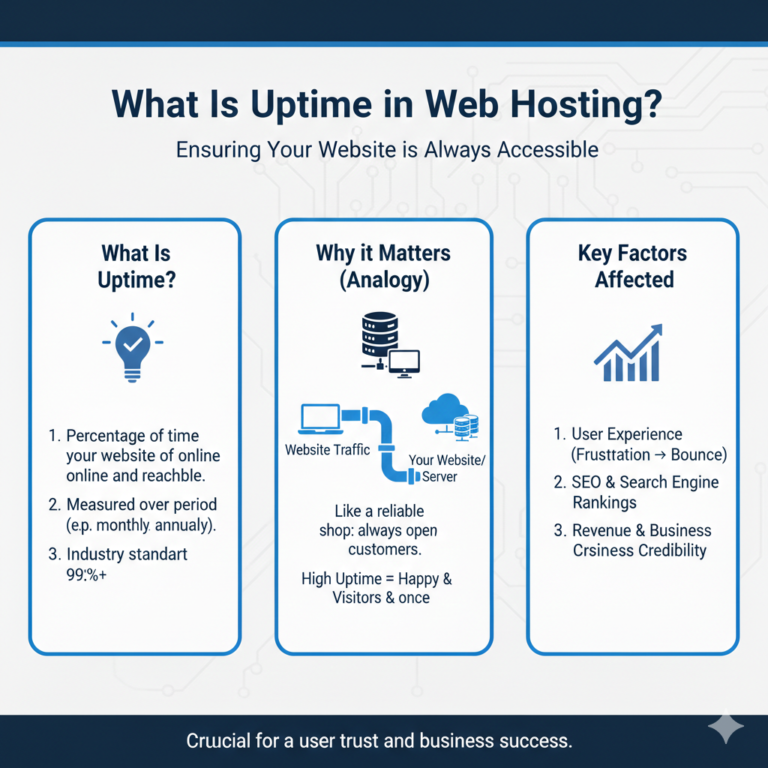
Myth #3 – Cheap Hosting Has Terrible Uptime
The Myth: Your website will be offline constantly. You’ll wake up to “Server Not Found” errors because cheap providers use unreliable data centers.
The Truth: Cloud infrastructure has made reliable budget hosting a reality. Uptime guarantees are legally binding and easier to maintain than ever.
The Shift to Cloud Infrastructure
The definition of “server” has changed. In the past, a cheap account lived on a single physical machine. If that machine’s power supply failed, your site went down.
In 2026, many budget hosts have moved to cloud-based infrastructure. Your “server” is actually a slice of a massive cluster of machines. If one hardware node requires maintenance or fails, your site is instantly migrated to a healthy node, often without a single second of downtime. This redundancy used to be expensive; now it is the most efficient way for hosts to operate at scale.
SLA Improvements
Service Level Agreements (SLAs) promise a certain percentage of uptime, usually 99.9%. If a host drops below this, they usually have to credit you money. Because margins are tight on cheap hosting, providers cannot afford to issue thousands of refunds. It is actually more profitable for them to maintain high uptime than to deal with the support costs and refunds associated with downtime.
While a $5/month plan might not offer the 99.999% uptime required by a bank, 99.9% (which allows for about 43 minutes of downtime per month, usually for scheduled maintenance at night) is more than sufficient for blogs and small businesses.
Myth #4 – Cheap Hosting Can’t Handle Traffic Growth
The Myth: If your blog post goes viral, your site will crash immediately, and the host will shut you down for using too many resources.
The Truth: Scalable cheap hosting allows for vertical growth. You aren’t stuck on the entry-level plan forever.
Vertical Scaling Explained
The beauty of modern hosting dashboards is the ability to vertically scale. Let’s say you start on a “Micro” plan with 1GB of RAM. Suddenly, you get featured on a major news site.
On a legacy host, you might crash. On a modern budget host, you often have the option to upgrade your CPU and RAM limits instantly—sometimes with a single click—to handle the surge. You pay the difference for the upgrade, but you don’t have to migrate your website to a new server. This elasticity allows you to start small to save money and only pay for budget hosting traffic handling capabilities when you actually have the traffic.
CDN Offloading
As mentioned in the speed section, CDNs handle the heavy lifting. If your traffic spikes, the CDN absorbs the majority of the bandwidth request (loading images, CSS, and JavaScript). The actual hit to your cheap hosting server is minimal. By configuring a CDN correctly, a budget plan can withstand significantly higher traffic waves than the specs would suggest.
Myth #5 – Cheap Hosting Has No Support
The Myth: You are on your own. If something breaks, you’ll send an email into a void and wait three days for a reply.
The Truth: Support channels have shifted. While phone support might be gone, cheap hosting support quality via chat and automation has improved.
The AI and Chat Revolution
It is true that you likely won’t get a dedicated phone agent on a budget plan. However, 24/7 live chat is the industry standard. In 2026, AI-driven initial triage helps significantly.
When you open a support ticket, an AI assistant can instantly check your server status, clear your cache, or identify common error codes (like 503 or 404). For 80% of issues, this solves the problem instantly. For the complex 20%, you are escalated to a human. This efficiency keeps costs down for the host while providing faster resolution times for budget hosting customer service.
Comprehensive Knowledge Bases
Budget hosts invest heavily in documentation. They want you to solve the problem yourself because it saves them money. This means you get access to extensive libraries of tutorials, video guides, and step-by-step walkthroughs that are often better than what premium, “managed” services offer.
Myth #6 – Cheap Hosting Is Only for Hobby Sites
The Myth: You can’t run a “real” business on cheap hosting. It’s for personal blogs and testing, not for making money.
The Truth: Cheap hosting for business is a viable strategy for startups, local businesses, and even e-commerce stores.
Small Business Use Cases
Consider a local landscaping company. Their website exists to show services, display a phone number, and perhaps offer a contact form. This site receives steady, low-volume traffic. Hosting this on a $50/month premium server is a waste of capital. A budget plan provides ample bandwidth and storage for this business model without impacting the user experience.
E-Commerce Viability
Can you run a store on cheap hosting? Yes. Platforms like WooCommerce run perfectly fine on optimized shared hosting for small to medium-sized catalogs. As long as you have your SSL enabled (which is free) and a payment gateway set up (which is external to the host), affordable hosting for ecommerce is perfectly secure and functional.
You only need to upgrade when your database becomes massive or you have dozens of concurrent checkout processes happening every second. For a store selling 10-50 items a day, budget hosting is more than capable.
[Check Budget Hosting Deals]
Myth #7 – Cheap Hosting Always Has Hidden Costs
The Myth: The price you see is a lie. You’ll get hit with setup fees, migration fees, and expensive plugins just to make the site work.
The Truth: Pricing models are transparent if you know where to look. The “trap” isn’t hidden fees; it’s the renewal strategy.
Understanding the Renewal Cycle
Most hosting renewal pricing works on an introductory model. You might pay a low rate for the first 3-year term, and then the price renews at the “regular” rate.
This isn’t a scam; it is a standard customer acquisition cost model. The myths of “hidden fees” usually come from users who didn’t read the renewal terms. In 2026, regulations and consumer demand have forced hosts to display renewal rates more clearly during checkout.
What’s Included vs. What’s Extra
Ten years ago, you had to pay extra for email, backups, and SSL. Today, competitive cheap hosting plans include:
- Free Email Accounts
- Free Daily/Weekly Backups
- Free Domain (often for the first year)
- Free Website Builders
The “hidden costs” are disappearing because the market is too competitive. If Host A charges for backups, customers will move to Host B who includes them for free.
What Cheap Hosting Can and Cannot Do (Reality Check)
To ensure we are being completely balanced, we must look at the limitations. Budget hosting is powerful, but it is not magic.
| Feature | What Cheap Hosting Can Do | What Cheap Hosting Cannot Do |
|---|---|---|
| Performance | Load fast for standard web pages and blogs using caching. | Handle complex, heavy data processing or video rendering. |
| Traffic | Handle moderate traffic (10k-50k visits/month) easily. | Sustain millions of hits during a “Super Bowl Ad” moment. |
| Control | Allow standard file management and CMS installation (WordPress). | Allow custom server-side software or root access (usually). |
| Send standard business emails. | Send 100,000 marketing newsletters per hour (spam filters will block you). |
When Cheap Hosting Is the Right Choice
You should feel confident choosing a best cheap hosting use cases provider if:
- You are launching an MVP (Minimum Viable Product): Test your business idea with minimal overhead. If the business fails, you haven’t lost much. If it succeeds, you can upgrade.
- You are running a content site or blog: Text and images are easy to cache. A blog with 50,000 monthly readers can live comfortably on a budget plan.
- You are a Local Business: Restaurants, plumbers, lawyers, and consultants rarely need the horsepower of a dedicated server.
- You are building a Portfolio: Personal branding sites are perfect candidates for affordable hosting recommendations.
When You Should Upgrade from Cheap Hosting
While we are busting myths, we must also recognize the ceiling. You should look for hosting upgrade signs when:
- Your site takes longer than 3 seconds to process backend tasks: (e.g., saving a post or processing a payment). Front-end speed can be cached; backend speed requires CPU power.
- You require custom compliance: If you are handling sensitive medical or financial data that requires specific server certifications (HIPAA, etc.), shared environments may not qualify.
- You need root access: Developers who need to install specific libraries or configure the server environment manually will need a VPS, not shared hosting.
Best Cheap Hosting Providers That Actually Perform Well
When looking for the best cheap hosting providers, don’t just look at the price. Look for these specific traits in their offering:
- The “Litespeed” Adopters: Look for hosts that explicitly mention Litespeed servers. They prioritize performance even on cheap tiers.
- The “Cloud” Shared Hosts: Providers that advertise “Cloud Shared” hosting offer better uptime and isolation than traditional legacy hosts.
- The “WordPress Optimized” Specialists: Even on budget tiers, these hosts pre-configure the server specifically for WordPress, which solves 90% of speed issues.
[View Hosting Reviews]
FAQs – Cheap Hosting Myths
Is cheap hosting safe for websites?
Yes. As long as the host uses containerization (like CloudLinux) and offers free SSL certificates, cheap hosting is safe. The biggest security risk is usually the user’s weak password or outdated plugins, not the hosting server itself.
Can cheap hosting rank well on Google?
Absolutely. Google ranks sites based on content quality, mobile-friendliness, and loading speed. Since cheap hosting can be optimized to load quickly (especially with a CDN), there is no penalty for using an affordable provider.
How cheap is too cheap for hosting?
Be wary of “free” hosting or hosting that costs pennies per year. Sustainable budget hosting usually falls in the range of the price of a cup of coffee per month. Anything less often relies on selling your data or injecting ads into your site.
Are renewal prices higher on cheap hosting plans?
Yes, this is industry standard. The introductory price is a discount. However, even the renewal price is often very competitive compared to managed hosting solutions. Always check the “renewal rate” line item before buying.
Which cheap hosting provider is most reliable?
Reliability fluctuates, but providers that utilize cloud infrastructure (Google Cloud, AWS, or their own cloud clusters) generally offer the highest reliability. Look for an uptime guarantee of 99.9%.
Can I host WordPress on cheap hosting?
Yes. WordPress powers over 40% of the web, and almost every cheap host is built specifically to support it. Many offer “One-Click Install” features for WordPress.
Does cheap hosting affect website speed?
It can, if unoptimized. However, by using a caching plugin and a free CDN, a site on cheap hosting can outperform a site on expensive hosting that hasn’t been optimized.
Conclusion
The stigma surrounding cheap hosting is a relic of the past. In 2026, technology has democratized access to high-performance web infrastructure. The myths of constant downtime, security breaches, and snail-paced speeds have been busted by the widespread adoption of NVMe storage, cloud redundancy, and automated security protocols.
Budget hosting is not about accepting a broken product; it is about paying for exactly the amount of resources you need right now. It allows creators, entrepreneurs, and small businesses to launch their ideas without the burden of heavy overhead costs.
Don’t let fear dictate your budget. Evaluate your needs, check the specs, and feel confident starting small. Your hosting can grow as you do.
Ready to find the perfect home for your website?