What Is the Most Common Type of Web Hosting? Explained for Beginners
Launching a website involves a surprising number of decisions. You have to pick a domain name, choose a design platform, and create content. But before your site can go live, you must make a critical technical choice: web hosting.
For beginners, the terminology alone can be overwhelming. You will encounter acronyms like VPS, terms like “cloud architecture,” and vast price differences between seemingly similar plans. This confusion often leads new website owners to ask: What is the standard? What do most people use when they are just starting out?
The answer is shared hosting. It is the entry point for the vast majority of websites on the internet today.
Understanding the most common type of web hosting is essential because it is likely the solution that fits your current needs and budget. Choosing the wrong hosting type can result in overpaying for resources you don’t need or, conversely, crashing your site because you lack the necessary power. This guide will break down exactly what shared hosting is, how it works, and help you decide if it is the right foundation for your online presence.
See also: The Evolution of Web Hosting: From Shared Servers to Cloud Infrastructure
The Most Common Type of Web Hosting – Shared Hosting
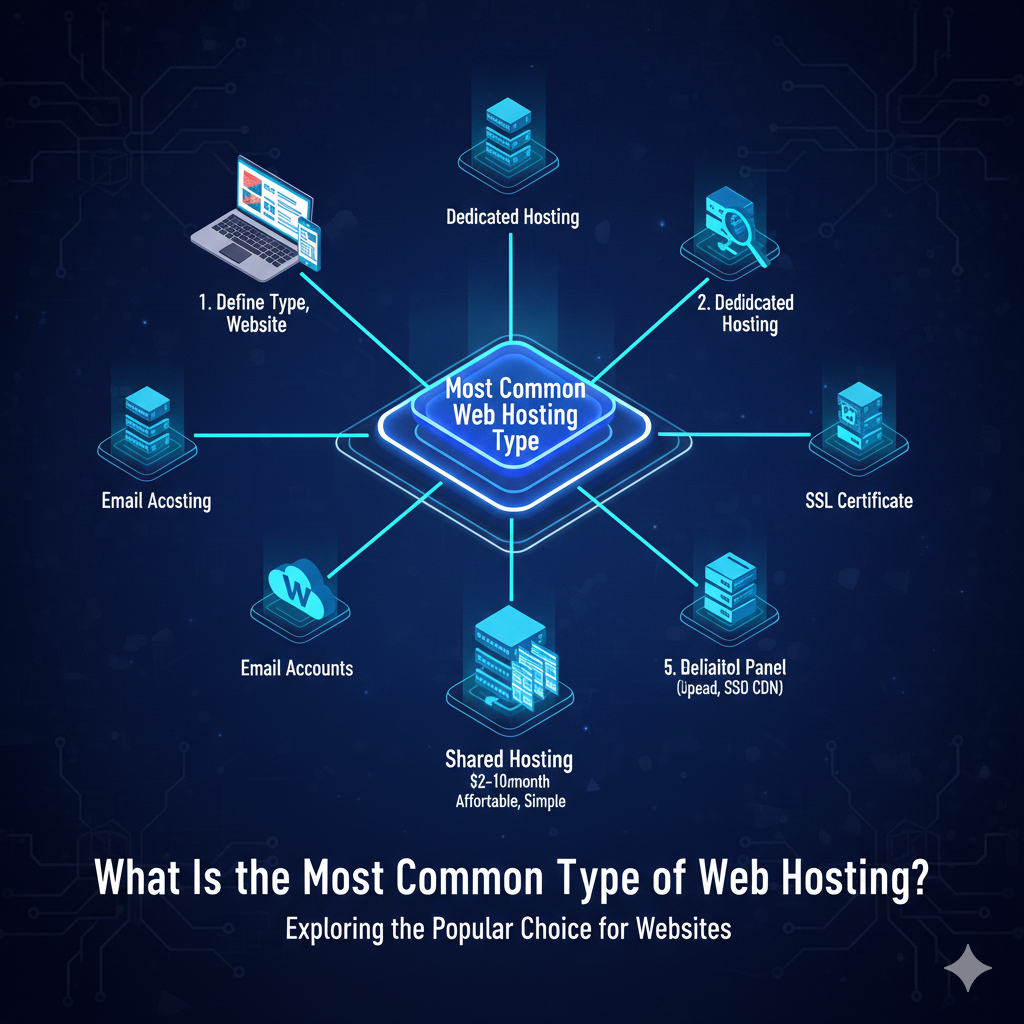
If you are looking for the “default” option for new websites, shared hosting is it. When someone mentions “cheap web hosting” or “beginner hosting,” they are almost exclusively talking about shared hosting.
What is Shared Hosting?
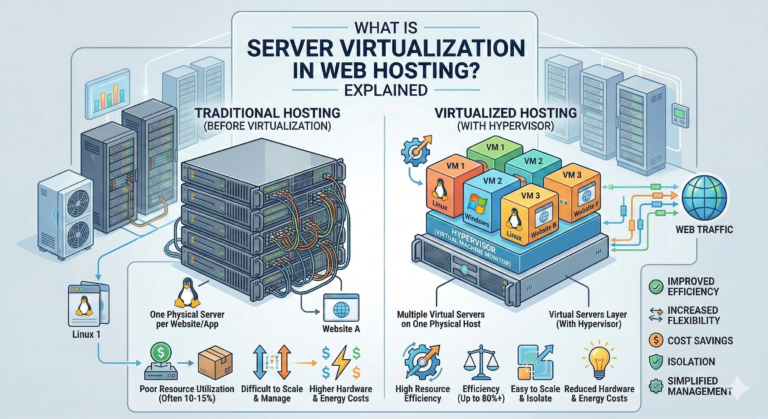
At its core, shared hosting is a setup where multiple websites reside on a single physical server. Think of a web server as a powerful computer that stores website files and serves them to visitors around the world. In a shared hosting environment, that single computer hosts the files for hundreds, or sometimes thousands, of different users.
Why It Dominates the Market
Shared web hosting is the most common form of hosting primarily because of accessibility. It lowers the barrier to entry for the internet. Before shared hosting became streamlined, running a website required significant technical knowledge and expensive hardware. Today, providers have optimized the shared model to be incredibly user-friendly and affordable, making it the go-to choice for personal blogs, small business landing pages, and portfolios.
Who Uses Shared Hosting?
The user base for this hosting type is massive. It includes:
- Bloggers: Writers launching their first WordPress site.
- Small Businesses: Local shops, restaurants, or service providers needing a digital brochure.
- Hobbyists: People creating fan sites or informational wikis.
- Startups: New ventures testing an idea before investing in heavy infrastructure.
How Shared Hosting Works
To truly understand shared hosting for beginners, it helps to use a real-world analogy. Imagine living in a large apartment complex.
In this complex (the server), you rent a single unit (your website). You have your own private space where you keep your furniture and decorations (your site files and images). However, you share the building’s resources with all the other tenants. You all use the same water supply, the same electricity grid, the same parking lot, and the same main entrance.
Server Resource Sharing
Technically speaking, “shared resources” means that all websites on that specific server tap into the same pool of computing power.
- CPU (Central Processing Unit): The brain of the server that processes requests.
- RAM (Random Access Memory): The short-term memory used to run scripts and load pages.
- Disk Space: The hard drive storage where your HTML, CSS, and media files live.
When a visitor clicks on your website, the server uses a bit of its CPU and RAM to show them the page. Because most small websites don’t have visitors every single second of the day, the server can easily juggle the needs of hundreds of sites at once.
Cost Efficiency
This sharing model is the secret behind the low pricing. The hosting company pays for the maintenance, electricity, and hardware of one server, but they split that cost among hundreds of customers. This is how shared hosting works to keep monthly fees comparable to the price of a cup of coffee.
Advantages of Shared Hosting
There is a reason this remains the most common type of web hosting. For 90% of new projects, the benefits far outweigh the downsides.
Low Cost
The primary benefit of shared hosting is affordability. It is common to find plans ranging from $2 to $10 per month. For a new business or a hobbyist with zero revenue, keeping overheads low is crucial.
Easy Setup and Management
Shared hosting is designed for non-technical users. Providers almost always include a control panel (like cPanel or Plesk) and a “one-click installer.” This means you can install software like WordPress, Joomla, or Drupal in seconds without ever looking at a line of code. The interface is visual and intuitive, allowing you to manage email accounts, databases, and files easily.
Managed Environment
In a shared environment, the hosting provider handles the backend maintenance. You don’t need to worry about updating the server’s operating system, installing security patches for the server software, or replacing physical hardware if a drive fails. This “hands-off” approach allows you to focus entirely on building your website content.
Disadvantages of Shared Hosting
While shared hosting is excellent for starting out, sharing resources comes with inherent compromises.
Limited Performance
Returning to the apartment analogy: if your neighbor throws a massive party, the hallway gets crowded, and the noise might bother you. On a server, if one website suddenly gets a viral spike in traffic, it can hog the server’s CPU and RAM. This creates the “bad neighbor effect,” where your website slows down because someone else on the same server is using too many resources.
Security Risks
While hosting providers work hard to isolate accounts, the reality of sharing a server means strictly defined security boundaries are harder to maintain than on a dedicated server. If a hacker gains root access to the main server through a vulnerability in a neighbor’s site, there is a small potential risk to others on that machine. However, reputable hosts use containerization technology to minimize this risk significantly.
Scaling Limitations
Shared hosting has a ceiling. There is a limit to how much traffic your site can handle. If your business grows and you start receiving tens of thousands of visitors a day, a shared plan will likely crash or the host will temporarily suspend your account to protect other users.
When Should You Use Shared Hosting?
Knowing the pros and cons, when is this the right choice? You should opt for shared hosting if you fall into these categories:
- Personal Websites and Portfolios: If you are building a resume site or a personal blog to share thoughts, shared hosting offers everything you need.
- New Blogs: Until you have built an audience, you don’t need high-performance power. It is better to start small and upgrade later.
- Small Business Websites: For a local bakery or a consulting firm where the website primarily provides information (hours, location, services) rather than complex functionality, shared hosting is sufficient.
- Database-Light Sites: If your site doesn’t require thousands of database queries per second, shared hosting will perform perfectly well.
In short, these are the best hosting for beginners use cases. If your traffic is low to moderate (0 to 5,000 visitors a month), shared hosting is the smart economic choice.
When Should You Upgrade from Shared Hosting?
Success brings its own set of problems. As your site grows, you may outgrow the shared environment. Here are the signs it is time to upgrade from shared hosting:
- Traffic Growth: If you are consistently hitting 20,000+ monthly visitors, or if you have frequent traffic spikes that crash your site.
- Speed Issues: If you have optimized your images and code but your site is still sluggish (Time to First Byte is high), the server may be overloaded.
- Security Needs: If you are handling sensitive customer data (like HIPAA-compliant information) or processing high-volume transactions, you may need a more isolated environment.
- Custom Software: Shared hosts usually lock down the server settings. If you need to install custom server-side software or change specific configuration files, you will need to move to VPS hosting.
Other Types of Web Hosting Compared
To understand why shared hosting is the “most common,” it helps to see what it is competing against.
VPS Hosting (Virtual Private Server)
If shared hosting is an apartment, VPS hosting is a townhouse. You still share the physical building (server), but you have dedicated walls and resources that no one else can touch.
- Shared vs VPS hosting: VPS is more expensive and requires more technical skill, but it offers better performance and stability.
Cloud Hosting
Cloud hosting uses a network of servers rather than a single machine. If one server fails, another takes over. It is like staying in a network of hotels; you have resources on demand.
- Cloud hosting vs shared hosting: Cloud is infinitely scalable. It handles traffic spikes much better than shared hosting but often comes with a more complex, usage-based pricing model.
Dedicated Hosting
This is owning the house. You rent the entire physical server. No sharing. All the resources are yours. This is expensive and intended for massive websites like Amazon or Facebook, or large enterprise applications.
Managed WordPress Hosting
This is a specific subtype of hosting optimized purely for WordPress. It often uses shared or cloud architecture but includes premium support, automatic updates, and specialized security. It is a step up in convenience and price from standard shared hosting.
Cost Comparison – Shared Hosting vs Other Hosting Types
Price is the main driver for shared hosting’s popularity. Here is how the costs generally stack up:
- Shared Hosting Cost: Usually ranges from $2.95 to $10 per month. It is the cheapest web hosting option available.
- VPS Hosting: Typically costs between $20 and $60 per month, depending on the allocated RAM and CPU.
- Dedicated Hosting: The premium option, starting around $100 per month and easily reaching $500+ for powerful machines.
When doing a value comparison, shared hosting offers the best “bang for your buck” for a new site. Paying $50 a month for a VPS when you only have 10 visitors is a waste of capital that could be spent on marketing or design.
Best Shared Hosting Providers (2026 Preview)
Because shared hosting is so competitive, there are hundreds of providers. However, a few consistently rise to the top based on uptime, support, and speed.
- Bluehost: Often recommended directly by WordPress.org. It is famous for being incredibly beginner-friendly.
- SiteGround: Known for having superior customer support and higher performance speeds, though slightly pricier than average.
- Hostinger: frequently cited as the best “budget” option, offering surprisingly fast speeds for very low monthly rates.
- DreamHost: Offers month-to-month plans which are great for those who don’t want to lock into a 3-year contract.
When looking for the best shared hosting providers, always check renewal rates. Many hosts offer a low introductory price (e.g., $2.99) that jumps to a regular rate (e.g., $9.99) after the first term.
FAQs – Most Common Type of Web Hosting
What is the most common type of web hosting?
Shared hosting is the most common type. It is the standard starting point for personal sites, blogs, and small businesses due to its low cost and ease of use.
Why is shared hosting so popular?
Its popularity comes from affordability and simplicity. It allows anyone to publish a website without needing to understand Linux commands or server administration.
Is shared hosting good for beginners?
Yes, it is the best option for beginners. It comes with pre-configured environments and control panels that make managing a website as easy as managing a social media profile.
How much does shared hosting cost?
You can find decent shared hosting for as little as $2 to $5 per month if you sign a long-term contract. Month-to-month plans usually cost between $10 and $15.
Can shared hosting handle high traffic?
Generally, no. Shared hosting is meant for low to medium traffic. If your site starts getting tens of thousands of visitors simultaneously, you will need to upgrade.
When should I upgrade from shared hosting?
You should upgrade when your site slows down noticeably, you experience downtime during traffic spikes, or your revenue justifies the cost of a VPS or Managed plan for better reliability.
Is shared hosting secure?
It is secure enough for standard websites. However, because you share the server with others, there is a slightly higher risk compared to isolated hosting. Always use strong passwords and keep your website software updated to maximize security.
Making the Right Choice for Your Website
Choosing a web host feels like a high-stakes decision, but it doesn’t have to be permanent. The beauty of the web is its flexibility. Starting with shared hosting—the most common type of web hosting—is the logical first step for 99% of new websites. It allows you to launch quickly, keep your costs low, and learn the ropes of website management without a steep learning curve.
If your website becomes a massive success and outgrows the shared environment, that is a good problem to have. Until then, shared hosting provides all the tools you need to build your corner of the internet.
Don’t let analysis paralysis stop you. Compare the shared hosting plans from reputable providers, pick one that fits your budget, and get your site live today.
Related articles: