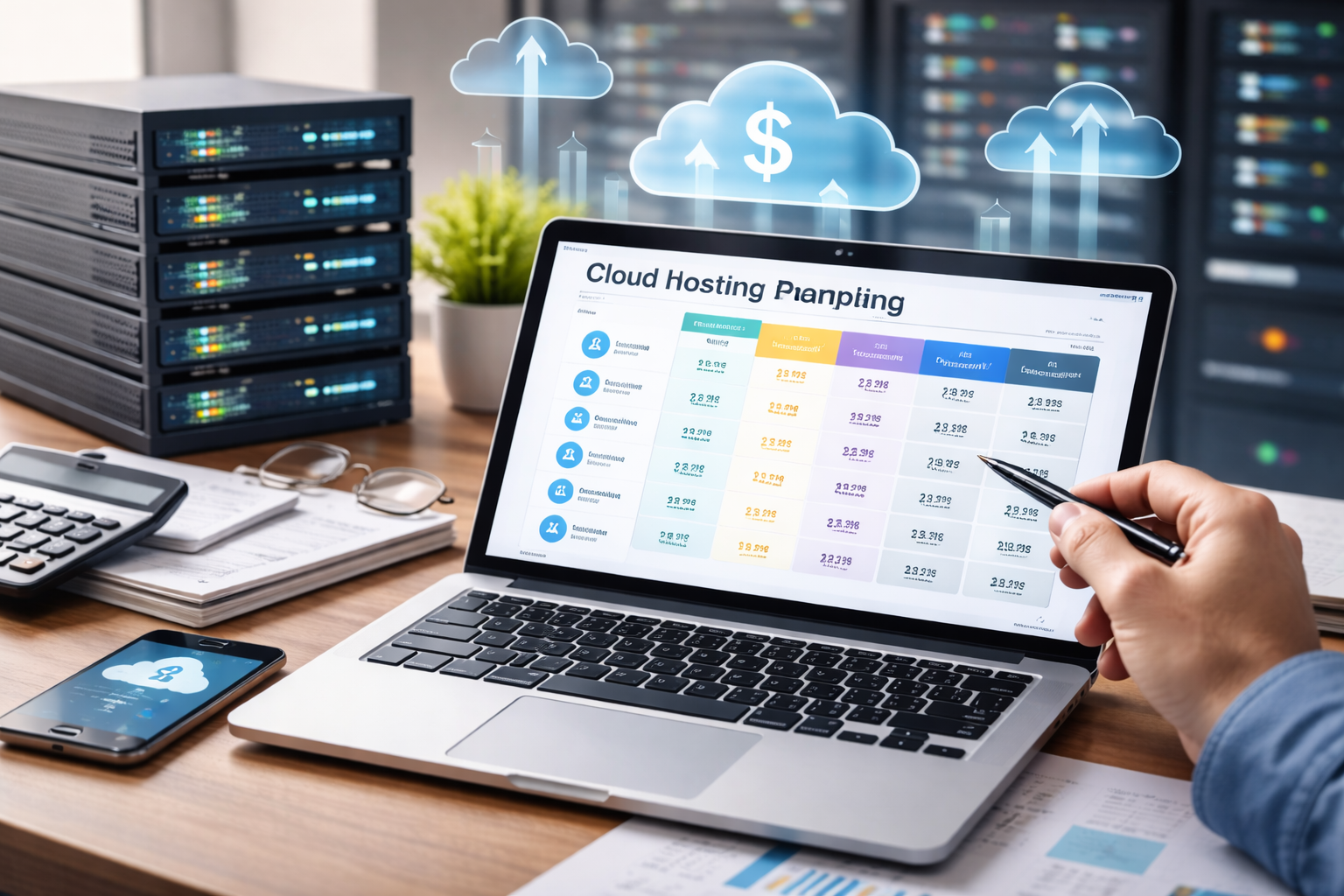
9 Cloud Hosting Providers in 2026 Compared by Pricing and Scalability
In 2026, cloud hosting has firmly established itself as the backbone of modern digital infrastructure. From agile startups to multinational corporations, the shift away from rigid, traditional server setups toward flexible cloud environments is nearly universal. As businesses continue to demand higher uptime, faster speeds, and the ability to handle massive traffic spikes, the cloud hosting market has become more competitive than ever.
However, with so many providers vying for attention, choosing the right partner has become a complex challenge. Marketing jargon often obscures the reality of costs and capabilities. Two factors consistently rise to the top of the decision-making matrix: pricing and scalability. Can the platform grow with you without breaking the bank? Does the pricing model align with your actual usage, or are you paying for idle resources?
This guide breaks down the top 9 cloud hosting providers of 2026, specifically analyzing them through the lens of cost-efficiency and growth potential. We will explore how these platforms handle resource allocation, what you can expect to pay, and which providers offer the best balance of power and affordability.
Background and Cloud Hosting Explained
Before diving into the comparisons, it is essential to understand the mechanics of cloud hosting and why it differs so significantly from the hosting solutions of the past.
What cloud hosting is and how it works
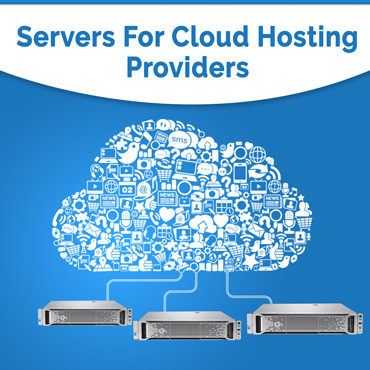
Cloud hosting utilizes a network of virtual and physical servers to host applications and websites. Unlike traditional hosting, where your data resides on a single physical machine, cloud hosting distributes data across multiple interconnected servers. This “cloud” of resources ensures that if one server fails, another instantly takes over, maintaining continuity. The infrastructure relies heavily on virtualization technology, which partitions physical hardware into isolated virtual environments.
Differences between cloud hosting and traditional hosting
The primary distinction lies in resource allocation and reliability. Traditional hosting (like shared or dedicated hosting) binds you to specific hardware. If that hardware fails or reaches its capacity, your site goes down. Cloud hosting decouples your data from specific hardware constraints. It offers elasticity—the ability to expand or contract resources like CPU, RAM, and storage instantly—providing a level of resilience and flexibility that traditional setups simply cannot match.
Methodology and Comparison Criteria
To ensure a fair comparison of the top providers in 2026, we focused on three critical pillars that directly impact business operations.
Pricing models and cost transparency
We examined how each provider structures their billing. Is it a fixed monthly fee, or a pay-as-you-go model based on hourly usage? We also looked for hidden costs, such as bandwidth overage fees or charges for premium support, to determine true cost transparency.
Scalability features and resource flexibility
Scalability isn’t just about having more space; it’s about how easily you can access it. We evaluated how quickly users can upgrade resources (vertical scaling) or add more server nodes (horizontal scaling). We also considered whether these processes are automated or require manual intervention.
Performance consistency and availability
A cheap, scalable host is useless if it’s offline. We reviewed uptime guarantees (SLAs), global data center distribution, and the redundancy measures in place to ensure high availability during peak traffic periods.
9 Best Cloud Hosting Providers in 2026
The landscape in 2026 is diverse, ranging from hyperscale giants to developer-focused platforms. Here is how the top 9 contenders stack up regarding pricing and scalability.
1. Amazon Web Services (AWS)
Overview: The market leader remains the go-to for enterprise-level needs. AWS offers an unmatched breadth of services.
Scalability & Pricing: AWS sets the standard for auto-scaling. You can configure granular rules to scale resources up or down automatically. However, the pricing model is notoriously complex. While you pay only for what you use, unmonitored usage can lead to “bill shock.” It is ideal for companies that need infinite scale and have the budget (and expertise) to manage it.
2. Google Cloud Platform (GCP)
Overview: Known for its cutting-edge data analytics and Kubernetes support, GCP powers some of the internet’s heaviest workloads.
Scalability & Pricing: GCP offers excellent custom machine types, allowing you to tailor CPU and RAM ratios exactly to your needs, which minimizes waste. Their sustained use discounts are a major plus for long-running workloads, often making them cheaper than AWS for predictable high-volume traffic.
3. Microsoft Azure
Overview: Azure is the preferred choice for organizations heavily invested in the Microsoft ecosystem.
Scalability & Pricing: Azure provides seamless hybrid cloud capabilities, making it easy to scale between on-premise servers and the cloud. Their pricing is competitive, particularly for businesses with existing enterprise agreements with Microsoft. Hybrid benefit discounts can significantly lower costs for Windows Server migration.
4. DigitalOcean
Overview: A favorite among developers and SMBs for its simplicity and user-friendly interface.
Scalability & Pricing: DigitalOcean shines with its transparent, flat-rate pricing. You know exactly what a “Droplet” (virtual machine) will cost per month. Scalability is straightforward—you can resize Droplets quickly—though it lacks the complex auto-scaling granularity of the hyperscalers. It offers one of the best price-to-performance ratios for small to mid-sized apps.
5. Linode (Akamai)
Overview: Since being acquired by Akamai, Linode has expanded its global reach while maintaining its developer-centric roots.
Scalability & Pricing: Similar to DigitalOcean, Linode offers predictable, flat pricing with generous bandwidth bundles. Their “NodeBalancers” make horizontal scaling relatively easy. It is an excellent choice for those who need raw Linux power without the confusing billing of enterprise clouds.
6. Vultr
Overview: Vultr differentiates itself with high-performance hardware, offering high-frequency compute instances.
Scalability & Pricing: Vultr provides an impressive variety of instance types, including bare metal. Their hourly billing is extremely flexible, allowing short-term scaling for temporary projects. Pricing is transparent, and they have expanded their data center presence significantly by 2026, offering low-latency options in niche markets.
7. Heroku
Overview: A Platform as a Service (PaaS) that abstracts away infrastructure management, allowing developers to focus solely on code.
Scalability & Pricing: Heroku is incredibly easy to scale; you simply adjust a slider to add more “dynos” (containers). However, this convenience comes at a premium. Heroku is often the most expensive option per unit of compute power, but the savings in DevOps labor can justify the cost for smaller teams.
8. Kamatera
Overview: A performance-oriented provider known for high customization.
Scalability & Pricing: Kamatera allows you to configure servers with exact specifications—choosing the exact number of CPU cores and GB of RAM. This prevents over-provisioning. They offer a 30-day free trial and highly scalable infrastructure that can be deployed in under a minute, making them a strong contender for dynamic workloads.
9. Hostinger (Cloud Plans)
Overview: While known for shared hosting, Hostinger’s cloud plans have matured into a robust solution for less technical users.
Scalability & Pricing: Hostinger bridges the gap between shared and VPS. Their custom control panel makes upgrading resources a one-click affair. The pricing is among the lowest in the industry for managed cloud features, making it the best entry point for beginners or budget-conscious projects.
Key Factors Influencing Cloud Hosting Performance
Choosing a provider is only half the battle; understanding what drives performance is the other.
Infrastructure design and virtualization
The underlying hardware matters. Providers using NVMe SSD storage and the latest generation processors will inherently outperform those on older hardware. Furthermore, the virtualization technology (like KVM) dictates how efficiently the physical server’s resources are shared. Good isolation ensures that a “noisy neighbor” on the same physical server doesn’t impact your performance.
Data center locations and global availability
Latency—the delay between a user’s action and the server’s response—is dictated by physics. The closer the data center is to your user, the faster the site loads. By 2026, top providers have established edge locations and data centers in secondary markets, not just major tech hubs. This distributed architecture also aids in disaster recovery; if one region goes offline, traffic can be rerouted.
Security standards and compliance support
Performance is irrelevant if your data is compromised. Leading cloud providers now integrate advanced DDoS protection, firewalls, and automated backups at the infrastructure level. For industries like healthcare or finance, the provider’s adherence to compliance standards (like HIPAA, GDPR, or SOC 2) is a non-negotiable performance metric.
Why Cloud Hosting Matters for India and Emerging Markets
The digital economy in emerging markets, particularly India, has exploded by 2026. This growth places unique demands on hosting infrastructure.
Scalability needs for growing digital businesses in India
India’s internet user base is massive and mobile-first. Digital businesses here often experience extreme volatility in traffic—viral trends can bring millions of users in hours. The elasticity of cloud hosting is vital for survival. Startups cannot afford to buy hardware for peak capacity that sits idle 90% of the time; they need instant, automated scaling to handle festive sales or viral events.
Cost management considerations for regional companies
While scalability is necessary, budget sensitivity remains high. Regional companies often operate on thinner margins than their Western counterparts. Cloud providers that offer granular billing (paying by the minute or second) and local currency support are gaining ground. Furthermore, data localization laws in India require certain data to stay within the country, making providers with local data centers (like AWS Mumbai or local players) essential for both compliance and cost control.
Current Trends in Cloud Hosting
As we move through 2026, the cloud hosting industry continues to evolve to meet sophisticated user demands.
Increased demand for flexible billing and usage-based pricing
The era of flat monthly fees for enterprise resources is fading. Businesses are demanding true utility billing—similar to paying for electricity. We are seeing a shift toward “serverless” pricing models even in standard hosting, where users are charged based on the exact number of requests or compute seconds used, ensuring zero waste.
Focus on reliability, redundancy, and uptime
With downtime costing businesses thousands of dollars per minute, reliability has become the primary differentiator. Providers are competing on “five nines” (99.999%) uptime guarantees. This is achieved through multi-zone redundancy, where data is mirrored across physically separate buildings within the same region, ensuring that a fire or power outage in one building doesn’t take the application offline.
Expert Insights and Data-Backed Analysis
Industry data suggests a clear correlation between infrastructure investment and business longevity.
Industry benchmarks for cloud infrastructure performance
Recent benchmarks indicate that infrastructure utilizing containerization (like Kubernetes managed services) sees a 30% improvement in resource utilization compared to traditional virtual machines. Furthermore, sites hosted on cloud infrastructure with edge computing capabilities show a 40% reduction in latency for global audiences.
Common cost and scalability trade-offs
There is no free lunch. Experts consistently point out the “convenience tax.” Platforms that handle all the scaling logic for you (PaaS like Heroku) charge significantly more per resource unit than Infrastructure as a Service (IaaS like DigitalOcean). Businesses must decide if they want to pay with money (for managed scaling) or with engineering time (configuring auto-scaling on IaaS).
What to Watch Next
The horizon of cloud hosting is changing rapidly. Two specific areas warrant close attention.
Changes in cloud pricing structures
We anticipate a move toward outcome-based pricing rather than resource-based pricing for certain AI and ML workloads. Additionally, as competition heats up, we may see aggressive price wars in bandwidth costs (egress fees), which have historically been a pain point for data-heavy applications.
Developments in multi-cloud and hybrid environments
Vendor lock-in is a growing concern. In response, tools that manage workloads across multiple clouds (e.g., running the database on AWS and the application on GCP) are becoming more robust. 2026 is seeing the rise of the “cloud-agnostic” architecture, allowing businesses to leverage the best pricing and features of different providers simultaneously without technical friction.
Frequently Asked Questions
How does cloud hosting pricing typically work?
Cloud hosting usually operates on a Pay-As-You-Go model. You are charged based on the resources (CPU, RAM, Storage, Bandwidth) you consume over a billing cycle, often measured in hours or seconds. Some providers also offer fixed monthly plans for simpler budgeting.
Is cloud hosting suitable for small businesses?
Yes. While it powers giants like Netflix, cloud hosting is excellent for small businesses because it eliminates the need for expensive hardware investments. You can start with a very small, cheap server and scale up only as your business grows.
What makes cloud hosting scalable compared to VPS?
While a VPS is a slice of a server, it often has hard limits based on the physical machine it sits on. Cloud hosting abstracts resources across many machines. Upgrading a VPS might require a reboot or migration; scaling cloud resources can often happen instantly, sometimes automatically, without downtime.
How predictable are cloud hosting costs over time?
It depends on the provider and configuration. Flat-rate providers (like DigitalOcean or Linode) offer high predictability. Usage-based providers (like AWS) can fluctuate wildly if traffic spikes. Setting up billing alerts and resource caps is essential for maintaining predictable costs.
Moving Forward with the Right Cloud Partner
Selecting a cloud hosting provider in 2026 is about balancing your current budget with your future ambitions. Whether you prioritize the raw power and infinite scale of AWS, the developer-friendly simplicity of DigitalOcean, or the cost-effective performance of Vultr, the right choice will empower your business to grow without technical bottlenecks.
Take the time to audit your specific needs. Are you building a global app that needs edge locations? Or a local e-commerce store that needs predictable billing? By aligning your infrastructure choice with your business goals, you ensure that your technology stack becomes an accelerator for growth rather than a hurdle.