Hosting AI Agents: A Practical Baseline Before You Rebuild
An agent workflow does not become impossible to host because its server was designed in an earlier year. Start with the requirements of the workflow, then compare them with the environment you already have.
The earlier claim that a “2025 architecture” cannot support agents was too broad. This guide replaces that claim with a deployment baseline and specific reasons you might need a change.
Separate orchestration from inference
The orchestration service manages task state, calls permitted tools and handles model responses. The model may run on an external API, on a separate managed endpoint or on infrastructure you operate.
If inference is external, the orchestration host may need ordinary application compute rather than a local GPU. If you serve a model yourself, measure its memory, compute and latency needs separately.
Record the deployment requirements
| Component | Baseline question |
|---|---|
| Runtime | Can the service run the required application and background workers? |
| Task state | Where is progress stored if a worker restarts? |
| Model endpoint | What quotas, timeouts and data-handling rules apply? |
| Tools | Which operations are permitted, and how are inputs checked? |
| Operations | Who handles failures, updates, access and recovery? |
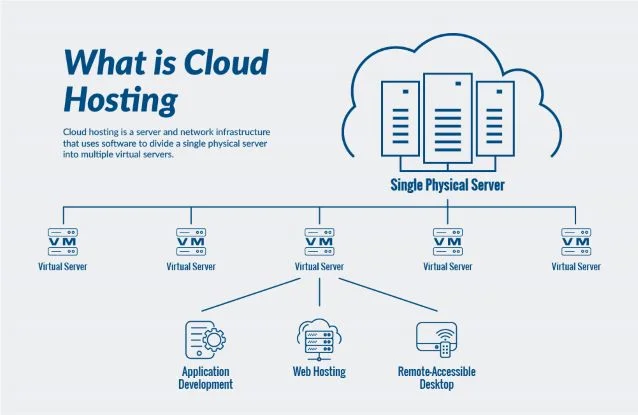
A shared hosting account may restrict background processes or execution duration. A VPS gives different controls but adds administration work. Check the product’s actual limits rather than assuming any hosting label settles the question.
Choose state for the job
Use a suitable durable store for task progress and important outputs. Keep transient cache data separate from records needed to recover a task or prevent duplicate actions.
A vector database is useful for some retrieval designs, not a mandatory memory component for every agent. Start with the retrieval and access requirements, then test quality and response time.
Make tool access an application boundary
Validate tool arguments, enforce permissions and separate tenant data before a tool runs. Keep secrets out of prompts and general-purpose logs where possible.
Limit tool calls and require review for actions with consequences that warrant it. A model instruction alone is not an access-control system, and retrieved documents should not be able to grant the agent new authority.
Use evidence to justify specialised infrastructure
High-bandwidth GPU networking can matter for some distributed model workloads. It is not a universal prerequisite for a worker making ordinary API calls.
Likewise, low network latency helps only to the extent that it affects the full task path. Measure model time, tool time and queueing before buying edge capacity or moving databases.
Deploy a bounded first version
Start with a limited task, a small user group and explicit operating limits. Test a restart, a timeout and a tool failure, then confirm that no action was unintentionally repeated.
The scaling guide explains queue and retry controls. Use the inference comparison if model serving is your responsibility, and the production gates before expanding scope. Rebuild only the parts that do not meet the measured requirements.