The State of AI Hosting: Global Trends for 2026
Artificial intelligence has moved decisively from experimentation to production. By 2026, AI systems are no longer peripheral tools; they are embedded into the core operations of enterprises, governments, and digital-native startups. Powering this transformation is AI hosting—the specialized infrastructure designed to train, deploy, and scale AI workloads efficiently, securely, and at global scale.
AI hosting refers to purpose-built compute environments optimized for machine learning (ML), deep learning (DL), and generative AI workloads. These environments are designed to handle massive parallel processing, data-intensive pipelines, real-time inference, and strict compliance requirements. In 2026, AI hosting has become a strategic asset, not just an IT decision.
Why AI Hosting Matters in 2026
Several converging forces have made AI hosting mission-critical:
- Explosion of AI workloads: Generative AI, computer vision, and real-time analytics require orders of magnitude more compute than traditional applications.
- Enterprise-wide adoption: AI is now embedded across finance, healthcare, manufacturing, retail, and public services.
- Regulatory scrutiny: Governments demand data sovereignty, explainability, and security, shaping where and how AI workloads are hosted.
- Performance expectations: End users expect instant responses from AI-driven systems, pushing infrastructure closer to the edge.
From a market perspective, the global AI hosting market is experiencing double-digit compound annual growth. Analysts project sustained expansion through and beyond 2026, driven by enterprise digital transformation, sovereign AI initiatives, and the commercialization of large language models (LLMs). For businesses and governments alike, choosing the right AI hosting strategy is now synonymous with competitiveness, compliance, and innovation velocity.
What Is AI Hosting?
AI hosting is the provisioning and management of infrastructure specifically optimized for AI workloads. Unlike general-purpose cloud or traditional hosting, AI hosting environments are engineered to support the unique computational, architectural, and operational demands of artificial intelligence systems.
Core Components of AI Hosting
AI hosting environments typically include:
- Accelerated compute: GPUs, TPUs, and NPUs designed for parallel processing.
- High-throughput networking: Low-latency interconnects (e.g., InfiniBand) for distributed training.
- Scalable storage: High-performance object and block storage optimized for large datasets.
- Orchestration layers: Kubernetes and container platforms for workload portability and automation.
- Security and compliance tooling: Encryption, access controls, audit logging, and compliance frameworks.
AI Hosting vs Traditional Hosting
| Dimension | Traditional Hosting | AI Hosting |
|---|---|---|
| Compute | CPU-centric | GPU/TPU/NPU-accelerated |
| Workloads | Web apps, databases | ML training, inference, LLMs |
| Scaling | Vertical / limited horizontal | Elastic, distributed |
| Orchestration | VM-based | Containers, Kubernetes |
| Performance | General-purpose | AI-optimized throughput & latency |
Traditional hosting environments struggle with the parallelism, memory bandwidth, and scalability requirements of modern AI models. AI hosting addresses these gaps by aligning infrastructure design with AI workload characteristics.
Key Technologies Powering AI Hosting
Edge computing: Brings AI inference closer to data sources for ultra-low latency.
GPUs (Graphics Processing Units): The backbone of AI training and inference.
TPUs (Tensor Processing Units): Specialized accelerators optimized for tensor operations.
NPUs (Neural Processing Units): Increasingly used in edge and mobile AI deployments.
Kubernetes & containerization: Enable portability, scalability, and DevOps integration.
Global AI Hosting Market Overview
Market Size and Growth
By 2026, the global AI hosting market is estimated to be worth hundreds of billions of dollars, encompassing hyperscale cloud services, specialized AI infrastructure providers, and sovereign cloud initiatives. Growth rates remain robust, with annual expansion driven by:
- Enterprise AI deployment at scale
- Proliferation of generative AI applications
- Public sector investment in national AI capabilities
Key Market Drivers
- AI adoption across industries
From predictive maintenance to personalized medicine, AI is now a core business capability. - Big data explosion
AI systems thrive on data, and global data volumes continue to grow exponentially. - Cloud and hybrid transformation
Enterprises are modernizing infrastructure to support AI-native architectures. - Sovereign and regulated AI
Governments and regulated industries demand local, compliant AI hosting options.
Challenges Facing the Market
Despite strong growth, the AI hosting market faces structural challenges:
- Energy consumption: AI data centers are energy-intensive, raising sustainability concerns.
- High costs: GPUs and specialized accelerators remain expensive and supply-constrained.
- Hardware shortages: Demand for advanced AI chips often outstrips supply.
- Operational complexity: Managing distributed AI systems requires specialized expertise.
Regional Market Insights
United States
The United States remains the global leader in AI hosting adoption and innovation.
Enterprise and Startup Adoption
US enterprises deploy AI at scale across finance, healthcare, defense, and consumer technology. Startups benefit from deep capital markets and mature cloud ecosystems, enabling rapid experimentation and scaling.
Major Providers and Hyperscalers
The US market is dominated by hyperscale providers such as Amazon Web Services, Google Cloud, and Microsoft Azure, alongside a growing ecosystem of specialized AI infrastructure companies.
Regulation and Governance
AI governance in the US emphasizes sector-specific regulation, national security considerations, and voluntary frameworks. While less centralized than Europe, compliance and transparency expectations are rising, especially for AI used in critical infrastructure and public services.
United Kingdom
The United Kingdom positions itself as a global AI innovation hub with strong academic, financial, and public-sector engagement.
AI Infrastructure Maturity
The UK benefits from advanced cloud adoption, high-speed connectivity, and a vibrant AI startup ecosystem. AI hosting is increasingly hybrid, combining global cloud platforms with UK-based data centers.
Public and Private Investment
Significant investment flows into AI research, healthcare AI, and fintech, driving demand for compliant, high-performance AI hosting.
GDPR and Compliance
As a GDPR-aligned jurisdiction, the UK emphasizes data protection, transparency, and responsible AI. These requirements shape hosting decisions, particularly for enterprises handling sensitive personal data.
Germany
Germany represents Europe’s industrial AI powerhouse.
Industry 4.0 and Industrial AI
AI hosting demand in Germany is heavily driven by manufacturing, automotive, and industrial automation. Use cases include predictive maintenance, robotics, and digital twins.
Data Sovereignty Preferences
German enterprises show a strong preference for local or EU-based AI hosting, prioritizing data control, security, and regulatory certainty.
Regulatory Influence
The EU AI Act plays a central role in shaping AI hosting strategies, pushing providers toward transparency, risk management, and localized infrastructure.
Key AI Hosting Trends in 2026
Edge AI Hosting and Real-Time Inference
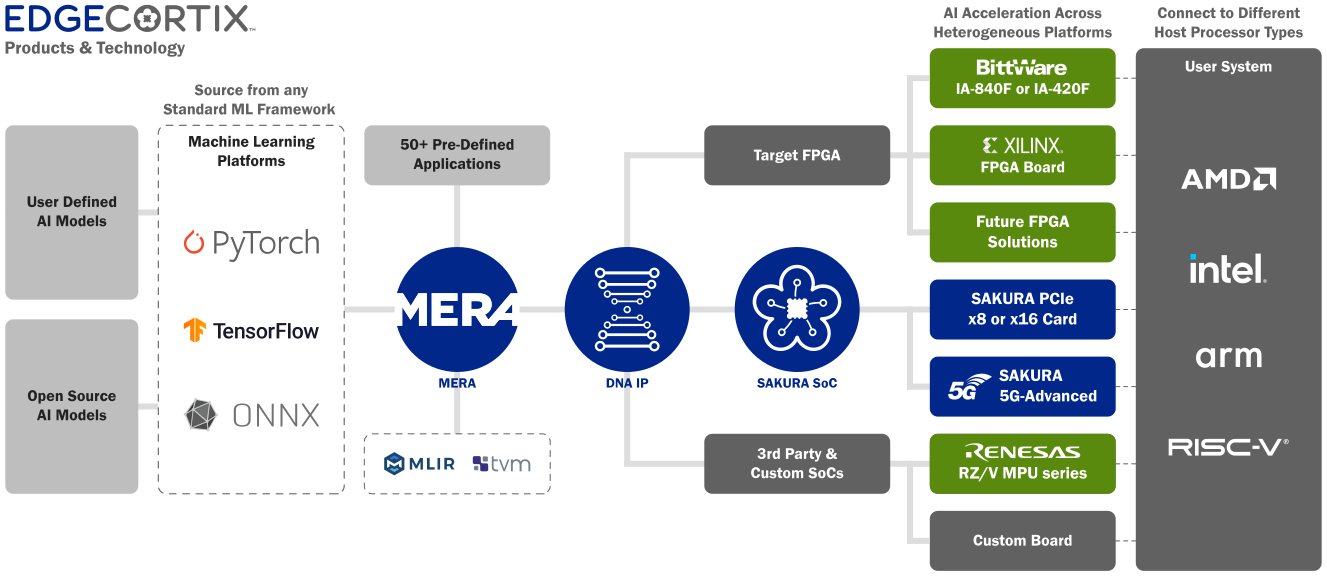
Edge AI hosting brings compute closer to data sources—factories, hospitals, vehicles—enabling millisecond-level latency and reduced bandwidth costs.
Hybrid and Multi-Cloud AI
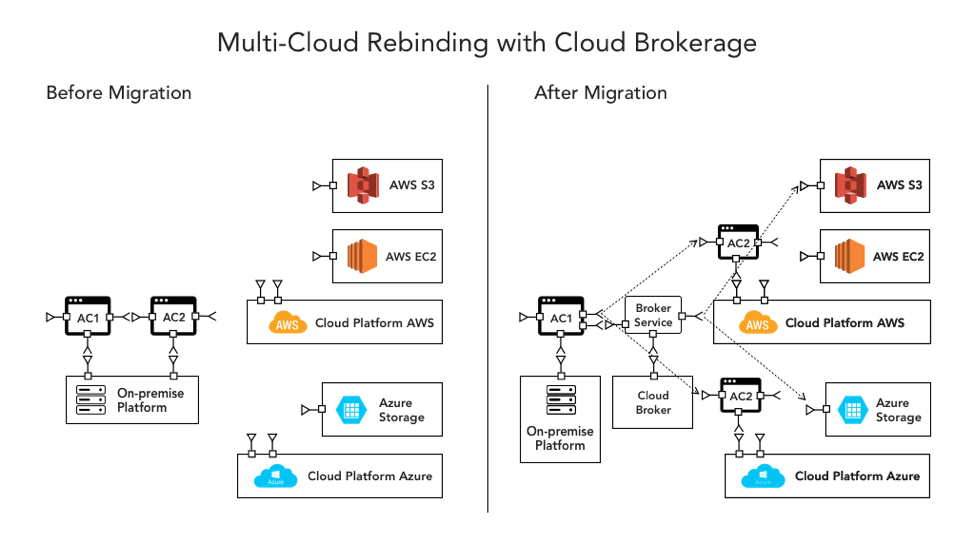
Enterprises increasingly distribute AI workloads across multiple clouds and on-prem environments to optimize cost, performance, and compliance.
Sustainable and Green AI Hosting
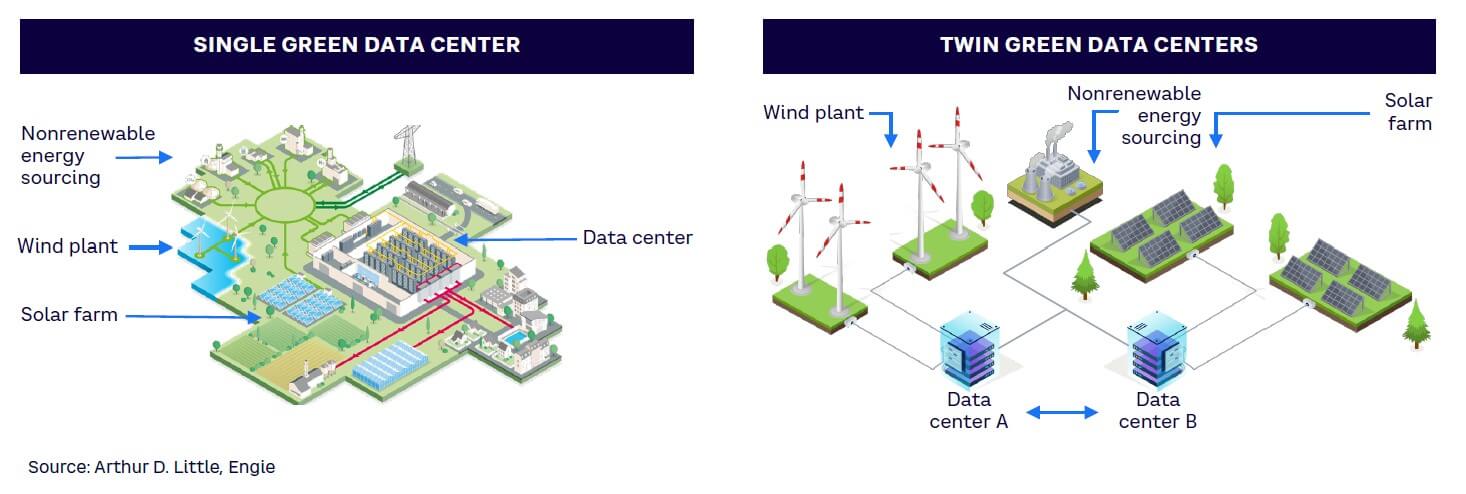
Energy efficiency is now a competitive differentiator. Providers invest in renewable energy, liquid cooling, and carbon-aware scheduling.
AI-Driven Infrastructure Automation
AI manages AI infrastructure. Predictive scaling, automated failover, and intelligent workload placement reduce operational overhead.
Security-First AI Hosting
Zero-trust architectures, confidential computing, and AI-driven threat detection are becoming standard.
Serverless AI Workloads
Serverless paradigms are extending to AI inference, allowing developers to deploy models without managing underlying infrastructure.
Top AI Hosting Providers in 2026
Hyperscalers vs Specialized Providers
Hyperscalers
Pros:
- Massive global scale
- Integrated ecosystems
- Rapid innovation
Cons:
- Vendor lock-in
- Less customization for niche compliance needs
Specialized AI Hosting Providers
Pros:
- Deep AI optimization
- Regulatory specialization
- Tailored performance
Cons:
- Smaller global footprint
- Higher per-unit costs in some cases
Comparison Criteria
- Performance: GPU availability, interconnect speed
- Scalability: Elasticity across regions
- Pricing: Transparent, consumption-based models
- Compliance: Support for regional regulations (US, UK, Germany)
Real-World Use Cases of AI Hosting
Healthcare & Biotech
AI hosting supports medical imaging, drug discovery, and genomics, where large datasets and strict compliance coexist.
Finance & Fraud Detection
Real-time inference detects anomalies and fraud at transaction scale with ultra-low latency.
Retail & Recommendation Systems
Personalization engines rely on AI hosting to process customer behavior in real time.
Autonomous Vehicles & Smart Cities
Edge AI hosting enables real-time decision-making for traffic systems and autonomous navigation.
Generative AI & Large Language Models
Training and serving LLMs is one of the most compute-intensive workloads, driving demand for advanced AI hosting infrastructure.
AI Hosting Cost & Pricing Models
GPU-Based Pricing
Customers pay per GPU-hour, often with premiums for next-generation accelerators.
Consumption-Based Pricing
Costs align with actual compute, storage, and network usage, improving cost predictability.
Cost Optimization Strategies
- Model optimization and pruning
- Spot and reserved instances
- Hybrid deployment strategies
Total Cost of Ownership (TCO)
TCO includes hardware, energy, staffing, compliance, and opportunity costs. Strategic planning is essential to avoid cost overruns.
Challenges & Risks in AI Hosting
- Scalability bottlenecks in peak demand scenarios
- Data privacy and compliance risks across jurisdictions
- Cybersecurity threats targeting high-value AI systems
- Talent shortages in AI infrastructure engineering
Future Outlook Beyond 2026
Technological Breakthroughs
- Advanced AI chips with higher efficiency
- Early-stage quantum acceleration for specific AI tasks
Market Consolidation
Partnerships and acquisitions will reshape the AI hosting landscape, blending hyperscale reach with specialized expertise.
Role in Global Digital Economies
AI hosting will underpin national competitiveness, digital sovereignty, and economic growth worldwide.
Frequently Asked Questions (FAQ)
Q1. What is AI hosting and how does it work?
AI hosting provides specialized infrastructure—GPUs, accelerators, storage, and orchestration platforms—to train and deploy AI models efficiently across cloud, edge, or hybrid environments.
Q2. How is AI hosting different from cloud hosting?
AI hosting is optimized for AI workloads, offering accelerated hardware, high-throughput networking, and AI-specific orchestration not typically found in general cloud hosting.
Q3. Which countries are leading AI hosting adoption in 2026?
The United States, United Kingdom, and Germany lead adoption, with strong growth also seen in Asia-Pacific and the Middle East.
Q4. Is AI hosting expensive?
Costs can be high, but modern pricing models, optimization techniques, and ROI-driven deployments make AI hosting economically viable for many organizations.
Q5. What industries benefit the most from AI hosting?
Healthcare, finance, retail, manufacturing, SaaS, and public sector organizations see the highest returns.
Q6. How secure is AI hosting?
Security is a top priority, with encryption, zero-trust architectures, and AI-driven threat detection built into modern platforms.
Q7. What should businesses consider before choosing an AI hosting provider?
Performance, compliance, scalability, geographic coverage, pricing transparency, and support expertise.
Q8. Will AI hosting replace traditional hosting?
AI hosting will not fully replace traditional hosting but will become the dominant choice for AI-intensive workloads.
Conclusion
AI hosting has become foundational infrastructure for the digital economy of 2026. As AI systems grow more powerful, regulated, and mission-critical, the infrastructure supporting them must evolve accordingly. Across the United States, United Kingdom, and Germany, organizations are investing heavily in AI-optimized hosting to gain performance, compliance, and strategic advantage.
For enterprises, SaaS founders, and developers, the message is clear: AI hosting is no longer optional. Those who invest early in scalable, secure, and sustainable AI hosting platforms will be best positioned to innovate, compete, and lead in the AI-driven decade ahead.