
Best Cloud Hosting for Small Businesses and Startups
Every second your website is offline, you lose money. For a small business or a budding startup, this isn’t just a minor inconvenience; it’s a direct hit to your reputation and revenue. You might have started with shared hosting to save a few dollars, but as your traffic grows, you likely noticed the slowdowns. The solution isn’t necessarily buying expensive dedicated hardware. It’s the cloud.
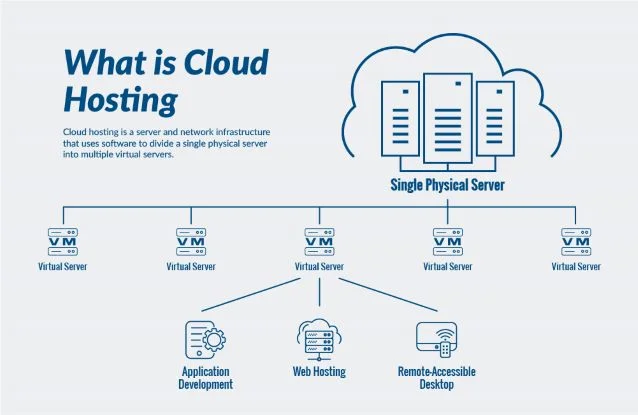
Cloud hosting has democratized high-performance infrastructure. It offers the power and reliability that was once reserved for enterprise giants, but at a price point that fits a seed-stage budget. By utilizing a network of virtual servers, cloud hosting ensures that if one server goes down, another takes its place instantly.
This guide explores why cloud hosting is the smartest infrastructure move for growing businesses. We will break down exactly what to look for, compare the best types of providers available today, and help you decide which option aligns with your growth trajectory.
Why Small Businesses and Startups Should Use Cloud Hosting
The hosting landscape is crowded, but for businesses expecting growth, the cloud stands out. It solves the fundamental problems of traditional hosting models: rigidity and unreliability.
Scalability: Handle Growth Without the Crash
The most defining feature of a startup is growth. You might have 100 visitors today, but a viral marketing campaign could bring 10,000 visitors tomorrow. On traditional hosting, a traffic spike often results in a site crash because you hit your resource limit.
Cloud hosting is elastic. It allows you to scale resources—RAM, CPU, and storage—up or down instantly. You can handle a sudden surge of traffic during a Black Friday sale or a product launch without your website buckling under the pressure. Once the traffic normalizes, you can scale back down.
Pay-As-You-Grow Pricing
Cash flow is king for small businesses. Traditional hosting often locks you into flat monthly fees for resources you might not use, or forces you to pay expensive overage charges when you exceed limits.
Most cloud hosting providers operate on a utility model. You pay for what you use. If your app is quiet at night, you aren’t paying for peak capacity. This granular billing helps startups keep their “burn rate” low, allocating funds to marketing or product development instead of idle server space.
Superior Performance and Uptime
In a shared hosting environment, you share resources with “noisy neighbors.” If another website on the same server gets attacked or sees a traffic spike, your site slows down. Cloud hosting isolates your resources. Your dedicated slice of the cloud is yours alone. Furthermore, because your data is often mirrored across multiple devices, hardware failure doesn’t mean downtime. The redundancy built into cloud architecture guarantees significantly higher uptime.
Reduced Technical Burden
While some cloud options require technical skill, the modern cloud ecosystem has evolved. Many providers now offer “managed” cloud hosting. This means the provider handles the nitty-gritty of server maintenance, security patches, and OS updates. This allows small teams to focus on their business logic and customer acquisition rather than worrying about Linux command lines.
Key Features to Look for in Cloud Hosting
Not all clouds are created equal. When evaluating a potential host, look beyond the marketing jargon and check for these specific capabilities.
Auto-Scaling and Resource Flexibility
Does the host allow you to upgrade your server with a single click? Better yet, do they offer auto-scaling? This feature automatically adds resources when CPU usage hits a certain threshold and removes them when demand drops. For a startup with unpredictable traffic patterns, this is a non-negotiable feature.
Budget-Friendly Plans with Clear Pricing
Cloud pricing can be complex. Look for providers that offer transparent pricing calculators. You need to know exactly how much a 20% increase in traffic will cost you. Avoid providers with hidden fees for data transfer (bandwidth) or confusing storage tiers.
robust Customer Support
When your application goes offline at 2:00 AM, you cannot wait for an email ticket to be answered in 24 hours. Look for providers offering 24/7 support via live chat or phone. Check user reviews specifically regarding support response times. For non-technical founders, managed support is worth the extra cost.
Security and Automated Backups
Data loss can bankrupt a small business. Ensure your provider offers automated daily backups and one-click restoration. Additionally, look for built-in firewalls, DDoS protection, and free SSL certificates. Security should be proactive, not an afterthought.
Intuitive Management Dashboard
If you aren’t a DevOps engineer, the user interface matters. You should be able to deploy a server, access your files, and monitor your analytics from a clean, easy-to-understand dashboard.
Best Cloud Hosting Providers for Small Businesses & Startups
Choosing a provider depends heavily on your technical skills and specific business needs. Here is a breakdown of the top categories of providers suited for different stages of business growth.
Provider 1 – Best All-Around for Small Business
This category represents the balanced heavyweights. These providers offer a blend of ease of use and raw power.
- Core features: They typically provide a highly intuitive control panel that sits on top of powerful cloud infrastructure. You get reliable uptime guarantees (often 99.9%) and scalable resources (CPU/RAM) that can be adjusted manually.
- Ideal use cases: These are perfect for professional blogs, portfolio sites, and small-to-medium eCommerce stores using platforms like WooCommerce or Magento.
- Why it’s great for startups: You get the performance of the cloud without needing a degree in computer science to manage it. The support is generally more hands-on than developer-focused clouds.
Provider 2 – Best Budget Cloud Hosting
For pre-revenue startups or local small businesses, every dollar counts.
- Most affordable entry-level plans: These providers focus on volume. They offer cloud-based shared hosting or entry-level VPS options at rock-bottom prices.
- Easy setup: They prioritize “one-click” installers for WordPress and other CMS platforms.
- Best for: New startups with minimal budgets, landing pages, and proof-of-concept projects. While you might sacrifice some advanced auto-scaling features, the price-to-performance ratio is unbeatable for low-traffic sites.
Provider 3 – Best Managed Cloud Hosting
This is the “concierge” service of the hosting world.
- Managed services included: The provider takes care of the operating system, security patches, database optimization, and backups. You simply upload your website code.
- Excellent support: Support agents are often experts in specific platforms (like WordPress or Magento) and can help debug issues that go beyond just “is the server on?”
- Best for: Business owners who want hands-off hosting. If your time is worth more than $50/hour, paying a premium for managed hosting is a net savings because it frees you from system administration tasks.
Provider 4 – Best for Growing Startups
Once you have traction, you need infrastructure that acts like a partner.
- Strong scalability: These providers offer easy vertical scaling (making a server bigger) and horizontal scaling (adding more servers). They often include additional integrated services like Content Delivery Networks (CDN) and developer tools.
- Handles traffic spikes: Engineered for applications that are seeing week-over-week growth.
- Good for: SaaS (Software as a Service) companies, growing eCommerce brands, and media sites with heavy image/video content.
Provider 5 – Best for Tech-Savvy Startups
For the developers building the next big thing.
- Control and customization: These are “hyperscalers” or developer clouds. They give you root access to the server. You choose the operating system, the networking rules, and the exact software stack.
- Flexible infrastructure: You can choose data center locations down to the specific city to reduce latency for your users.
- Best for: Startups with a CTO or technical co-founder who wants to build a custom architecture. This offers the most power but requires the most maintenance.
Cloud Hosting vs Other Hosting Types
Understanding where cloud hosting sits in the ecosystem helps clarify why it’s the superior choice for growth.
Cloud vs Shared Hosting
Shared hosting is like renting a room in a crowded dormitory. It’s cheap, but you share the bathroom and kitchen (CPU and RAM) with everyone else. If your roommate throws a party (gets a traffic spike), you can’t sleep. Cloud hosting is like owning a condo. You have your own dedicated space. While it costs more than shared hosting, the privacy, security, and performance are significantly better.
Cloud vs VPS (Virtual Private Server)
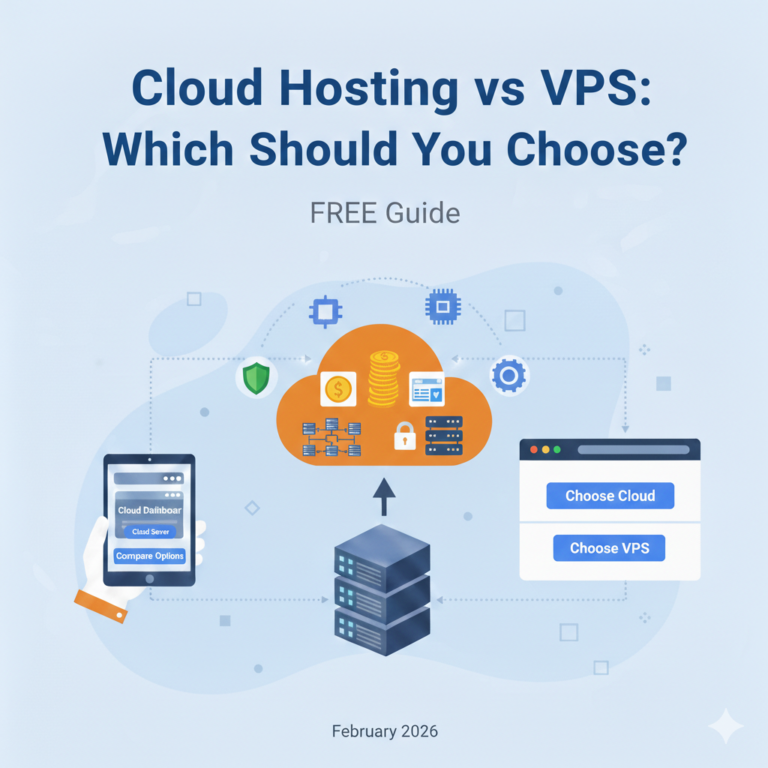
The line here is blurry, but generally, a traditional VPS is hosted on a single physical server. If that physical hardware fails, your VPS goes down. Cloud hosting spreads your data across a cluster of servers. If the hardware fails, your site is instantly migrated to a healthy node. Cloud is essentially a more resilient, scalable version of a VPS.
Cloud vs Managed WordPress Hosting
Managed WordPress hosting can actually be cloud hosting, but it is restricted to the WordPress platform. If you run a Python or Node.js application, managed WordPress hosting is useless to you. General cloud hosting is “agnostic”—you can run any software you want on it.
How to Choose the Right Cloud Hosting for Your Small Business
Making the final decision comes down to three main factors.
1. Traffic Volume and Consistency
Do you have steady, predictable traffic? A standard cloud VPS with fixed resources is fine. Do you have wild swings in traffic (e.g., an event-based business)? You need a provider that specializes in auto-scaling.
2. Technical Expertise
This is the most critical filter.
- High Skill: Go with unmanaged developer clouds (like Provider 5). You save money and get total control.
- Low Skill: Go with Managed Cloud (Provider 3) or All-Around providers (Provider 1). Do not try to learn Linux server administration while trying to launch a business. It is a recipe for disaster.
3. Future Needs
Don’t just buy for today. Migrating hosts is a headache. Choose a provider that has a “ceiling” high enough for your two-year plan. Can they handle it if you grow 10x? If the answer is no, keep looking.
Tips for Getting the Most Out of Your Cloud Hosting
Buying the hosting is just step one. Here is how to optimize it.
- Use a CDN: A Content Delivery Network stores copies of your images and files on servers around the world. This speeds up your site for international visitors and reduces the load on your main cloud server.
- Implement Caching: Caching saves a static version of your website so the server doesn’t have to build the page from scratch for every visitor. This dramatically improves speed.
- Monitor Performance: Use tools like New Relic or simple server monitors to track CPU and memory usage. Scale up before you max out your resources.
- Regular Security Audits: Even on the cloud, you are responsible for your application security. Keep your software updated and run regular malware scans.
Comparison: Cloud Hosting Types
| Feature | Best All-Around | Budget Cloud | Managed Cloud | Tech-Savvy / Developer |
|---|---|---|---|---|
| Cost | $$ | $ | $$$ | $$ |
| Ease of Use | Moderate | High | Very High | Low |
| Scalability | High | Low/Medium | High | Very High |
| Support | Standard | Basic | Premium | Technical/Docs only |
| Best For | Small Business | New Blogs | Non-Tech Founders | SaaS / Custom Apps |
Conclusion
The digital foundation of your business matters. Cloud hosting offers the perfect balance of performance, cost-efficiency, and scalability that small businesses and startups require. It allows you to start small and grow infinitely without the technical debt of migrating servers every few months.
If you are non-technical, the investment in Managed Cloud Hosting is usually the best money you will spend. It buys you peace of mind. If you are a technical startup, the Developer Clouds offer the playground you need to build the next unicorn. Evaluate your current technical bandwidth and your budget, and choose the partner that will grow with you, not hold you back.
Frequently Asked Questions (FAQ)
Is cloud hosting good for small businesses?
Yes. It is often the best choice because it is more reliable than shared hosting but cheaper and easier to manage than dedicated servers. It bridges the gap between affordability and performance.
How much does cloud hosting cost for startups?
Prices vary wildly. You can find entry-level cloud servers for as low as $5 to $10 per month. Managed cloud hosting, where the provider handles support and updates, typically starts closer to $25 to $50 per month.
Do startups need managed cloud hosting?
If the startup team includes a skilled DevOps engineer or system administrator, no. They can manage the servers themselves to save money. However, if the startup is focused on marketing or sales and lacks deep server expertise, managed hosting is highly recommended to prevent security breaches and downtime.