Hybrid Cloud Benefits: Test the Business Case and the Connection
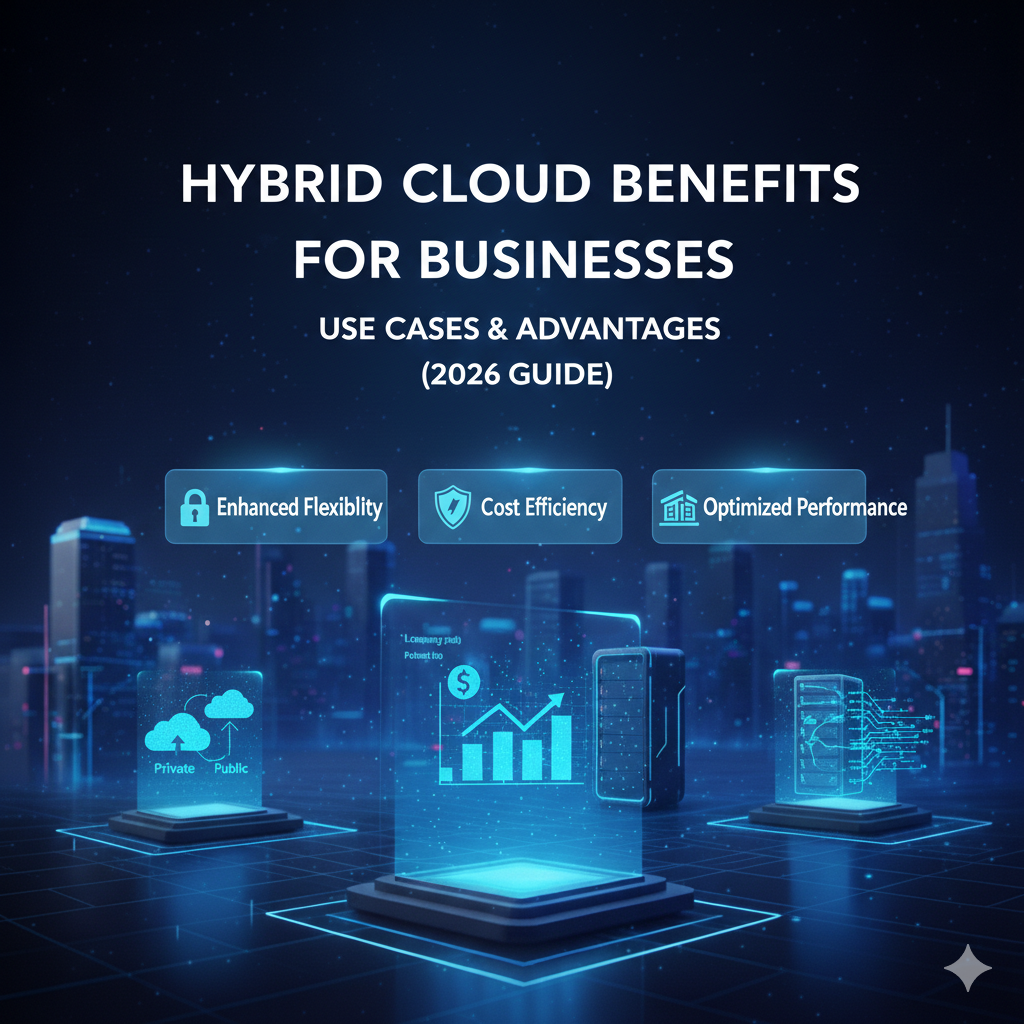
A hybrid approach can make sense when an application must connect existing infrastructure with public-cloud services. Its value comes from a specific business need, not from automatically getting the best features of two environments.
For example, a business might keep a manufacturing system near its equipment while sending selected data to a cloud analysis service. Another might modernise a customer interface while retaining a system that cannot yet be replaced. These are illustrative scenarios, not customer case studies.
Be precise about the arrangement
The NIST cloud definition distinguishes public, private and hybrid deployment models. In everyday project discussions, “hybrid” is also used for connections between traditional on-premises systems and cloud services. Describe the actual components rather than assuming an office server is a private cloud.
Document where each application and dataset lives, what crosses the connection and which team owns each part. A shared management dashboard does not by itself make workloads portable.
Identify the benefit you can measure
Possible goals include retaining a required local dependency, reducing one migration’s scope, processing data near its source or adding a tested recovery path. Give the goal an acceptance measure and compare it with a simpler alternative.
Keeping sensitive data locally does not automatically establish compliance. Cloud processing can still expose or transfer data through logs, queries, replicas or support access. Review the complete path and applicable requirements with the appropriate specialists.
Price both environments and their connection
Include existing hardware maintenance, licences, cloud services, connectivity, transfer, monitoring and staff time. A paid-for server still has operating costs. A temporary cloud workload may incur storage and network charges outside its execution time.
Estimate the ordinary month and a connection outage. If local and cloud services depend on each other for every transaction, an unreliable or slow link may undermine the design. Test latency and bandwidth with representative requests and data sizes.
Do not assume automatic bursting or failover
Moving work to extra capacity needs compatible applications, identity, networking, data and an explicit trigger. Quotas, startup delays and stateful dependencies can limit it. Keeping a backup in the cloud is not the same as having a working recovery environment.
Test restoration, routing changes, access and a return to normal operations. Write down the observed recovery time and data loss in the exercise. Do not describe an untested backup as instant failover.
Plan common operations without hiding differences
Services such as Azure Arc offer management capabilities across environments. Evaluate the exact supported features, permissions, charges and remaining local tasks. A single tool does not erase different patching or recovery procedures.
Use the ownership map and security checklist across both sides. Run a bounded pilot, record failure behaviour and use the cost forecast to check whether the demonstrated benefit justifies the added work. If it does not, keep the simpler design.