Web Hosting Comparisons: Match the Evidence to Your Website
A comparison table is useful only when the evidence behind its columns is clear. A response-time score, uptime percentage and starting price can describe different products and conditions unless the method keeps them aligned.
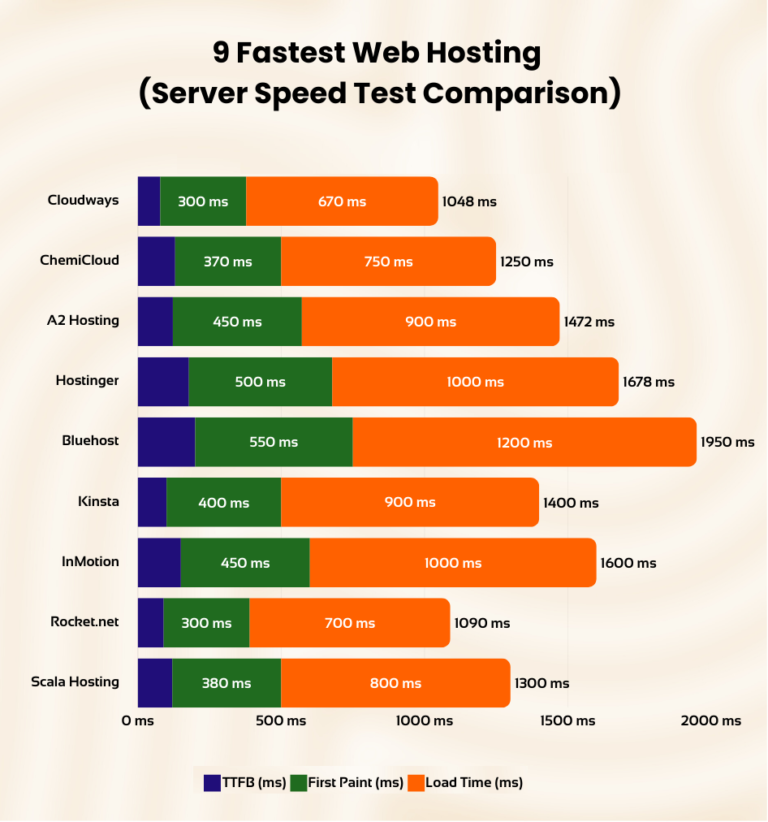
Editorial correction: the earlier version claimed original speed testing and review of twelve months of uptime records without a retained verifiable dataset. Those claims and the resulting top-ten ranking have been removed.
Ask what kind of comparison you are reading
| Evidence type | What it can support |
|---|---|
| Official documentation | Features, terms and stated limits of a selected product |
| Controlled workload test | Observed behaviour under documented conditions |
| Availability monitoring | Observed checks over a stated period and service path |
| Customer review | A reported experience with its own context and limitations |
None of these automatically establishes the others. A product specification is not a measured benchmark, and an SLA is not a monitoring record.
Keep configuration and price together
Record the tier, region, resource allocation and included services for each entry. Attach the price of that exact configuration, with term, currency, tax presentation and renewal.
Do not pair a test from a larger plan with the cheapest advertised tier. Do not compare an unmanaged server invoice with a managed application subscription without accounting for the operating work.
Check the performance method
Look for application, page, visitor locations, cache conditions, observation dates and treatment of errors. Ask whether important dynamic actions were tested as well as the homepage.
One attractive result does not establish every user’s experience. The reproducible speed-test guide explains a method, while the speed diagnosis guide helps interpret a bottleneck.
Interpret reliability honestly
Check which URL or transaction was monitored, frequency, duration and limitations. A short observation cannot substantiate a year-long availability claim.
Keep contractual commitments separate, including exclusions and remedies. A facility or platform can remain available while a particular application fails, so choose monitoring that answers the actual question.
Use documented shortlists as starting points
Our WordPress and store shortlist and UK provider shortlist link to official product information and state that they are not independent performance rankings.
A focused shortlist helps choose what to investigate. It should not turn documentation alone into a numerical “best support” or “fastest host” award.
Account for your operating team
List maintenance, troubleshooting, deployment and recovery tasks. Confirm the supplier’s role and the work left to you. Test the routine through an appropriate evaluation period.
More features are not automatically more value. A service with fewer controls can be suitable when it performs the needed work and the limits are understood.
Keep a decision you can revisit
Record requirements, evidence, costs and unresolved assumptions in the comparison worksheet. Define what new measurement or requirement would trigger a review.
Choose a service for the website and people operating it. A transparent, limited conclusion is more useful than a top-ten table whose scores cannot be traced to evidence.