VPS vs Cloud Hosting in 2026 Compared for Business Growth
Choosing the right digital infrastructure is no longer just an IT decision—it’s a foundational business strategy. As we move deeper into 2026, the lines between Virtual Private Servers (VPS) and cloud hosting continue to blur, yet the core distinctions remain critical for businesses aiming to scale efficiently.
For growing companies, the debate often settles on two primary contenders: the isolated, predictable performance of VPS hosting or the expansive, flexible nature of cloud environments. Both offer distinct advantages depending on your stage of growth, technical expertise, and budget fluidity.
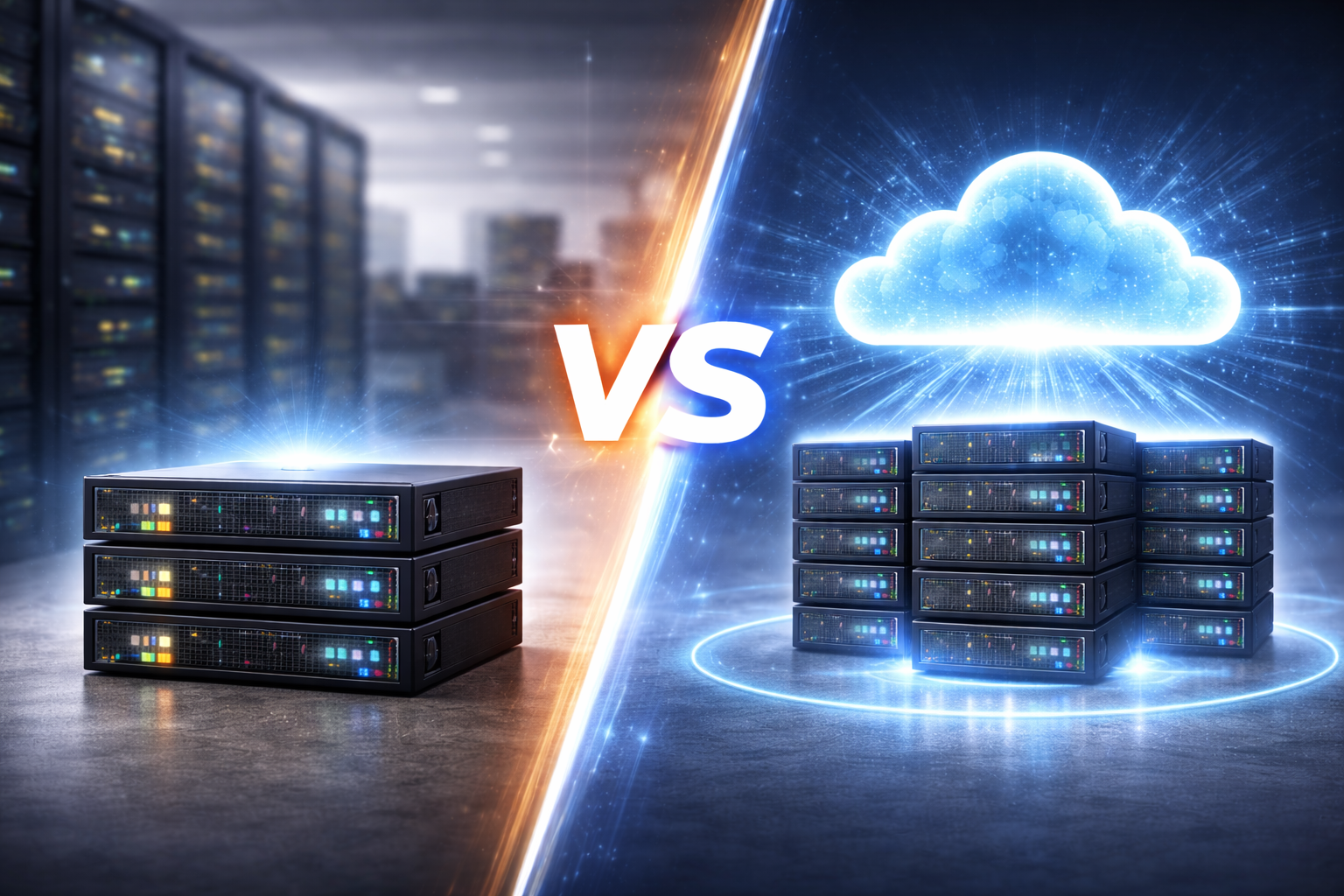
This guide breaks down the VPS vs. cloud hosting comparison for 2026, offering a detailed look at architecture, cost, scalability, and performance to help you decide which model best aligns with your business trajectory.
Background and Hosting Models Explained
To make an informed decision, it is essential to understand how these two hosting environments function at an architectural level. While both utilize virtualization technology to partition resources, they do so in fundamentally different ways.
What VPS hosting offers
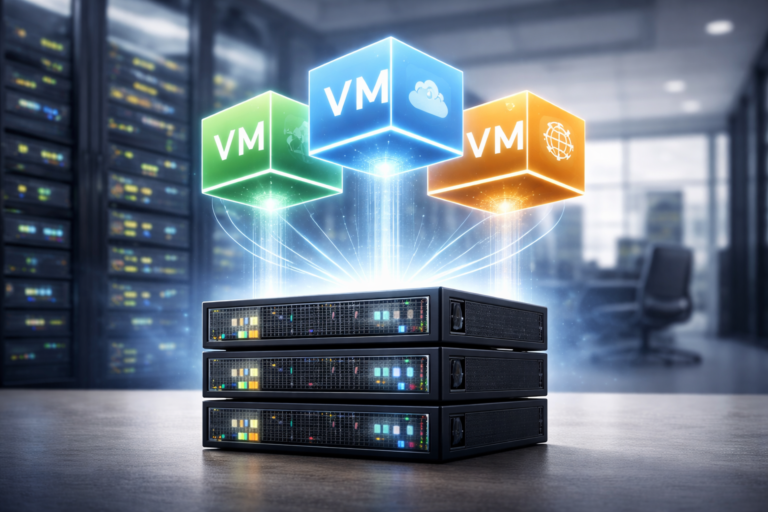
Virtual Private Server (VPS) hosting mimics the environment of a dedicated server within a shared physical environment. It uses a hypervisor to partition a physical server into several isolated virtual compartments. Each compartment gets a dedicated slice of resources—CPU cores, RAM, and storage space—that are yours and yours alone.
Think of a VPS like owning a condo in a high-rise building. You have your own private space, walls, and amenities that neighbors cannot encroach upon. You are responsible for maintaining the interior, but the building management handles the structural integrity. This model offers high stability because a neighbor’s heavy resource usage generally won’t impact your performance.
What cloud hosting offers
Cloud hosting takes virtualization a step further by utilizing a network of connected servers rather than a single physical machine. Your data and applications are distributed across a cluster of servers. If one server in the cluster fails or undergoes maintenance, another instantly takes over, ensuring practically zero downtime.
Continuing the real estate analogy, cloud hosting is like staying in a massive hotel chain where you can book as many rooms as you need, instantly. If one wing of the hotel needs repairs, you are simply moved to another room in a different wing without noticing the disruption. Resources are pooled, meaning you can tap into vast amounts of computing power on demand.
Key architectural differences
The primary architectural difference lies in the infrastructure’s resilience and resource allocation. A VPS is tied to a specific physical server (or a very small cluster), meaning its scalability is limited by that specific machine’s total capacity. Cloud hosting, however, is hardware-agnostic. It abstracts the software from the hardware entirely, allowing for a fluid resource pool that spans across multiple data centers and geographic regions.
Cost Structure and Pricing Models
For many businesses, the decision between VPS and cloud hosting often comes down to the bottom line. However, comparing costs isn’t straightforward, as the pricing models cater to different financial strategies.
Fixed pricing and predictability with VPS
VPS hosting is favored for its predictable, flat-rate pricing model. You pay a set monthly fee for a specific allocation of resources (e.g., 4 vCPUs, 8GB RAM, 100GB SSD). This transparency is invaluable for small to medium-sized businesses (SMBs) and startups operating on strict budgets. You know exactly what your bill will be at the end of the month, regardless of whether you utilized 10% or 90% of your allocated power.
Usage-based pricing in cloud hosting
Cloud hosting typically operates on a “pay-as-you-go” or utility model. You are billed based on exact consumption—per hour, per minute, or even per second of CPU and RAM usage. While this sounds efficient (you only pay for what you use), it introduces variable costs. If a marketing campaign goes viral and traffic spikes unexpectedly, your hosting bill will scale up alongside that traffic.
Budget planning considerations for businesses
When planning your 2026 budget, consider your traffic stability. If your workload is consistent—such as an internal employee portal or a steady e-commerce store—VPS offers better value per dollar. The fixed cost eliminates billing surprises. Conversely, if your business experiences wild fluctuations—like a ticket sales site or a seasonal retail platform—cloud hosting prevents you from paying for idle resources during quiet periods, potentially saving money despite the higher unit cost of compute power.
Scalability and Growth Support
Growth is rarely linear, and your hosting infrastructure needs to adapt to your company’s expansion. Scalability is where the differences between VPS and Cloud become most apparent.
Vertical scaling with VPS hosting
VPS hosting primarily relies on vertical scaling (scaling up). To add power, you must upgrade your plan to a larger tier with more RAM or CPU cores. While modern virtualization makes this easier than in the past, there is a hard ceiling: the maximum capacity of the physical server your VPS resides on. Furthermore, scaling a VPS often requires a reboot or brief downtime to allocate the new resources, which might not be acceptable for mission-critical applications requiring 100% uptime.
Horizontal scaling in cloud environments
Cloud hosting excels at horizontal scaling (scaling out). Instead of making a single server larger, you simply add more server instances to your cluster to handle the load. This can often be automated; as traffic increases, the cloud infrastructure spins up new instances instantly. This limitless ceiling is ideal for rapid-growth startups or enterprise-level applications.
Handling traffic spikes and growth phases
For businesses in a hyper-growth phase, cloud environments offer “auto-scaling” capabilities. This means the infrastructure automatically adjusts to traffic spikes without human intervention. A VPS setup usually requires manual intervention to upgrade resources. If you anticipate sudden, unpredictable surges in user activity, the elasticity of the cloud is a safety net that VPS cannot match.
Performance and Reliability Considerations
In 2026, user experience is paramount. A slow website or application downtime translates directly to lost revenue.
Resource isolation and consistency
VPS hosting offers excellent performance consistency due to resource isolation. Because your RAM and CPU are reserved, you don’t suffer from the “noisy neighbor” effect common in shared hosting (and sometimes present in poorly managed cloud environments). For applications that require high-speed disk I/O or sustained CPU processing, a high-performance VPS often delivers faster raw speed dollar-for-dollar compared to entry-level cloud instances.
Redundancy and availability models
Cloud hosting wins on reliability and redundancy. Because your data is mirrored across multiple storage devices and often different availability zones, hardware failure is a non-issue. If a physical component fails, your instance migrates automatically. With a VPS, while RAID storage protects against drive failure, a motherboard or power supply failure on the physical host can result in downtime until the hardware is fixed or the VPS is restored to a new node.
Latency and regional deployment options
Cloud providers (like AWS, Google Cloud, and Azure) have data centers in almost every major region globally. This allows businesses to deploy resources closer to their users, significantly reducing latency. While many VPS providers also offer geographic choices, their networks are generally less extensive than the hyperscale cloud networks, which utilize sophisticated content delivery networks (CDNs) and edge computing to accelerate delivery.
Control, Customization, and Management
How much hands-on time does your IT team want to spend managing servers? The answer will heavily influence your choice.
System-level control in VPS hosting
VPS hosting provides root access (Linux) or Administrator access (Windows), giving you complete control over the operating system. You can install any software, configure custom firewalls, and tweak security settings to your exact specifications. This is ideal for developers and system administrators who want to build a bespoke environment. However, with great power comes great responsibility—you are generally responsible for OS updates, security patches, and backups unless you pay for a “Managed VPS” service.
Managed services and abstraction in cloud hosting
Cloud platforms often offer “Platform as a Service” (PaaS) or highly managed infrastructure options. In these scenarios, the cloud provider manages the OS, runtime, and middleware, allowing developers to focus solely on code. While you can spin up raw compute instances (IaaS) that function like a VPS, the true power of the cloud lies in its managed services—databases, load balancers, and AI tools that integrate seamlessly without requiring manual configuration.
Why This Comparison Matters for India and Emerging Markets
For businesses in emerging markets like India, the choice between VPS and Cloud takes on additional dimensions regarding cost sensitivity and infrastructure maturity.
Cost sensitivity and infrastructure planning in India
In price-sensitive markets, the predictable cost of VPS is highly attractive. Many Indian SMBs operate with tight cash flows where a variable cloud bill could be disruptive. Additionally, local data sovereignty laws may require data to stay within national borders. While major cloud providers now have data centers in Mumbai, Hyderabad, and Delhi, reputable domestic VPS providers often offer lower-latency, compliant solutions at a fraction of the cost of international cloud giants.
Choosing between predictability and flexibility
Digital transformation in emerging markets is accelerating. Businesses are often leapfrogging legacy technologies. However, the technical talent gap can be a hurdle. Managing complex cloud architectures requires specialized DevOps skills that command high salaries. A VPS environment is often more familiar to traditional IT administrators, making it a more accessible entry point for businesses digitizing their operations for the first time.
Current Trends in VPS and Cloud Adoption
As we navigate through 2026, the binary choice between “VPS” and “Cloud” is evolving into a spectrum of hybrid solutions.
Hybrid infrastructure strategies
We are seeing a surge in hybrid strategies where businesses use VPS for their stable, core workloads (like the main website or internal database) to keep costs low, while utilizing cloud services for specific, high-demand functions (like heavy data processing or temporary marketing microsites). This “best of both worlds” approach optimizes spend without sacrificing capability.
Increased demand for simplified management
The complexity of cloud management has led to a counter-trend: the rise of simplified cloud providers. These platforms offer the scalability of the cloud but with the simple interface and predictable pricing closer to a VPS. Businesses are increasingly rejecting the complexity of hyperscale clouds for these developer-friendly alternatives, signaling a demand for power without the steep learning curve.
Expert Insights and Data-Backed Analysis
Industry data suggests that the migration isn’t a one-way street toward the cloud. A significant portion of businesses are “repatriating” workloads from the public cloud back to VPS or dedicated environments.
Industry benchmarks on cost-performance ratios
Recent benchmarks indicate that for steady-state workloads, VPS solutions can be up to 50-60% cheaper than equivalent cloud instances when factoring in bandwidth and storage costs. Cloud environments tend to charge premiums for data egress (data leaving the cloud), which can balloon costs for media-heavy businesses.
Common growth-stage hosting decisions
Startups often begin on the cloud to leverage free credits and instant scalability. However, as they reach the “Scale-Up” phase, the cost of cloud compute becomes a major line item. At this stage, many migrate stable workloads to high-performance VPS or bare-metal servers to stabilize margins, proving that VPS is not just a stepping stone, but a viable long-term destination for mature businesses.
Future-Proofing Your Infrastructure
The decision between VPS and cloud hosting is not permanent, but switching costs can be high in terms of time and labor. As you plan for the remainder of the decade, look for providers that offer a migration path.
Pricing model changes in cloud platforms
Watch for shifts in cloud pricing. We are seeing a move toward “committed use discounts” and “savings plans” that mimic VPS fixed billing. Cloud providers are realizing that customers crave predictability and are adjusting their models accordingly.
VPS enhancements focused on scalability
Conversely, VPS technology is becoming more “cloud-like.” New virtualization technologies are allowing for near-instant vertical scaling without reboots, and storage clusters are improving redundancy. The gap between the two technologies is narrowing, offering businesses more robust options than ever before.
Making the right choice requires an honest audit of your technical resources, your budget tolerance, and your growth forecasts. Whether you choose the dedicated power of a VPS or the boundless flexibility of the cloud, ensure your infrastructure works for your business, not the other way around.
Frequently Asked Questions
Is VPS or cloud hosting better for small businesses?
For most small businesses with predictable traffic and limited IT budgets, VPS hosting is generally the better starting point. It offers better performance-per-dollar and predictable monthly costs. Cloud hosting is often overkill for simple websites or blogs unless you expect rapid, unpredictable growth.
When does cloud hosting become more cost-effective than VPS?
Cloud hosting becomes cost-effective when your workload is highly variable. If you run a business that is dead quiet at night but busy during the day, or seasonal (like a tax filing service), the cloud allows you to shut down resources when they aren’t needed, saving money. It is also cost-effective when the cost of downtime exceeds the cost of the infrastructure, as the cloud offers superior redundancy.
Can businesses switch from VPS to cloud easily?
“Easily” is relative. Moving files and databases is straightforward, but re-architecting an application to take full advantage of the cloud (using microservices, load balancers, etc.) is complex. However, simply lifting and shifting an application from a VPS to a cloud compute instance is a standard procedure that most competent IT teams can handle with minimal downtime.
Which option offers better performance consistency?
Generally, high-quality VPS hosting offers better performance consistency for the price. Because you have dedicated resources (RAM/CPU) that are not dynamically shifting, you avoid the latency spikes that can sometimes occur in multi-tenant cloud environments. However, premium cloud instances with “dedicated host” options can match this performance, albeit at a significantly higher price point.