Dedicated Server Providers: Four Documented Starting Points
A dedicated-server shortlist should match the application, intended location and operating support you need. The provider offering the smallest headline fee may be selling a different service from the one your team can use.
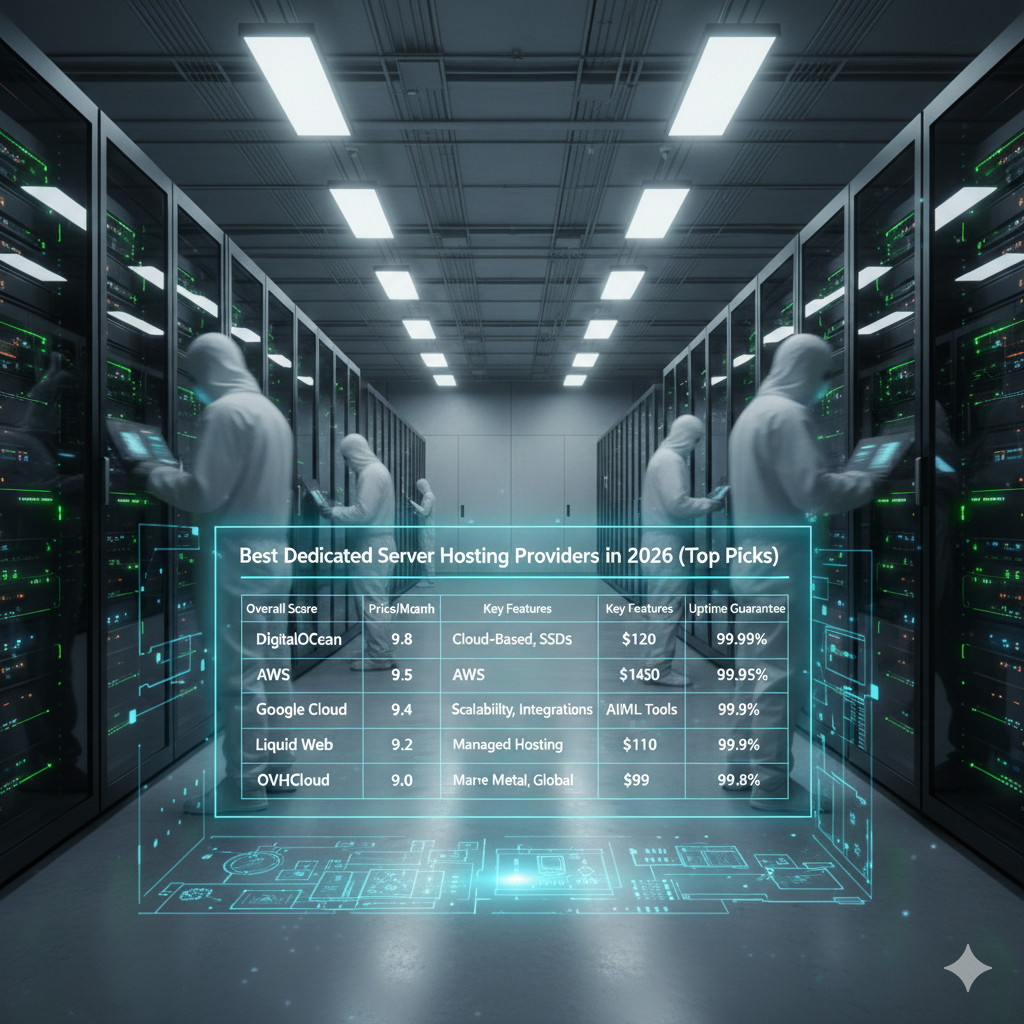
Editorial correction: the earlier article claimed a comparative assessment, provider awards and performance or support superiority without a reproducible record. Those rankings, old prices and guarantees have been removed. The providers below are documented starting points, not measured winners.
Liquid Web: investigate management scope
The dedicated-server catalogue is a place to identify a relevant configuration and management option. Ask which OS, control panel and application tasks are included in the exact proposal.
Confirm recovery responsibilities and exclusions. An advertised response promise is not a measurement of your future resolution time or proof of uninterrupted application service.
InMotion Hosting: compare the selected package
Use the current dedicated-server page to identify a compatible package. Record hardware, location, management and payment terms from the actual quote.
Check the exact upgrade and migration route. Do not infer an application benchmark from the presence of NVMe drives or a particular processor family.
OVHcloud: read hardware-service boundaries
The US bare-metal FAQ documents hardware and support considerations. It is a reference for that offering, not proof that the same terms or capacity apply in every market.
Verify the chosen regional product, network policy, support tier and customer steps after component replacement. Keep application restoration separate from hardware repair.
Hetzner: distinguish managed and root-server products
Hetzner’s product comparison helps identify differences in access and management. Select the product that supports your workload rather than assuming every dedicated offer includes the same control.
Confirm capacity, exact configuration and support process in the intended location. A catalogue entry is not a reservation or an observed uptime result.
Send the same requirement to each candidate
Specify application, supported software, measured load, storage growth, user locations and recovery targets. Ask for the full quote: licences, management, backups, transfer, setup, renewal and support. Use the dedicated-server cost worksheet to keep inputs comparable.
For a serious candidate, test a representative application and the operator’s tasks. Record functionality, latency, errors, sustained resource behaviour and recovery. The application test method helps make that evidence repeatable.
Choose from evidence and scope
Resolve unsupported features or ambiguous responsibilities before committing. Read the SLA’s eligibility, exclusions and remedy, then compare it with the application’s recovery needs.
Use the management-scope checklist and handover checks for acceptance. None of these starting points carries a universal fastest, cheapest or most secure award from this article. Verify the current proposal and keep the decision record with the operating notes.