Hosting Trends in 2026: What to Check Before You Upgrade
Hosting catalogues now put AI tools, managed services and performance bundles beside familiar storage and website limits. Some features can save work. Others are useful only for a particular application or team.
This is a practical review of buying considerations, checked against current product pages and technical documentation on 18 October 2026. It is not a market-share study or a prediction that every website needs to move to a new architecture.
AI features need a description of the job they do
An AI website builder, a support assistant and a capacity forecast solve different problems. Seeing “AI” on a hosting card does not establish that the server automatically repairs your website or prevents outages.
Ask which feature is included, who controls it and whether it only recommends changes or applies them. Check usage limits, any extra charges and how to undo a change. Our guide to AI in hosting operations gives examples of those distinctions.
Managed services make the scope worth reading
A managed plan can reduce administration when the included work matches your application. The description should say who handles infrastructure updates, website updates, backup restoration and incident investigation.
Do not assume the word “managed” includes every plugin, custom integration or database problem. Ask about the tasks you would otherwise have to pay someone to perform. That is a more useful comparison than looking only at subscription prices.
Delivery features are easier to buy than to evaluate
CDN, caching and edge features can change how content reaches visitors. The questions are which responses they cover and what happens when content is not cached. A global delivery badge does not mean a personalised request avoids the original application.
Cloudflare’s CDN explanation describes distributed content delivery. For a broader architecture comparison, see our AI, edge and cloud guide. Test from your users’ locations before paying for a supposed performance improvement.
Website performance still needs application work
Hosting can help with capacity and delivery. It cannot guarantee that a large image, complex theme or slow third-party script becomes efficient. Measure the user-facing result as well as infrastructure usage.
The current Core Web Vitals cover loading, responsiveness and visual stability. Our performance checklist explains how to separate these issues. Treat a marketing benchmark as a claim to investigate, not a measurement of your website.
Compare complete bills, including renewals
Bundled features can make a plan convenient, but some benefits last only for an introductory period. Check domain renewal, email duration, backup services, migration help and the commitment required for the displayed monthly equivalent.
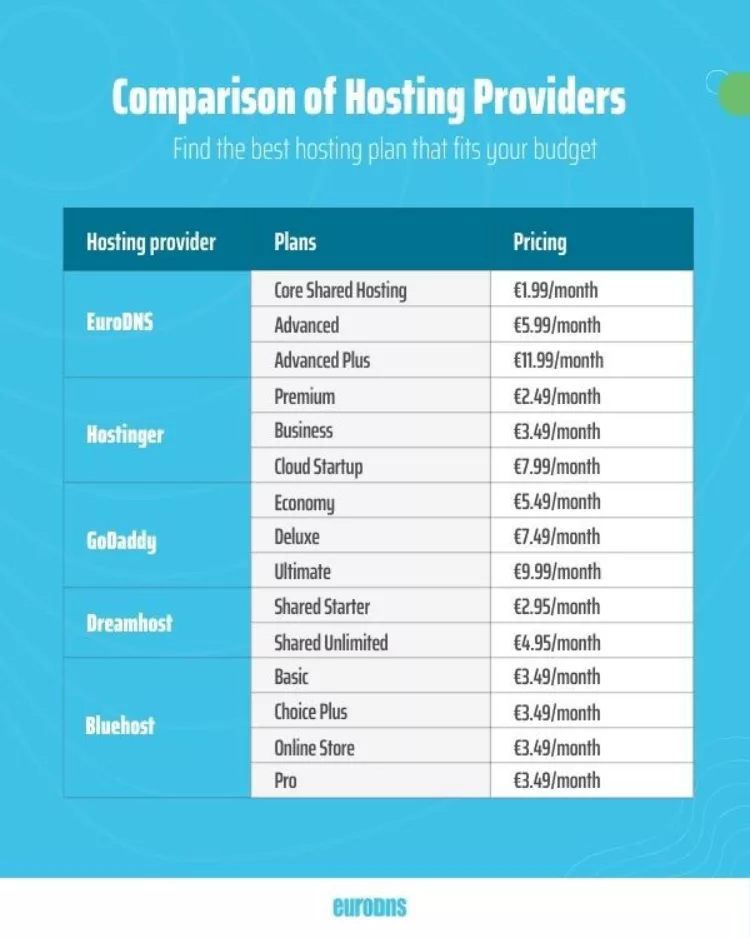
The current Hostinger India catalogue, for example, distinguishes plan features and introductory versus renewal rates. That illustrates why one provider’s tiers need comparing individually. It does not establish that its plan will be the cheapest for your requirements.
Keep a dated quote and compare the same term across candidates. Our hosting deals guide includes worked checks for advertised offers.
Recovery is a feature to test
Backup availability, retention and restoration are separate questions. A provider may make a backup available without supplying the recovery time your project needs. Ask what happens if the account or main location is unavailable.
For a shop, decide how orders created after the last backup will be handled. For a publication, test that media and article data restore together. An independent copy and a documented recovery exercise are more informative than an untested backup badge.
Developer tools should fit the team
Containers, staging environments and deployment integrations can make repeatable changes easier. They also introduce configurations someone must maintain. A small WordPress publication does not need a container cluster simply because it appears on a technology checklist.
The Kubernetes overview describes a platform for managing containerised workloads. Evaluate such tooling around a real deployment need, including the skills and time required to operate it.
Ask for evidence behind environmental claims
When sustainability matters to your choice, ask what the claim covers: a specific facility, purchased electricity, an organisational target or a measured footprint. Look for a date, boundary and method. Do not treat a green label as proof that every part of a hosted service has no environmental impact.
A useful upgrade has a measurable purpose
Write down the problem, the feature expected to address it and how you will check the result. That might be an easier restore, a supported runtime or fewer failed requests during a busy period. If the current setup meets your requirements, a new label alone is not a reason to migrate.