Why Shared Hosting Is the Best Choice for New Websites
Launching a new website is an exciting venture, but the technical side of things can quickly become overwhelming. You have to think about domain names, design, content strategy, and, of course, where your website will actually “live.”
When you start researching hosting, you are immediately bombarded with acronyms and expensive options: VPS, Dedicated Servers, Cloud Hosting, Managed WordPress Hosting. For a beginner, it can feel like you need a degree in computer science just to pick a plan.
Here is the truth: most of those expensive, high-powered options are overkill for a brand-new site.
For 99% of new projects—whether it’s a personal blog, a small business portfolio, or a startup landing page—shared hosting is not just the “cheap” option. It is the smartest strategic choice. It allows you to validate your idea, build your audience, and keep your overhead low without sacrificing the essential tools you need to succeed.
This guide explores exactly why shared hosting is the best starting point for your digital journey, how it works, and why you shouldn’t let technical snobbery talk you into paying for resources you don’t need yet.
What Is Shared Hosting?
To understand why shared hosting is so popular, we first need to strip away the jargon and look at how it functions.
At its core, web hosting is simply renting space on a physical server (a powerful computer) that is connected to the internet 24/7. This server stores your website’s files, images, and databases so that when someone types in your domain name, your site appears on their screen.
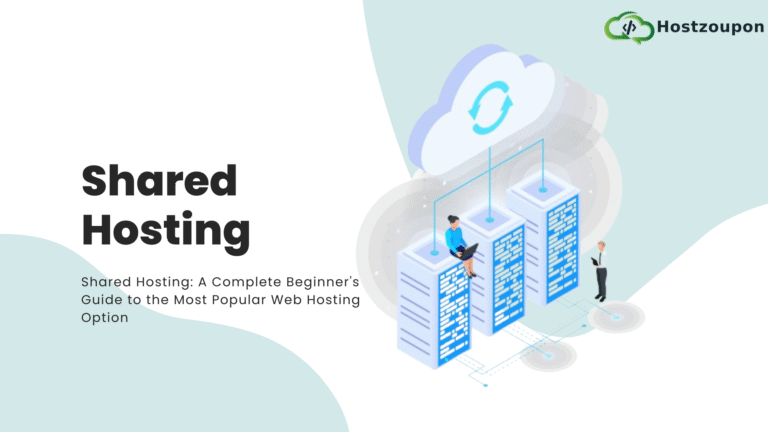
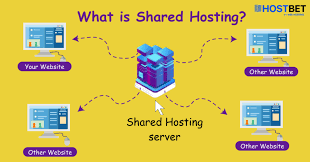
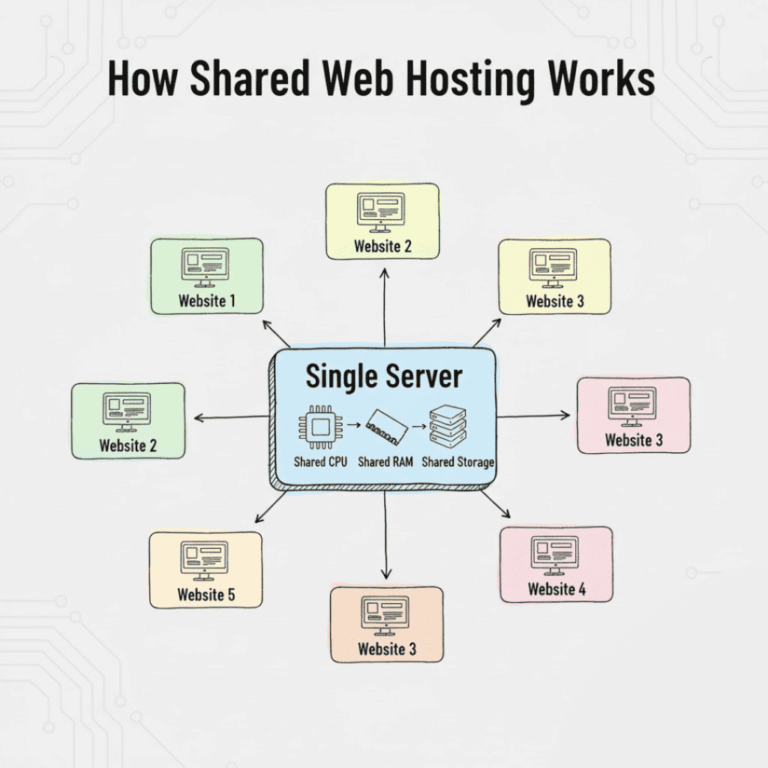
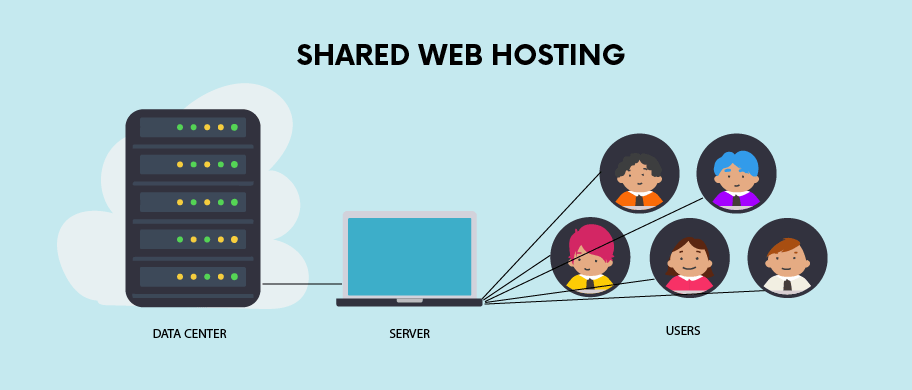
Shared hosting is exactly what it sounds like: multiple websites living on a single physical server.
The Apartment Building Analogy
Think of a web server as a large apartment complex.
- Dedicated Hosting is like owning a massive, standalone mansion. You have the whole property to yourself, but you are responsible for all the maintenance, the security system, and the high mortgage payments.
- Shared Hosting is like renting an apartment in that complex. You have your own private living space (your website), but you share the building’s resources—like the water supply, electricity, and parking lot—with other tenants (other websites).
Because the hosting provider splits the cost of the server maintenance and hardware among hundreds or thousands of customers, the cost for each individual user drops dramatically.
Why It Works
The reason this model works so well is that new websites rarely use all the resources available to them. A new blog might get 10 visitors a day. It doesn’t need the entire “water supply” of the building; it just needs a trickle. By sharing these resources, everyone gets what they need without paying for capacity they aren’t using.
What New Websites Really Need from Hosting
When you are just starting out, your priorities are different from those of Amazon or Netflix. You don’t need infrastructure capable of handling millions of simultaneous users. You need an environment that fosters growth.
Here is what actually matters for a new site:
- Low Financial Risk: You want to test your idea without burning through cash. If your project doesn’t take off, you don’t want to be locked into a $50/month contract.
- Simplicity: You want to focus on creating content and designing your brand, not managing server command lines or configuring firewalls.
- Reliability: You need the site to be online when people visit.
- Basic Security: You need a simplified way to keep hackers out and ensure your visitors’ data is safe.
- Room to Grow: You need a host that works for now but offers a path upward if your site goes viral.
Shared hosting aligns perfectly with this specific checklist.
Why Shared Hosting Is Ideal for New Websites
Let’s break down the specific advantages that make this hosting type the heavy favorite for beginners.
Affordable Pricing
The most obvious benefit is the cost. Because the server costs are distributed across many users, shared hosting plans are incredibly cheap.
You can often find introductory offers ranging from $2 to $10 per month. Compare this to VPS hosting, which often starts at $30-$50, or dedicated servers that can run hundreds of dollars monthly. For a new business or hobbyist, keeping your “burn rate” low is essential. That money saved on hosting can be better spent on marketing, a premium theme, or email list software.
Beginner-Friendly Setup
Shared hosting providers know their target audience is not made up of system administrators. They design their platforms for usability.
Most shared plans come with a built-in control panel (often cPanel or a custom dashboard). These interfaces are visual and intuitive. You don’t need to write code to create an email address or manage files; you just click icons.
Furthermore, “One-Click Installers” are industry standard on shared hosting. Want to start a WordPress site? You click a button, fill in your site name, and the host installs the software for you in under a minute.
No Technical Skills Required
If you choose a more advanced hosting type like an unmanaged VPS, you are often handed a blank server and expected to set it up yourself. If the server crashes at 2:00 AM, you are the one who has to fix it.
With shared hosting, the technical heavy lifting is done by the provider.
- Server Maintenance: They replace the hardware if it breaks.
- Updates: They update the operating system and PHP versions.
- Security Patches: They monitor the network for threats.
This “managed” aspect allows you to act as a website owner rather than a server technician.
Fast Enough for New Websites
There is a misconception that shared hosting means slow hosting. While it’s true that a shared server isn’t as fast as a dedicated one, modern hardware is powerful.
For a new website with low to moderate traffic, shared hosting is more than fast enough. If your site is properly optimized (images compressed, caching enabled), your visitors will likely not notice a difference between a quality shared host and a more expensive option.
Shared Hosting vs. Other Hosting Options for Beginners
It helps to see where shared hosting sits in the hierarchy of hosting options to understand why you shouldn’t jump the gun on upgrading.
Shared Hosting vs. VPS (Virtual Private Server)
A VPS is the middle ground. Using our analogy, this is like a townhouse. You still share the physical building, but you have dedicated resources (RAM and CPU) that are yours alone. Neighbors can’t impact your performance.
- The Verdict: Great for established businesses, but usually unnecessary expense and complexity for a Day 1 website.
Shared Hosting vs. Cloud Hosting
Cloud hosting uses a network of servers to host your site. If one server goes down, another picks up the slack. It offers incredible scalability.
- The Verdict: Cloud hosting pricing models can be complex (often pay-as-you-go). Unless you expect your traffic to spike from zero to a million overnight, shared is safer and more predictable.
Why Advanced Hosting is Often Unnecessary
Buying a dedicated server for a new blog is like buying a 50-passenger bus to drive yourself to work. It’s powerful, impressive, and completely wasteful. It creates more maintenance work for you without providing any tangible benefit to your initial trickle of visitors.
Common Myths About Shared Hosting
The internet is full of “gurus” telling you that you must have premium hosting to succeed. Let’s debunk a few myths.
“Shared hosting is always slow”
Shared hosting can be slow if you choose a terrible provider that crams too many websites onto one server. However, reputable hosts monitor their servers closely. If you stick to well-known, quality providers, speed is rarely an issue for a new site.
“Shared hosting is not secure”
While it is true that you share a server, modern hosting environments isolate users from one another. One neighbor cannot simply wander into your directory and delete files. As long as you use strong passwords and keep your website software updated, shared hosting is secure enough for most non-financial data.
“Shared hosting is bad for SEO”
Google wants to see that your site loads reasonably fast and is always online. You can achieve excellent SEO rankings on shared hosting. Content relevance and authority matter far more to search engines than whether you are paying $5 or $50 for your server.
When Shared Hosting Might NOT Be the Best Choice
While I advocate for shared hosting for 99% of beginners, there are exceptions. You should skip shared hosting if:
- You are launching a high-volume application: If you have an existing audience of 100,000 email subscribers and you plan to send them all to your site on launch day, shared hosting will crash.
- You run a complex custom app: If you need to install custom server-side software or run languages like Python or Ruby with specific configurations, you likely need the root access provided by a VPS.
- You are a large eCommerce store: If you have thousands of products and expect high transaction volume immediately, the specialized performance of Managed WooCommerce or VPS hosting is a better investment.
How Long Should New Websites Stay on Shared Hosting?
Shared hosting is not necessarily a “forever” home. It is an incubator.
Most websites can happily stay on shared hosting for years. You generally only need to worry about upgrading when your traffic exceeds 10,000 to 25,000 monthly visitors, or if you start noticing your dashboard slowing down while you are editing.
The good news is that upgrading is usually seamless. Because hosting companies want you to grow (and pay them more), they make moving from a Shared Plan to a VPS Plan incredibly easy, often handling the migration for you.
Is Shared Hosting Good for SEO on New Websites?
Search Engine Optimization (SEO) is a top priority for new site owners. The fear is that “cheap” hosting will hurt rankings.
Here is the reality: Google ranks content, not hosting receipts.
To rank well, you need:
- High uptime (your site needs to be accessible).
- Decent page speed (your site needs to load quickly).
- SSL Security (the little padlock icon).
Shared hosting provides all three. Most plans include free SSL certificates (Let’s Encrypt). If you optimize your images and use a caching plugin, your site will pass Google’s Core Web Vitals tests just fine. Until you are competing for the most difficult keywords on the internet against massive corporations, your hosting type is not going to be the bottleneck for your SEO.
How to Choose the Best Shared Hosting for a New Website
Not all shared hosts are created equal. Since you are looking for a long-term partner, here are the criteria you should judge them by:
Reliability and Uptime
Look for a guarantee of at least 99.9% uptime. This is the industry standard. Anything less is unacceptable.
Customer Support
This is the most critical factor. When (not if) you break something on your site, can you reach a human? Look for 24/7 Live Chat. Test it before you buy—ask them a question and see how long it takes them to reply.
Pricing Transparency
Many hosts offer a low introductory rate (e.g., $2.99/mo) but renew at a much higher rate (e.g., $10.99/mo). This is standard practice, but you need to be aware of it so the renewal bill doesn’t shock you.
Upgrade Options
Does the host offer VPS or Cloud hosting? You want a host that can grow with you so you don’t have to migrate your entire site to a different company when you get big.
Frequently Asked Questions
Is shared hosting safe for beginners?
Yes. Reputable hosts use firewalls and security monitoring to protect the server. As long as you use strong passwords and keep your website software (like WordPress) updated, you are safe.
Can I upgrade later?
Absolutely. Upgrading from a shared plan to a VPS is typically a matter of clicking a few buttons in your account panel or asking support to do it for you.
How much traffic can shared hosting handle?
It varies by host, but a general rule of thumb is that shared hosting can comfortably handle between 10,000 and 25,000 visits per month.
Is shared hosting good for WordPress?
Yes. Most shared hosting is specifically optimized for WordPress, offering one-click installations and sometimes even automatic updates for the platform.
Final Thoughts: Start Simple and Scale Later
In the world of technology, there is a temptation to “future-proof” everything by buying the most powerful, expensive tools available. But for a new website, agility is more important than raw power.
Shared hosting offers the perfect balance of cost, ease of use, and performance for a new project. It removes the technical barriers to entry, allowing you to focus on what actually matters: creating great content, building your brand, and finding your audience.
Don’t let the fear of “outgrowing” your plan stop you from starting. Start small, keep your costs low, and upgrade only when your success demands it. That is the smart way to build a website.