Colocation Hosting: Hardware, Facility Services and Costs
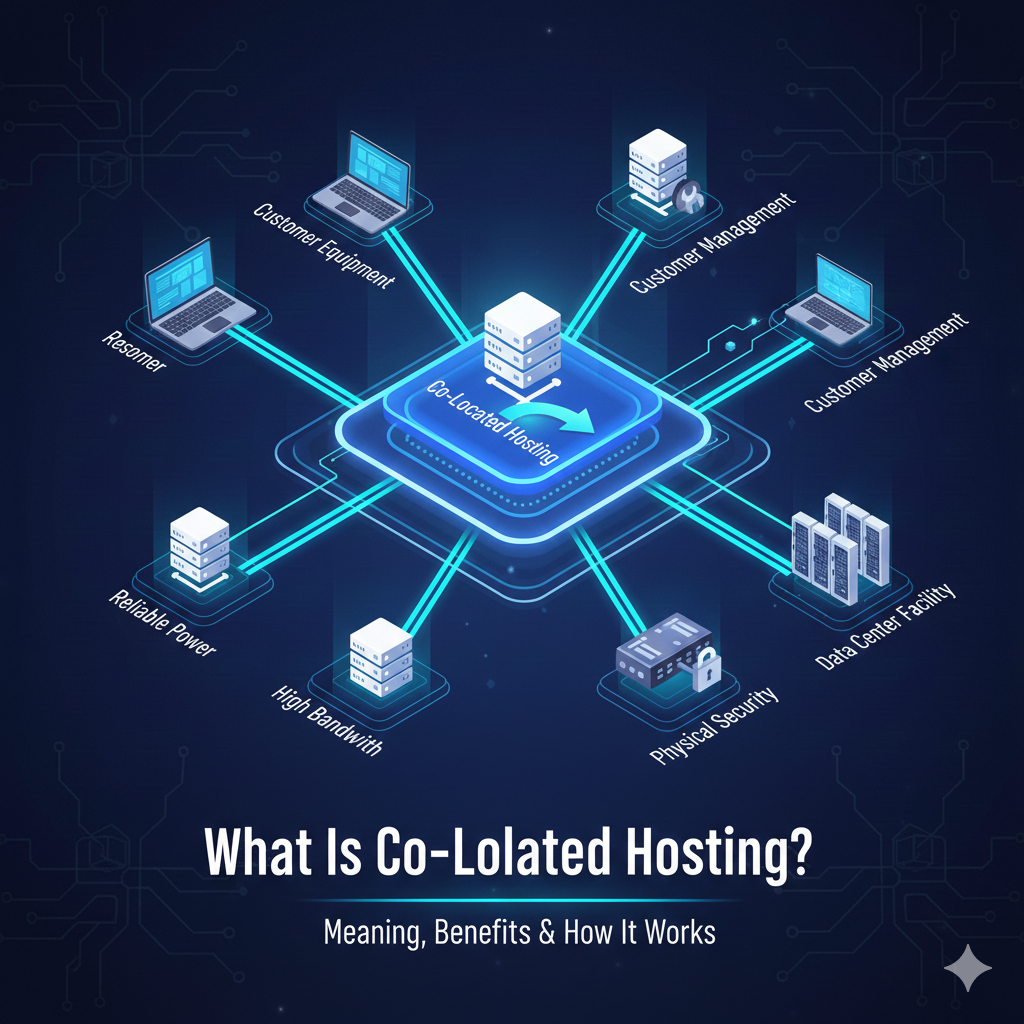
Colocation means placing hardware you own in a data centre and paying for the facility services it needs. You bring the equipment; the provider supplies an agreed combination of space, power, connectivity and related services.
It is usually a different decision from choosing a plan for a small website. The central question is whether owning and operating hardware fits your technical requirements and operating team.
What you buy and what you still own
A colocation quote may cover a rack unit, several units, a cabinet or a larger secured area. Power allocation and network connectivity are specified separately or packaged according to the provider’s product.
Equinix’s colocation overview is an example of the facility-service model. Treat the contract and technical schedule for a selected location as the source for exact inclusions, rather than assuming a general product description is your quote.
You remain the owner of the installed hardware. Operating-system administration, application support, spare parts and repairs need explicit ownership. Optional managed services can change the division of work, but should be listed rather than assumed.
How it differs from other hosting arrangements
| Arrangement | Equipment and operating question |
|---|---|
| Colocation | You own the hardware and purchase facility services; establish who operates and repairs it. |
| Rented dedicated server | The supplier provides a physical server; check hardware replacement and management scope. |
| Cloud virtual machine | You rent virtual resources through a service; application and guest-system duties depend on the product. |
| Managed website hosting | You purchase a website-oriented service with a defined support and maintenance scope. |
Owning hardware may provide control over its specification, but that control is bounded by facility rules, network policy and your contract. It does not imply unrestricted physical access or permission to install any equipment without approval.
Build a complete quote
- Space: usable units, cabinet allocation, access arrangements and installation charges.
- Power: allocation, circuit arrangement, measurement method and excess-use terms.
- Network: ports, committed bandwidth, transfer billing, cross-connects and address availability.
- Assistance: remote-hands availability, approved tasks, response commitments and hourly charges.
- Your equipment: purchase, shipping, spares, warranties and replacement cycles.
- Operations: monitoring, administration, backups, travel and staff time.
Use the provider’s units carefully. Power capacity, energy consumption and network transfer are different quantities. Ask for a worked billing example if the quote combines commitments, metered charges and overages.
Do not assume remote hands includes diagnosing an application, rebuilding an operating system or providing spare hardware. Define the exact actions technicians can take and how you authorise them.
Design recovery beyond the building
Redundant facility power does not automatically make your application redundant. A failed drive, switch, configuration change or database can still interrupt service. Map the failure points in your own system.
Plan replacements, backups and the route to recover if the equipment or entire site becomes unavailable. Test access to recovery data without relying on the same failed hardware. A second copy in the same cabinet may not address every failure you care about.
Compare ownership over a realistic period
Compare colocation with a rented or managed alternative using the same workload and availability requirements. Include capital purchases, financing if relevant, recurring facility charges, labour and eventual equipment replacement.
There is no universal rule that colocation becomes cheaper than cloud after a fixed number of years. Utilisation, contracts, staffing and growth assumptions can change the result. Evaluate a normal case and a case where demand or replacement costs differ.
Who should consider it?
Colocation can be worth evaluating when you have hardware-specific requirements and the people to operate the system. It is usually a substantial operating commitment for someone who only needs to publish a small WordPress site.
Clarify access, installation, incident response and the process for removing equipment at contract end. Use the hosting model guide to compare alternatives and the security responsibility checklist to ensure no essential maintenance task is left unassigned.