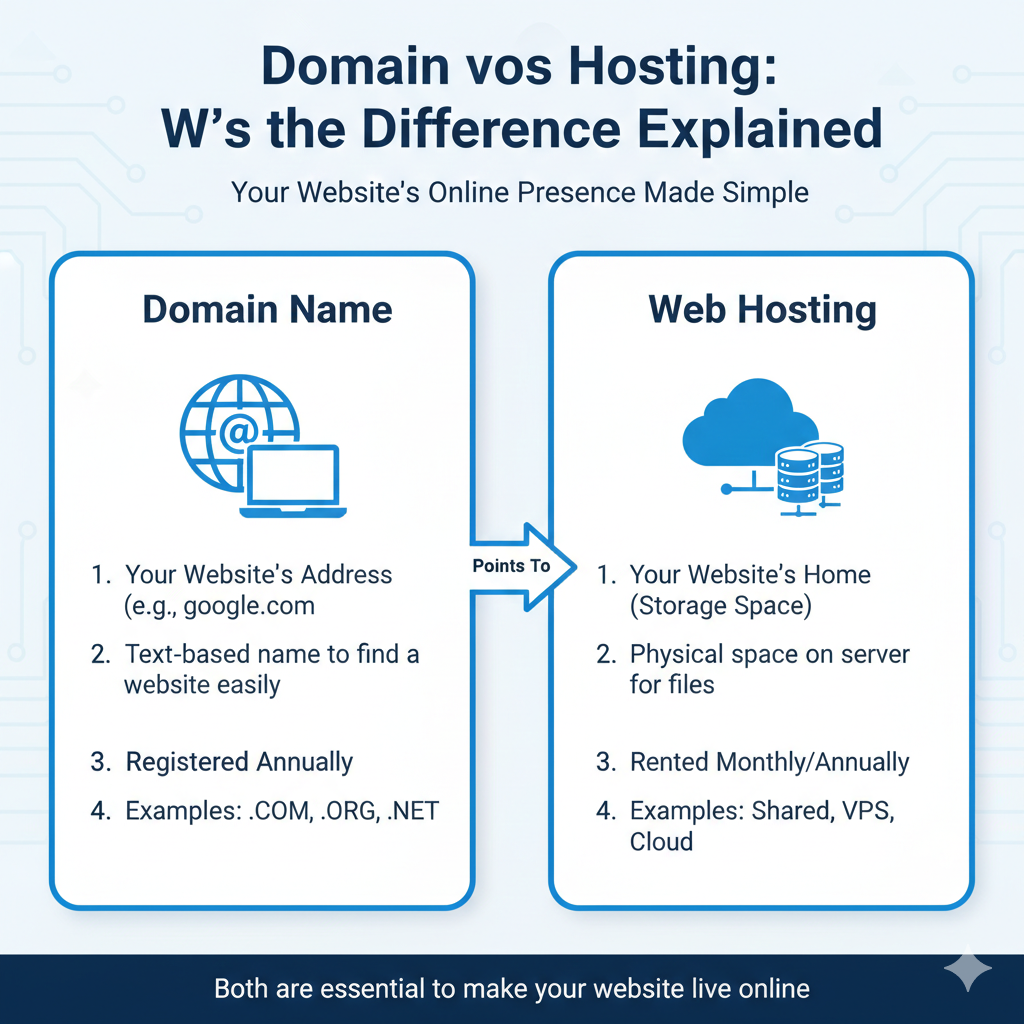
Domain vs Hosting: What You Register, Rent and Connect
Your domain registration and your hosting plan can come from the same company, but they do different jobs. Keeping track of each service helps prevent renewal surprises and unnecessary changes during a website move.
A domain gives you a name to use. Hosting supplies the environment that serves your website. DNS connects names to the services you configure, which can include a website and a separate email provider.
Know which service you are managing
| Service | What it handles | What it does not supply by itself |
|---|---|---|
| Domain registration | Your registration of a name for the agreed term, subject to applicable rules | The website’s content or application |
| Web hosting | Files, application execution and other included hosting services | Registration of every domain you use |
| DNS hosting | The records used to find services for your domain | The website or mailbox those records point to |
These services may be bundled on one invoice or managed through different accounts. Email, backups and a site builder may be additional products. Check the actual package rather than assuming they are included.
A domain is not the whole URL
In https://example.com/about/, example.com is the domain name. The scheme and path have separate roles. Registering the name does not create the pages visitors will see.
MDN’s domain-name introduction explains the naming system. Our DNS guide covers the records and caching involved in connecting services.
You can use different suppliers
A registrar does not have to host your website. You can keep registration in one account and connect the name to another company’s hosting using the configuration those services require.
Changing nameservers replaces the delegated DNS service; changing a web record updates a particular destination. These are different operations. Before either change, record the existing zone, including email records, and keep a rollback route.
Moving hosting does not require moving registration
Copy the application and data, test the destination, and plan the necessary DNS changes. A registrar transfer is a separate process with its own eligibility and timing conditions. Do it only when you intend to change registration management.
Use our hosting migration checklist for the website move. Keep the old service available for the agreed transition and verify forms, HTTPS and email before cancelling anything.
Track renewals separately
A first-year domain offer can have a different renewal price from the hosting subscription. Check the extension, eligible registration term, renewal conditions and what happens if the bundle is cancelled.
Do not assume either supplier will keep an expired service or its data for a fixed grace period. Read the current terms and maintain independent backups. Keep account access and renewal notices with the person responsible for the website.
Before you buy
Write down the registrar, DNS provider, hosting provider and email provider, even if one company fills several roles. Add renewal dates, recovery contacts and the location of your backups.
The domain-and-hosting bundle checklist helps compare combined offers. Convenience is useful when the costs, access and exit arrangements remain clear.